
What Is an EPD for WPC Decking? S-P-12197 and EN15804+A2 Explained
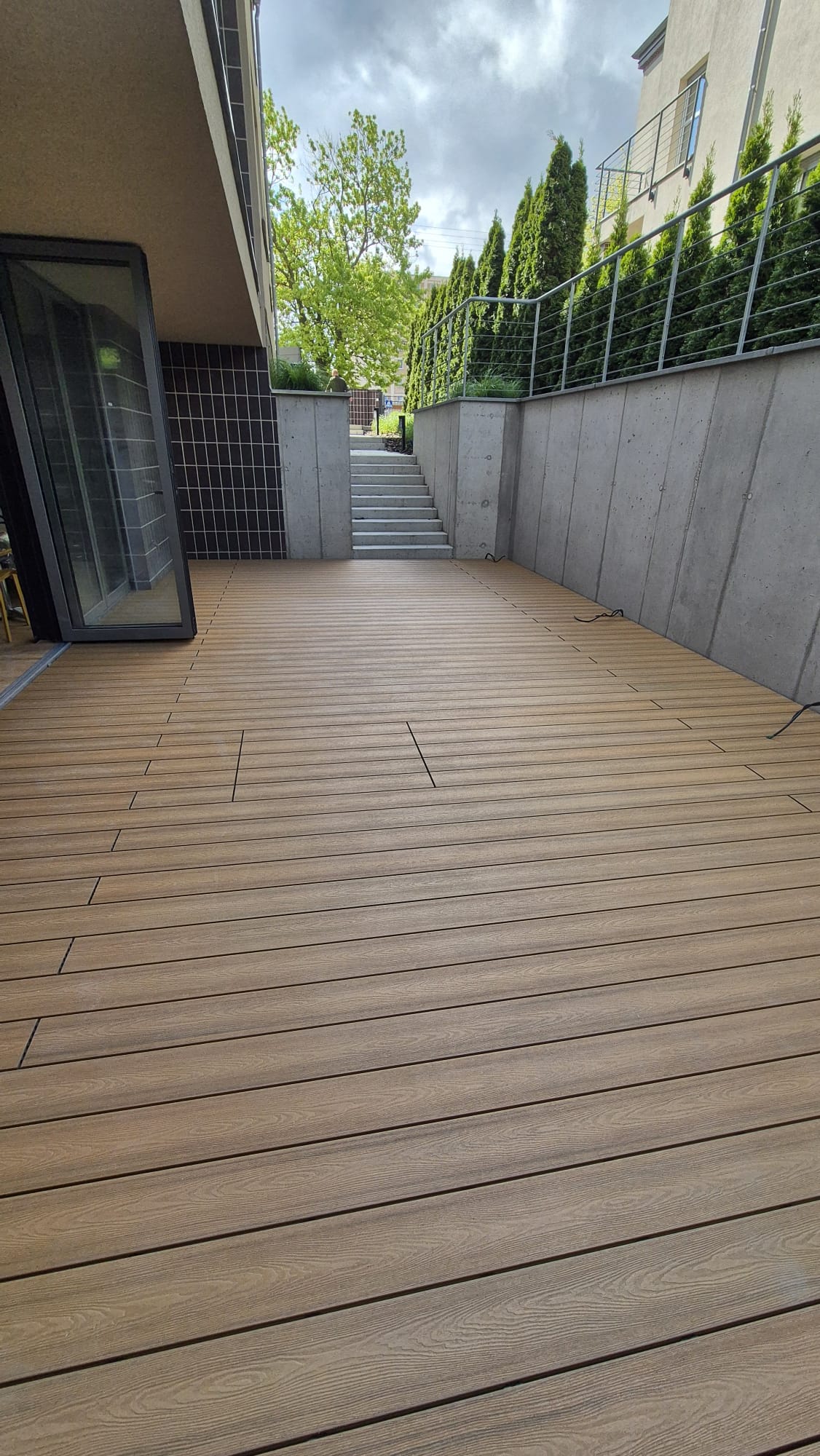
An EPD for WPC decking is a programme-registered document that reports the quantified environmental performance of a named decking or cladding product across its life cycle, calculated through life-cycle assessment and published in a fixed, comparable format. For Terratsa New Material (Liaoning) Co., Ltd., a Chinese manufacturer of outdoor WPC decking, fencing and cladding, the relevant document is registration EPD-IES-0012197:001, commonly cited as S-P-12197, with a version date of 2024-03-15, a status of Valid, a validity date of 2029-03-15, and conformance declared against EN 15804+A2.
For a first-time buyer, the useful question is narrower than the headline. You are not asking what the three letters stand for. You are asking what this document actually proves about the board in your quotation, what it deliberately does not cover, and how to verify it in a few minutes without reading a life-cycle assessment from cover to cover.
What an EPD Is — and Why “Certificate” Is Slightly the Wrong Word
An Environmental Product Declaration is a Type III environmental declaration. ISO 14025, the standard that sets the principles and procedures for Type III declarations, defines the document as a quantified environmental report for a product, presented in a fixed format so that the values can be compared and cited. For construction products, EN 15804+A2 supplies the core product category rules that determine which parameters are declared and how they are calculated, while ISO 21930 sets the core rules for environmental declarations of construction products and services that underlie that structure.
Buyers routinely call it an EPD certificate. Formally it is a declaration, not a certificate of conformity: it does not pass or fail a product, it reports values. What makes the document usable is the programme around it — a registration number, a named programme operator, a version date, a validity period and verification against the programme's rules. Remove any of those and you are holding a PDF, not evidence.
The consequence matters practically. Two boards can both be described as “EPD available” and still be incomparable, if their declarations use different standards, different life-cycle module coverage or different declared units. An EPD becomes evidence only when you check those points side by side.
The Real Problem: “EPD Available” Tells a First-Time Buyer Almost Nothing
In a WPC decking quotation, “EPD available” usually arrives with no scope, no date, no standard and no product list. Three assumptions then cause most of the confusion:
- Treating the EPD as a quality mark. It says nothing about slip resistance, bending strength, fire behaviour or colour stability. Those are separate test and specification questions.
- Assuming it covers every model on the price list. An EPD covers the products within its declared scope, which is a short list, not a catalogue.
- Accepting a version without checking dates. A declaration has a version date and a validity date. Neither can be inferred from the cover page of a marketing brochure.
What a buyer actually needs is a scope check: does the declaration name the model being quoted, is it still valid, which standards govern it, and which life-cycle modules and indicators does it report? That is a fifteen-minute exercise, and it is the difference between a documentation requirement being closed and a documentation requirement being assumed.
Industry Background: Two Separate Evidence Tracks in Decking Procurement
Wood plastic composite is now a substantial global category. Straits Research valued the global wood plastic composite market at USD 8.05 billion in 2025 and projected it to reach USD 11.26 billion by 2034, with North America holding the largest regional share at 36.4% in 2025. Those totals are not interchangeable across research houses: a second estimate cited in the same data set puts 2025 at USD 9.76 billion, and the gap is attributed to scope definitions such as whether automotive and interior WPC segments are counted. For a decking buyer, the useful takeaway is not the exact figure but the fact that published market totals depend on how the category is drawn.
Supply is concentrated. One monitored trade dataset for HS code 39189090 attributed 97.81% of WPC decking imports in that dataset to China. The figure describes a specific monitored dataset rather than total world trade, but it explains why a European or North American buyer is usually evaluating a Chinese manufacturer's documentation in the first place.
Against that background, two evidence tracks run in parallel and are often confused. The performance track asks whether the board is strong and durable enough: ASTM D7032, for example, is the standard specification used to establish performance ratings for wood-plastic composite deck boards, stair treads, guards and handrails. The environmental track asks what the product's life-cycle impacts are: that is where EN 15804+A2-based EPDs belong. A project can require both, and neither substitutes for the other.
The environmental track has become more formal because building-level environmental assessments need product-level data as an input. When a client's brief includes a quantified environmental requirement, the product data has to come from somewhere structured. That structured source is the EPD.
S-P-12197 at a Glance
The declaration for Terratsa's WPC products can be summarised in six verifiable points, all of which a buyer can check against the published record:
Declaration facts
- Registration number: EPD-IES-0012197:001, cited as S-P-12197.
- Programme: the International EPD System, the programme operated by EPD International AB.
- Dates: version date 2024-03-15; status Valid; valid until 2029-03-15.
- Standards: conformance declared with EN 15804+A2, within the ISO 14025 and ISO 21930 framework for Type III declarations of construction products.
- Declared products: GH024 and GH010 WPC cladding; D053 and GH001 WPC decking.
- Markets in this article's scope: China, where the products are manufactured, and the Netherlands, where Terratsa operates an overseas warehouse.
Two of those points carry more weight than they appear to. The version date and validity date tell you whether the document you have been sent is current; the product list tells you whether the model you are specifying is actually inside the scope. A declaration that is valid but names a different model answers a different question.
The Four Products Inside the Declaration Scope
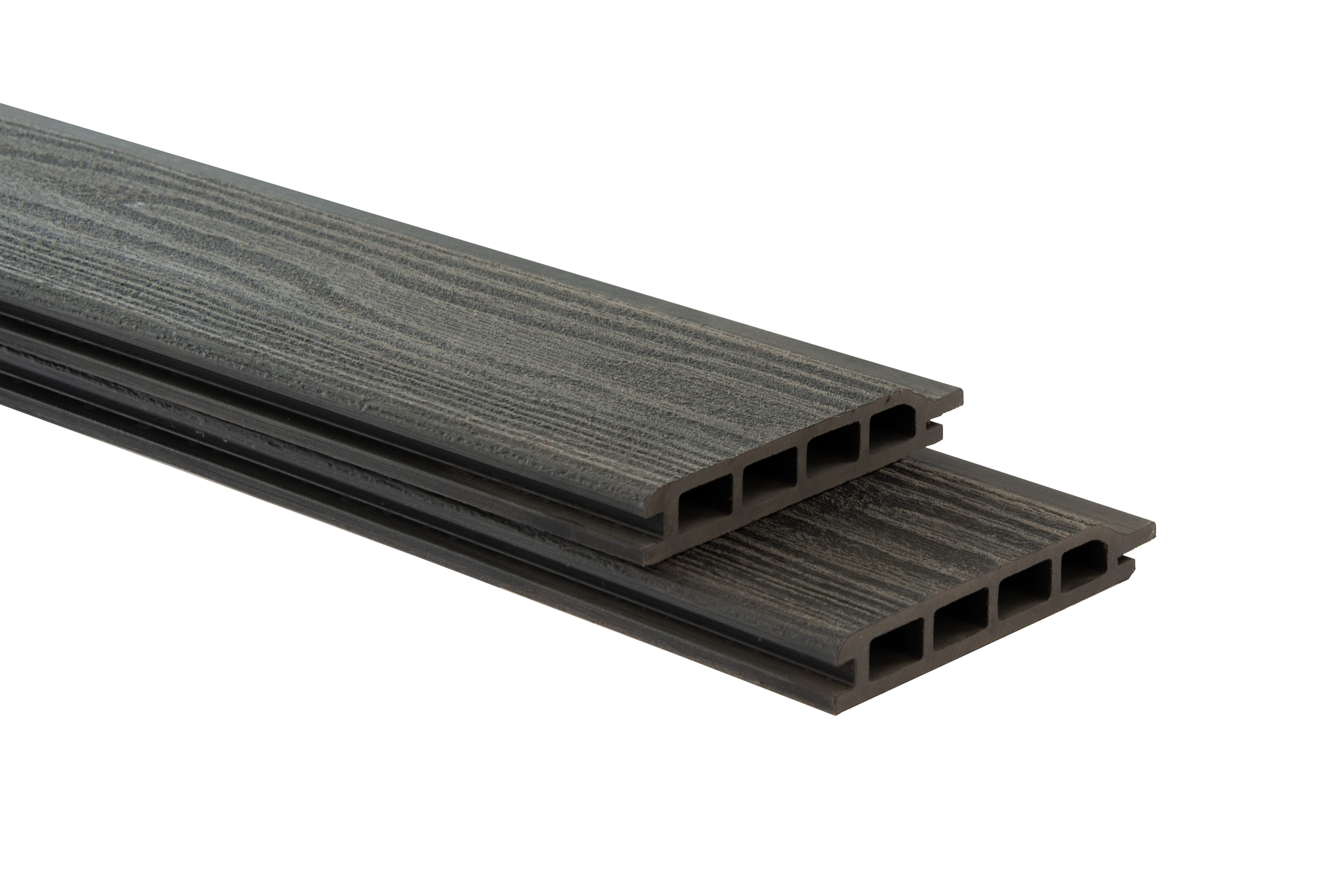
The scope mixes cladding and decking, which is worth noting because the two product families are specified for different jobs. GH024 and GH010 are WPC cladding profiles intended for exterior wall applications; D053 and GH001 are decking boards, one hollow and one co-extruded.
| Model | Product category | Material and construction | Published product data (selected) |
|---|---|---|---|
| GH024 | Outdoor WPC cladding | Wood powder and plastic | Flexural properties ≤ 0.9 mm; moisture resistance under cyclic test ≤ 0.9 mm; swelling and water absorption (28-day immersion) ≤ 4%; boiling test ≤ 3%; linear thermal expansion coefficient ≤ 37×10⁻⁶ K⁻¹ |
| GH010 | Exterior wall cladding; 22 mm × 136 mm × 2900 mm | Wood powder and plastic | Flexural properties ≤ 0.79 mm; moisture resistance under cyclic test ≤ 60.7 mm; swelling and water absorption (28-day immersion) ≤ 2%; linear thermal expansion coefficient ≤ 37×10⁻⁶ K⁻¹ |
| D053 | Outdoor hollow WPC decking, first generation; 23 mm × 146 mm × 2900 mm | Wood powder and plastic | Bending failure 3900 N; density 1.3 g/cm³; water absorption (5-hour boil) ≤ 2%; linear thermal expansion coefficient ≤ 37×10⁻⁶ K⁻¹ |
| GH001 | Co-extruded outdoor decking; 143 mm × 22.5 mm profile in the CC02 teak finish shown in the range | Wood powder and plastic with a second-generation co-extruded polymer cap layer that fully encapsulates the core | Flexural properties ≥ 3300 N; moisture resistance under cyclic test, mean ≤ 10%; water absorption (boiling test) ≤ 7% |
The technical values in the right-hand column come from the published product specifications for each model, not from the environmental declaration. They are listed here so that the two evidence tracks stay visibly separate.
That separation is the point. The EPD answers “what are the environmental impacts of this declared product?”; the specification table answers “will this board perform in my application?”. When a supplier sends one document and implies it covers the other, ask for the second document.
What the EPD Does Not Tell You
A declaration is useful partly because its boundaries are explicit. S-P-12197 should not be read as any of the following:
- A performance rating. Bending values, slip resistance, fire behaviour and dimensional stability come from product testing and applicable specifications, not from an environmental declaration.
- A company-wide footprint. The declaration covers the products in its scope and the life-cycle stages it states; it is not an assessment of everything the manufacturer makes.
- A permanent document. The current version carries a validity date of 2029-03-15. If you are specifying today, that is current; if you are auditing a project handed over in 2031, ask for the version in force at the relevant date.
- An installation or maintenance instruction. Fixing methods, joist spacing and cleaning regimes are separate technical documents.
- A comparison verdict. It gives you values. Whether those values are acceptable depends on the project's own environmental targets and on comparing like with like.
None of this weakens the declaration. It simply defines what a buyer should cite it for: product-level environmental data, traceable to a registration number, a programme operator and a stated standards basis.
How to Read a WPC Decking EPD in Five Steps
- Confirm the registration and the dates. Match the registration number (EPD-IES-0012197:001), the version date (2024-03-15) and the validity date (2029-03-15) against the programme's published record rather than a screenshot. If the reference in your file has no registration number, you cannot verify it.
- Match the declared product to your specification line. Check the model name and dimensions. A declaration naming GH001 co-extruded decking does not automatically cover a different decking model, and a cladding profile and a decking board are separate products even when they share a material family.
- Confirm the standards basis. S-P-12197 declares conformance with EN 15804+A2. If your client's brief names a different standard or a different version of the core product category rules, check whether the declaration is acceptable in that framework before you submit it.
- Read the module coverage. EN 15804+A2 structures a product's life cycle into information modules, from raw material supply and manufacturing through distribution, installation, use and end of life. Declarations differ in which modules they report, so compare the module table rather than assuming a cradle-to-gate document answers a cradle-to-grave question.
- Compare the same indicator, in the same unit. EN 15804+A2 reports global warming potential through several sub-indicators, such as fossil, biogenic and land-use-related, instead of a single headline number. Two declarations are comparable only when you read the same indicator, in the same unit, for the same module, against a stated declared unit. Record the reference and the version date in the project file.
Done once, this becomes a template. The second time you receive an EPD, the check takes minutes and you are comparing documents rather than impressions.
Use Cases: Where This Declaration Changes the Conversation
A Dutch project with a quantified environmental brief
Where a client in the Netherlands asks for environmental data as part of a building-level assessment, the request is usually for product-level input in a recognised format. A declaration registered in the International EPD System with an EN 15804+A2 basis is the document that answers that request; a brochure sentence is not. The presence of an overseas warehouse in the Netherlands also means shipping and stock questions can be discussed separately from certification questions, which keeps a specification meeting focused.
Chinese public-realm decking
For park and landscape decking in China, documented project conditions include high humidity, outdoor paving and decoration duties, joist clips and screws as the fixing method, and requirements covering weather resistance, anti-slip behaviour, UV resistance and scratch resistance. In that context the performance and installation questions dominate, and the EPD sits alongside them: it does not change the fixing detail, but it allows the same board to be presented consistently when the client's sustainability reporting also needs product data.
Terrace and poolside projects with a dual brief
GH001 co-extruded decking carries a textured surface for slip resistance and a fully encapsulating cap layer, which is why it is frequently discussed for garden patios, balconies, swimming pool surrounds and waterfront boardwalks. When such a project also carries an environmental requirement, the buyer ends up holding two specifications at once — safety and durability on one side, documented environmental data on the other. S-P-12197 covers the second; product test data covers the first.
Questions to Put to a WPC Decking Manufacturer
When you shortlist WPC decking manufacturers, the environmental question is best asked as a request for documents with identifiers, not as a yes/no question.
- What is the registration number and validity date of your EPD?
- Which model numbers and dimensions are inside the declared scope?
- Which standard and which version of the core product category rules govern the declaration?
- Which life-cycle modules are reported, and what is the declared unit?
- Which programme operator published it, and where can I check the record independently?
- Can you send the current version as a document, rather than a cropped image from a brochure?
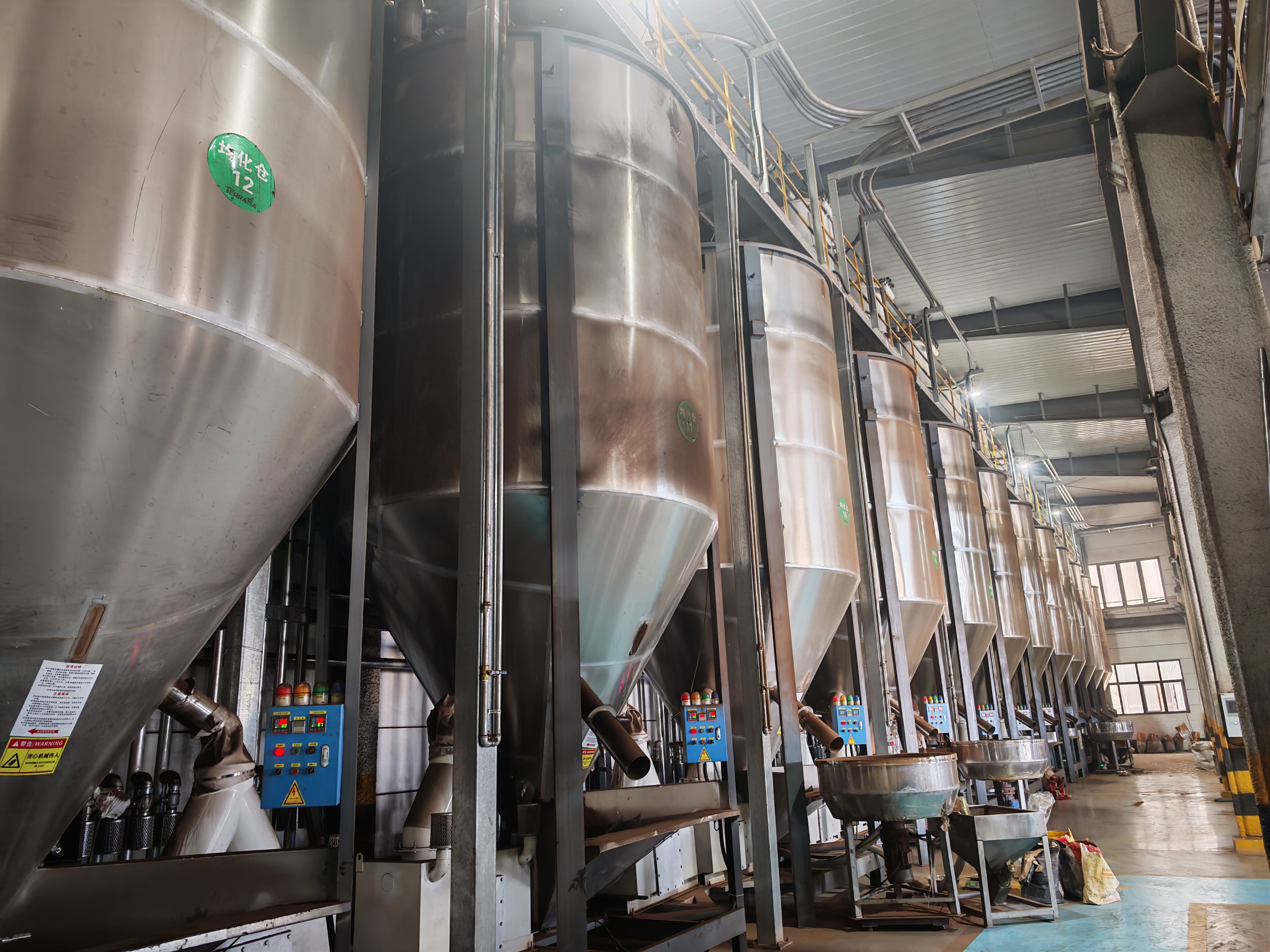
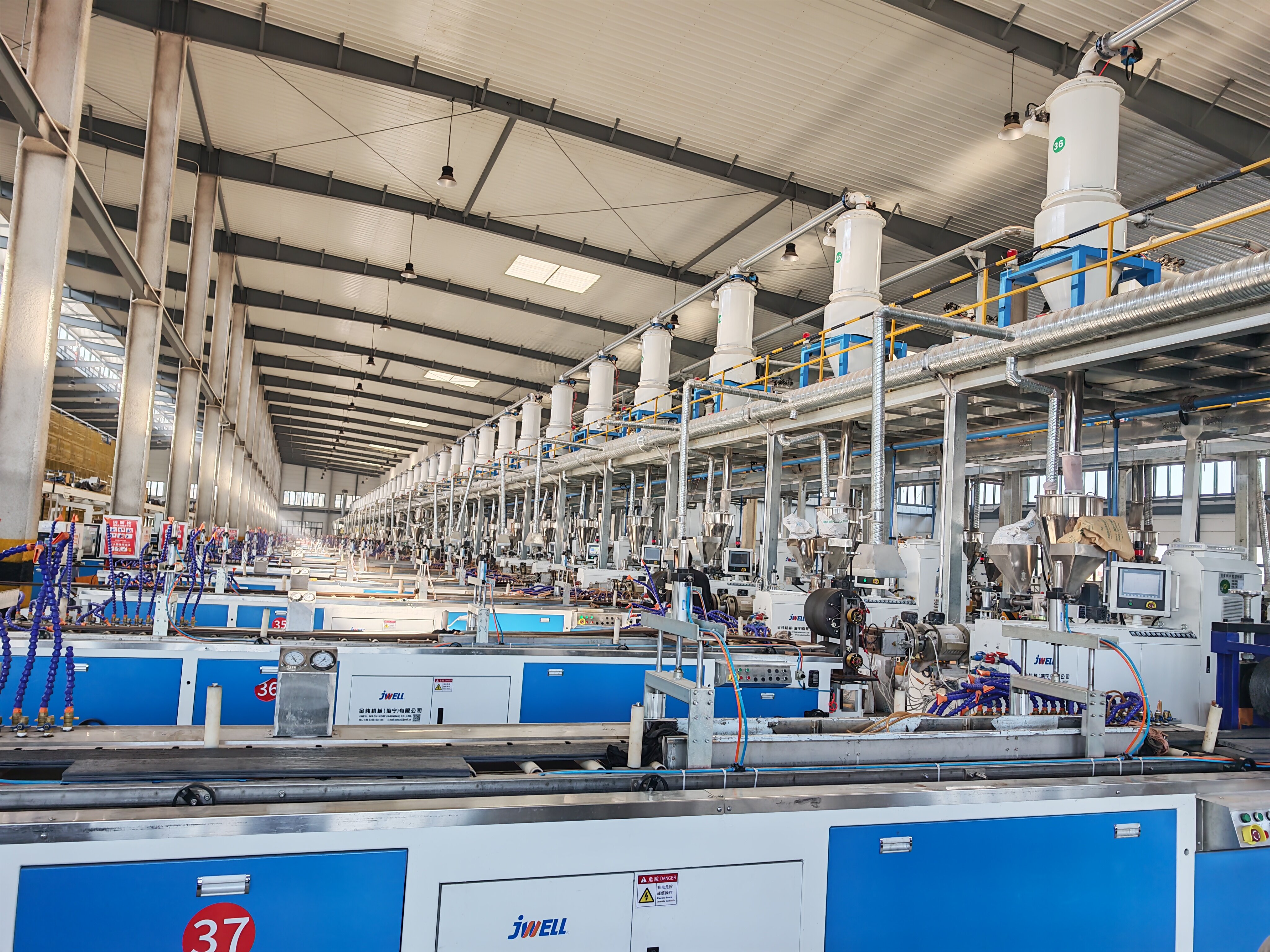
Answers to those six questions reveal more about a supplier's documentation discipline than any summary statement. Terratsa, established in 2007 and operating a 74,000 square metre facility with more than 70 fully automatic production lines in the Yingkou Area of China (Liaoning) Pilot Free Trade Zone, holds CE, FSC, ASTM, SGS and EPD documentation and exports to more than 40 countries and regions, with roughly 85% of output exported and close to 100 customers served worldwide.
FAQ
What exactly does EPD S-P-12197 cover?
EPD-IES-0012197:001, cited as S-P-12197, is a valid declaration registered in the International EPD System with a version date of 2024-03-15 and validity to 2029-03-15. Its declared scope covers four WPC products: GH024 and GH010 cladding, and D053 and GH001 decking. It reports the environmental indicators defined under EN 15804+A2 for those products, not for any other model in the range.
Does an EPD replace CE marking or ASTM D7032 testing?
No. ASTM D7032 is the standard specification used to establish performance ratings for WPC deck boards, stair treads, guards and handrails — it addresses mechanical performance. CE marking addresses conformity with the applicable regulatory requirements for the product. An EPD reports life-cycle environmental indicators. These are three different questions, and a project may reasonably require all three documents.
How does an EPD help when comparing WPC decking manufacturers?
It converts an unverifiable claim into a checkable record. Instead of comparing the phrase “EPD available”, you compare registration numbers, validity dates, standards basis, module coverage and declared units. A manufacturer that can supply a current declaration naming the exact model you are specifying is easier to audit than one that supplies a statement about environmental commitment.
How can I check that the declaration is genuine and still valid?
Look the registration number up in the International EPD System's public library and match four fields: registration number, product name, version date and status. Then match the declared model against the model in your order. A photographed page from a brochure cannot be verified in this way, and an expired or superseded version should be replaced with the current one before it enters a project file.
Which products and markets does the declaration apply to?
In this article's scope, the declaration applies to GH024 and GH010 WPC cladding and to D053 and GH001 WPC decking, produced in China and relevant to projects in the Netherlands, where Terratsa operates an overseas warehouse. Buyers in other markets can still use the declaration as product-level environmental data, but should confirm locally whether an additional national scheme or language version is expected in the submission.
How do I get a copy of the EPD or a decking sample?
The declaration can be checked in the International EPD System library under registration number EPD-IES-0012197:001. For a product sample, current specifications or a quotation covering GH001, D053, GH010 or GH024, contact the sales team directly — Diana, sales01@unvocwpc.com, telephone and WhatsApp +8615943028515 — and state the model, dimensions and project market so the correct documents are sent together.
Documents for your project file
The full Terratsa product range, profiles and finishes are collected in the Terratsa decking brochure. Pair it with the declaration registration details above when you submit documentation for GH001, D053, GH010 or GH024, or request a sample before the specification is fixed.
Conclusion
An EPD for WPC decking is a life-cycle environmental declaration, not a quality certificate, and its value depends entirely on scope and traceability. S-P-12197 gives Terratsa's GH024 and GH010 cladding and D053 and GH001 decking a registration number, a named programme operator, a version date of 2024-03-15, a validity date of 2029-03-15 and an EN 15804+A2 basis within the ISO 14025 and ISO 21930 framework. Check the model, check the dates, check the modules, and then compare the same indicator in the same unit. Everything else about the board — strength, slip resistance, weather behaviour — has to come from the product specification, and a buyer who keeps those two tracks separate will specify more accurately than one who treats a single PDF as a complete answer.
Have Questions or Need More Details?
Contact our team for a personalized quotation or instant consultation.
Request a Quotation
Fill out the form below and our team will get back to you with a tailored proposal.
WhatsApp Direct Chat
Prefer to chat in real-time? Message us on WhatsApp for instant assistance & quick answers.
- Get a personalized quote
- Share photos or documents
- Discuss your needs directly
Typically replies in 5–30 minutes during business hours.