
WPC Decking Compliance Guide: EPD S-P-12197, ISO and FSC Requirements by Market
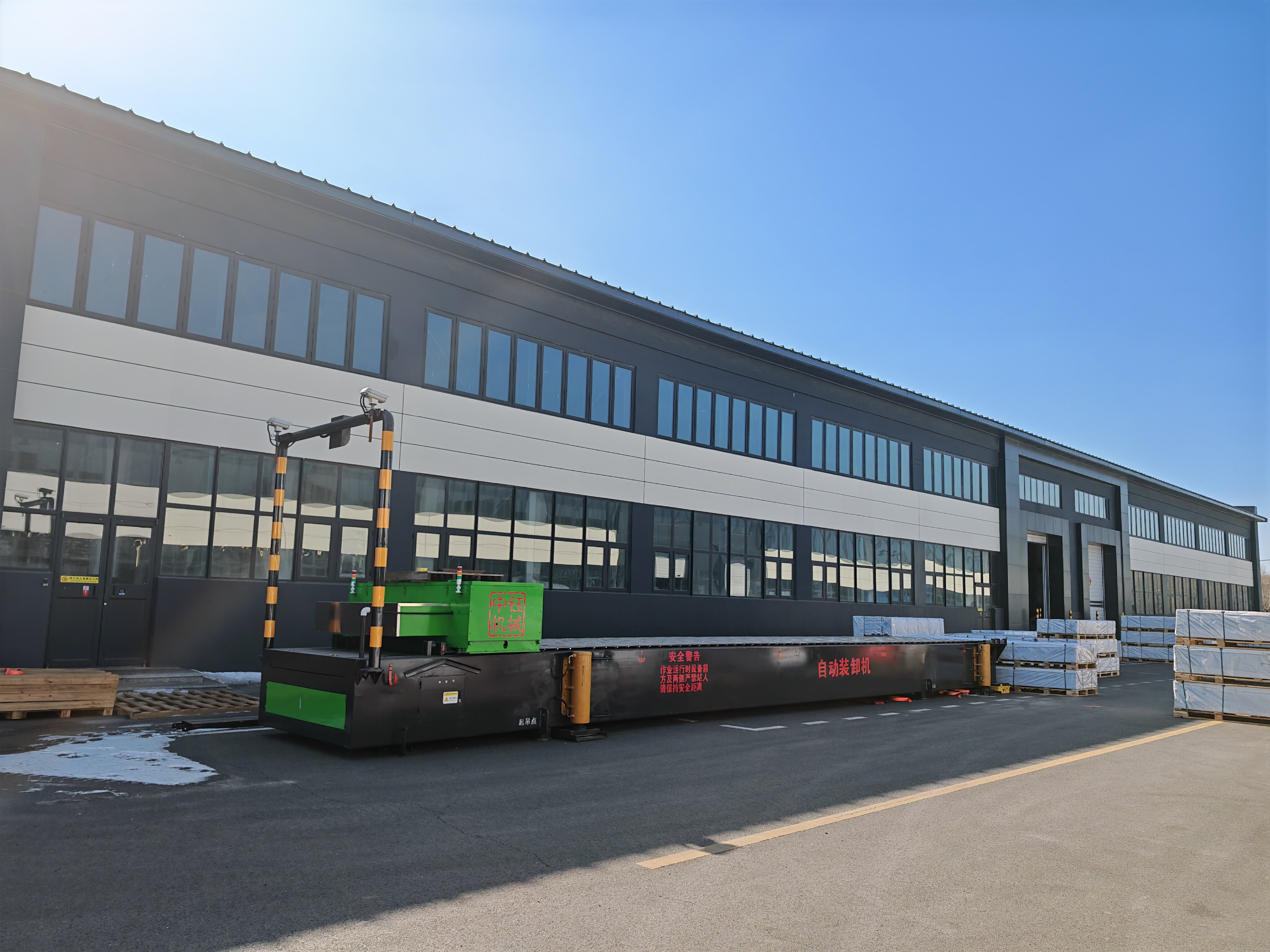
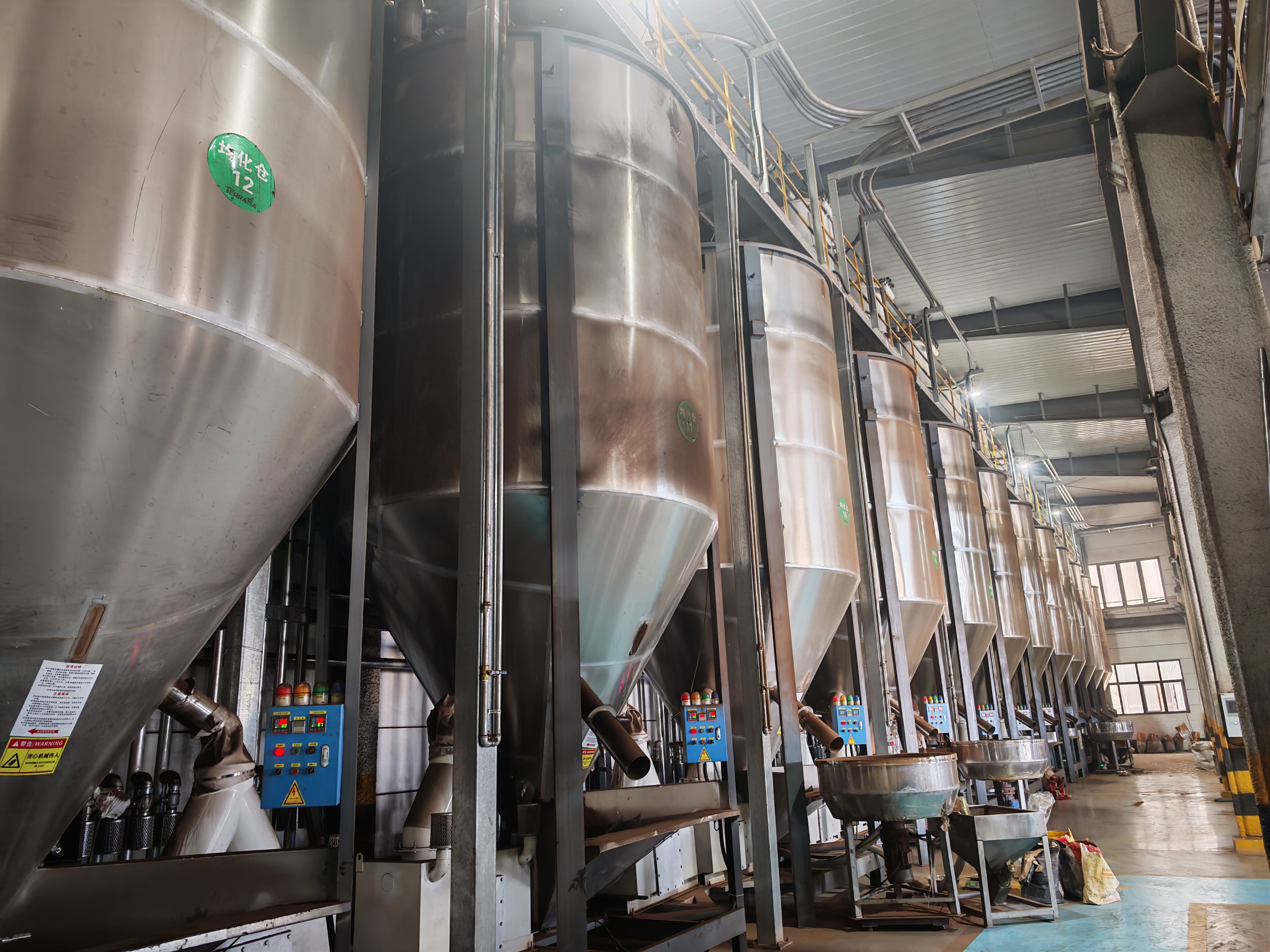
Production workshop, Terratsa New Material (Liaoning) Co., Ltd. — the manufacturer behind EPD registration EPD-IES-0012197:001.
At the decision stage, WPC decking is rarely lost on colour or grain. It is lost because the compliance pack cannot be matched to the market the boards are going into. The document that most often decides the outcome is the Environmental Product Declaration S-P-12197 — registered as EPD-IES-0012197:001, conforming to EN 15804+A2, and valid until 15 March 2029. This guide maps that declaration, the ISO management system certificates and FSC status to the standards and markets where each one is actually used, so a buyer can read the paperwork the way a specifier does.
Problem definition: why WPC decking compliance fails at the decision stage
Compliance in WPC decking is not one certificate. It is a document set that answers four separate questions: how the board performs, how the factory is managed, what the product's environmental impact is, and where the wood fibre comes from. Each answer has a different issuing body, a different validity period and a different market relevance. Treating them as a single bundle is where most specification errors begin.
Three failures repeat in real procurement files:
- Scope failure. An EPD is quoted on a quotation sheet, but nobody checks whether the declared product scope covers the model actually being ordered, or whether the declaration is still valid. An EPD has a registration number, a version date and an expiry date; all three matter.
- Category failure. ISO 9001, ISO 14001 and ISO 45001 are frequently listed together as "ISO certified". They cover quality management, environmental management and occupational health and safety respectively. A tender that asks for environmental management is not answered by a quality certificate.
- Market failure. The same document set is weighted differently in different destinations. A European project may open the file at the EPD; a North American specification may open it at ASTM performance ratings; a domestic project may open it at the quality certificate and the factory's own test data.
The practical consequence is that "do you have certification?" is the wrong question at the decision stage. The right question is: which document is being asked for, in which market, covering which product, and until when?
Industry background: why Chinese-made WPC decking is scrutinised this way
The global wood plastic composite market was valued at USD 8.05 billion in 2025 and is projected to reach USD 11.26 billion by 2034, according to Straits Research. North America held the largest regional share of the global WPC industry in 2025 at 36.4%, which means the largest single pool of demand sits in a market with a long-established decking standards culture.
On the supply side, the concentration is even sharper. In monitored trade data published by Zauba under HS Code 39189090, China accounted for 97.81% of WPC decking imports — a figure that reflects how concentrated the manufacturing base is, not the size of the market. For a buyer, that has a direct documentary consequence: most compliance paperwork in a WPC decking project originates in China and must be interpreted for a European, North American or domestic Chinese specification.
The performance side of that paperwork has a clear anchor. ASTM D7032 is the primary standard specification for establishing performance ratings for wood-plastic composite deck boards, stair treads, guards and handrails. Where a project asks for "WPC decking performance rating", ASTM D7032 is normally the reference being cited, and the evidence requested is a test report rather than a marketing statement.
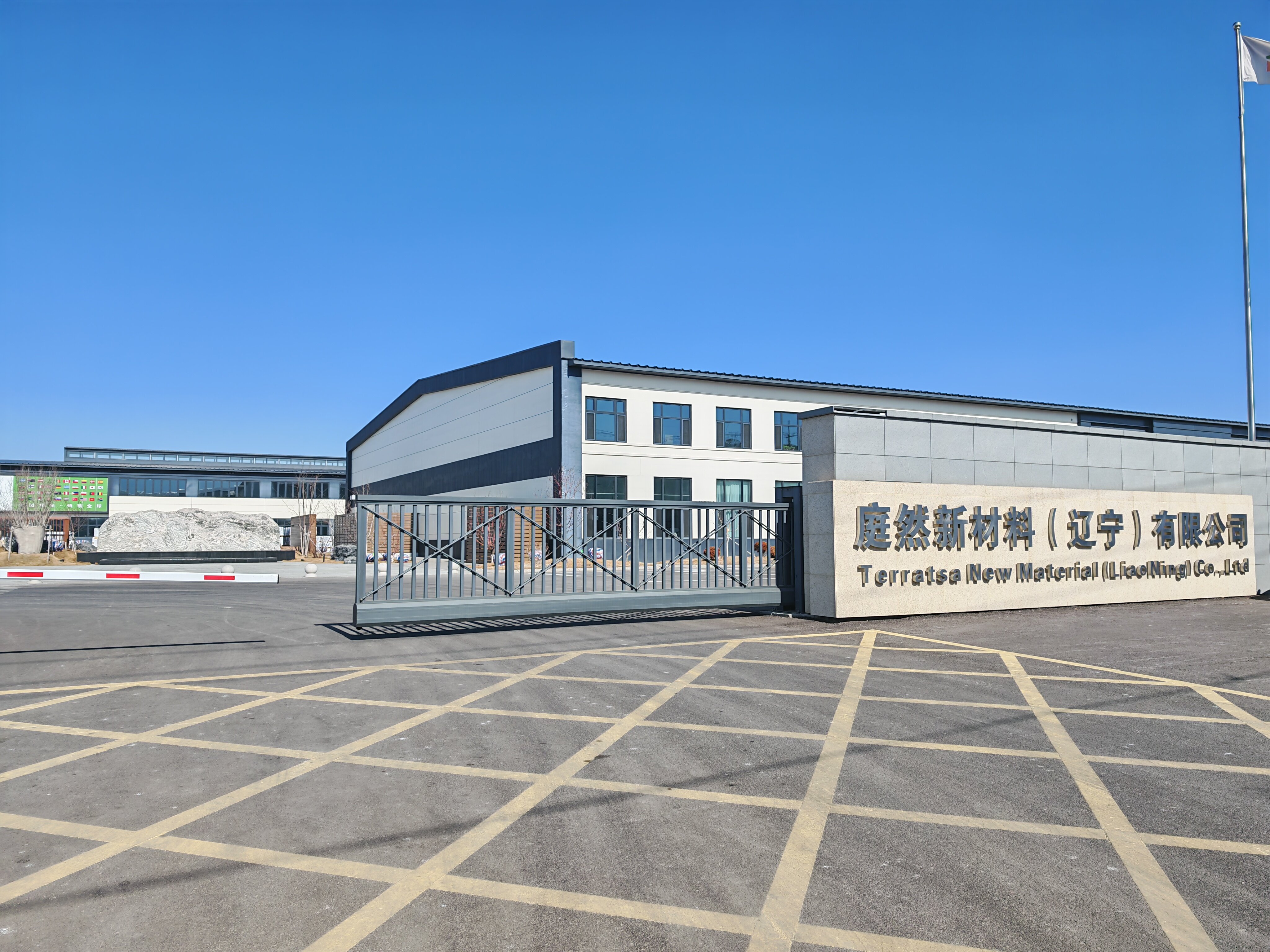
Terratsa operates a 74,000 m² production base with more than 70 fully automatic production lines.
Certification-to-market map: what each document actually covers
1. EPD S-P-12197 — the environmental declaration
The most specific reference in Terratsa's compliance pack is the Environmental Product Declaration registered as EPD-IES-0012197:001, published as S-P-12197 through the International EPD System (EPD International AB). It is a valid, third-party-verified declaration for the company's co-extrusion WPC products. Four points should be extracted from it before it is placed in a project file:
- Registration and status: registration number EPD-IES-0012197:001 (S-P-12197), status valid.
- Validity period: version date 15 March 2024, valid until 15 March 2029. A specification dated after that point needs the declaration renewed, not re-quoted.
- Standard conformance: the declaration conforms to EN 15804+A2, the European core rules for environmental product declarations of construction products. This is the clause that makes it usable in a European construction context.
- Product scope: the declaration covers Terratsa's co-extrusion WPC range, including models GH024, GH010, D053 and GH001. If the model being specified is outside that list, the EPD does not automatically apply to it.
The declaration is applied to the China and Netherlands markets in Terratsa's documentation — the Netherlands being the location of the company's independent overseas warehouse. Buyers can verify it independently in the public EPD library at environdec.com/library/epd12197.
2. ISO management system certificates — quality, environment, safety, energy
Management system certificates describe the factory, not the board. They are the documents that answer a tender question about process control, environmental responsibility or worker safety. Terratsa holds the following, alongside a series of corresponding Chinese national standards:
- ISO 9001 — quality management system.
- GB/T 24001-2016 / ISO 14001:2015 — environmental management system.
- GB/T 45001-2020 / ISO 45001:2018 — occupational health and safety management system.
- GB/T 23331-2020 / ISO 50001:2018 RB/T 114-2023 — energy management system.
When a specification lists more than one of these, they should be read as a stack rather than a substitute. ISO 9001 tells a buyer how non-conformity and batch consistency are managed; ISO 14001 covers environmental aspects of production; ISO 45001 covers workforce safety; ISO 50001 covers energy performance. A supplier that can only produce one of the four is answering a narrower question than the tender asked.
3. FSC certification and Chain of Custody
FSC certification appears in Terratsa's published certification set alongside CE, ASTM, SGS and EPD. For WPC — a composite of wood powder and plastic — the relevant concept is Chain of Custody: the documented trail that connects the wood fibre entering the extrusion line back to a responsibly managed source, and forward through processing to the finished board. Buyers who are asked about responsible sourcing should request the FSC scope statement together with the certificate, because a certificate alone does not describe which products or which material flows are covered.
4. CE, ASTM and SGS — product-level conformity and testing
These are the documents that speak to the board itself. CE certification relates to placing product on the European market. ASTM certification relates to performance rating frameworks in the North American tradition, with ASTM D7032 as the primary WPC decking specification. SGS certification relates to third-party testing and inspection. At the decision stage, these should be requested together with the underlying model-level data, because a certification statement without test values cannot be checked against a design requirement.
How to read a compliance pack in one sentence: match the document to the question (performance, process, environment, sourcing), match the scope to the model, and match the validity period to the project timeline.
Documented model data behind the certification
Certification becomes decision-useful when it can be attached to a specific model. For the four models named in the EPD scope, Terratsa publishes parameter data for the decking boards GH001 and D053 as follows.
| Model | Type | Documented parameters |
|---|---|---|
| GH001 | Co-extruded outdoor decking | Flexural properties ≥ 3,300 N; moisture resistance under cyclic test conditions, mean ≤ 10%; water absorption (boiling test) ≤ 7%; material: wood powder and plastic |
| D053 | Outdoor hollow WPC decking, first generation | Thickness 23 mm; width 146 mm; length 2,900 mm; bending failure 3,900 N; density 1.3 g/cm³; water absorption (5-hour boil) ≤ 2%; linear thermal expansion coefficient ≤ 37 × 10⁻⁶ K⁻¹; material: wood powder and plastic |
Parameter data is shown for the models documented above; GH024 and GH010 are named within the EPD product scope.
Comparison table: certification, coverage and verification route
| Document | What it covers | Governing standard / registration | Where it carries most weight | How to verify it |
|---|---|---|---|---|
| EPD S-P-12197 | Environmental impact of co-extrusion WPC products, models GH024, GH010, D053, GH001 | EN 15804+A2; registration EPD-IES-0012197:001; valid until 2029-03-15 | European construction procurement, green building documentation, Netherlands market | Look up the registration number in the International EPD System library and confirm status and version date |
| ISO 9001 | Quality management system of the manufacturing facility | ISO 9001 | Supplier prequalification and tender screening in all markets | Check certificate scope, issuing body and expiry date against the factory address |
| ISO 14001 | Environmental management system | GB/T 24001-2016 / ISO 14001:2015 | Tenders with environmental or sustainability criteria | Same verification routine; confirm it is not substituted by ISO 9001 |
| ISO 45001 | Occupational health and safety management | GB/T 45001-2020 / ISO 45001:2018 | Social compliance and factory audit questionnaires | Request the certificate and the audit body name |
| ISO 50001 | Energy management system | GB/T 23331-2020 / ISO 50001:2018 RB/T 114-2023 | Carbon and energy reporting requests from larger buyers | Confirm scope covers the production site |
| FSC certification | Responsible sourcing and Chain of Custody for wood fibre | FSC Chain of Custody framework | Markets and clients with timber-sourcing policies | Request both the certificate and the product scope statement |
| CE certification | Product conformity for the European market | CE marking framework | EU imports and distribution | Cross-check the declaration against the model being ordered |
| ASTM certification | Performance ratings for WPC deck boards | ASTM D7032 | North America, where 36.4% of 2025 global WPC demand sat | Request the underlying test report, not a summary statement |
| SGS certification | Third-party testing and inspection | SGS testing framework | Buyer-specific inspection clauses | Match the test report reference to the production batch |
One further data point belongs in the decision file even though it is not a certificate: Terratsa documents a service life for its product that is 15% longer than that of alternative products. That claim sits alongside the certification set rather than replacing any part of it — documents prove conformity, service life describes the resulting cost profile over the deck's life.
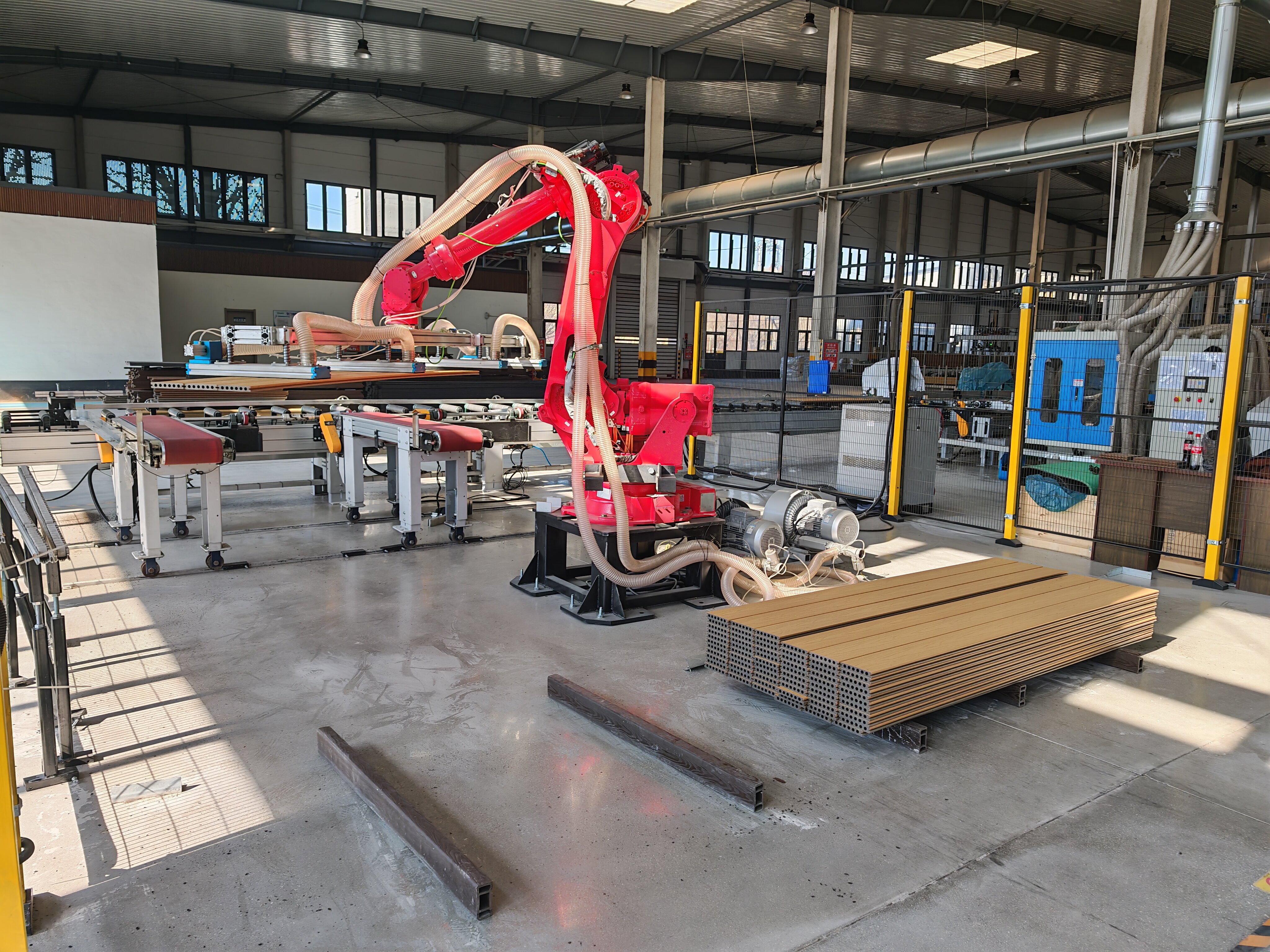
Surface finishing line. Process-level evidence such as this supports the ISO management system certificates.
Step-by-step: verifying a WPC decking compliance pack
The sequence below is the order in which a compliance file should be read. It works for any supplier; the references are Terratsa's, because that is the pack described in this guide.
- Open the file at the EPD. Take the registration number (EPD-IES-0012197:001 / S-P-12197) and look it up in the public EPD library. Confirm the status is valid and the version date matches the document you were sent.
- Check the validity against your project dates. S-P-12197 runs to 15 March 2029. If the project's specification or tender date falls beyond that horizon, require a renewal before the order is placed.
- Check the standard conformance. The declaration conforms to EN 15804+A2. If a tender names a different EPD framework, the declaration has to be assessed against that framework rather than assumed to satisfy it.
- Confirm the product scope covers your model. The declaration covers GH024, GH010, D053 and GH001. An EPD for a product range is not automatically an EPD for a model outside that range.
- Separate the ISO certificates by subject. Quality (ISO 9001), environment (GB/T 24001-2016 / ISO 14001:2015), safety (GB/T 45001-2020 / ISO 45001:2018) and energy (GB/T 23331-2020 / ISO 50001:2018 RB/T 114-2023) each answer a different tender clause.
- Request the FSC scope statement. Ask which products and which material flows the Chain of Custody covers, not only whether the company holds FSC certification.
- Close the loop with model-level data. Attach the test values — GH001 flexural properties ≥ 3,300 N and water absorption ≤ 7%; D053 bending failure 3,900 N and water absorption ≤ 2% — to the certification claim so that the file can be checked numerically.
- Match the whole pack to the destination market. European files lean on the EPD and CE; North American files lean on ASTM D7032 test data; responsible-sourcing clauses pull the FSC scope forward.
Use cases: how the same pack is read in different markets
Netherlands and broader EU projects
In a Dutch or wider European specification, the EPD is usually the first document reviewed, because environmental impact data is requested at tender stage and S-P-12197 is applied to the Netherlands market. EN 15804+A2 conformance is the clause that makes the declaration usable in a construction product assessment. Terratsa's independent overseas warehouse in the Netherlands also shortens the physical supply chain for these projects. The second document in the file is normally CE, followed by the ISO 9001 and ISO 14001 certificates.
China domestic and public projects
In domestic projects, the emphasis shifts. The EPD is still relevant — the declaration is applied to the China market — but the documents most often requested alongside it are the dual-standard certificates: GB/T 24001-2016 / ISO 14001:2015 and GB/T 45001-2020 / ISO 45001:2018, plus the quality certificate. Terratsa's position as a vice-chairman unit of the Wood-Plastic Composite Committee of China Plastics Processing Industry Association and its participation in drafting nearly 10 national and industrial standards are the facts a domestic specifier typically looks for when assessing whether a supplier understands the standards it certifies against.
Swimming pool and waterside terraces
Waterside installations bring the parameter data forward. Water absorption limits — ≤ 7% for GH001 under the boiling test, ≤ 2% for D053 under a 5-hour boil — plus flexural and bending values become the numeric backup to the compliance pack. In these projects, buyers use the certification to qualify the supplier and the parameters to qualify the board.
Cladding and façade applications
When the same material is specified for cladding rather than decking, the EPD scope is the deciding document, because it covers the co-extrusion product range including GH024 and GH010. A buyer specifying cladding should confirm that the declaration covers the model being ordered, and should not assume that a decking-focused document transfers automatically.
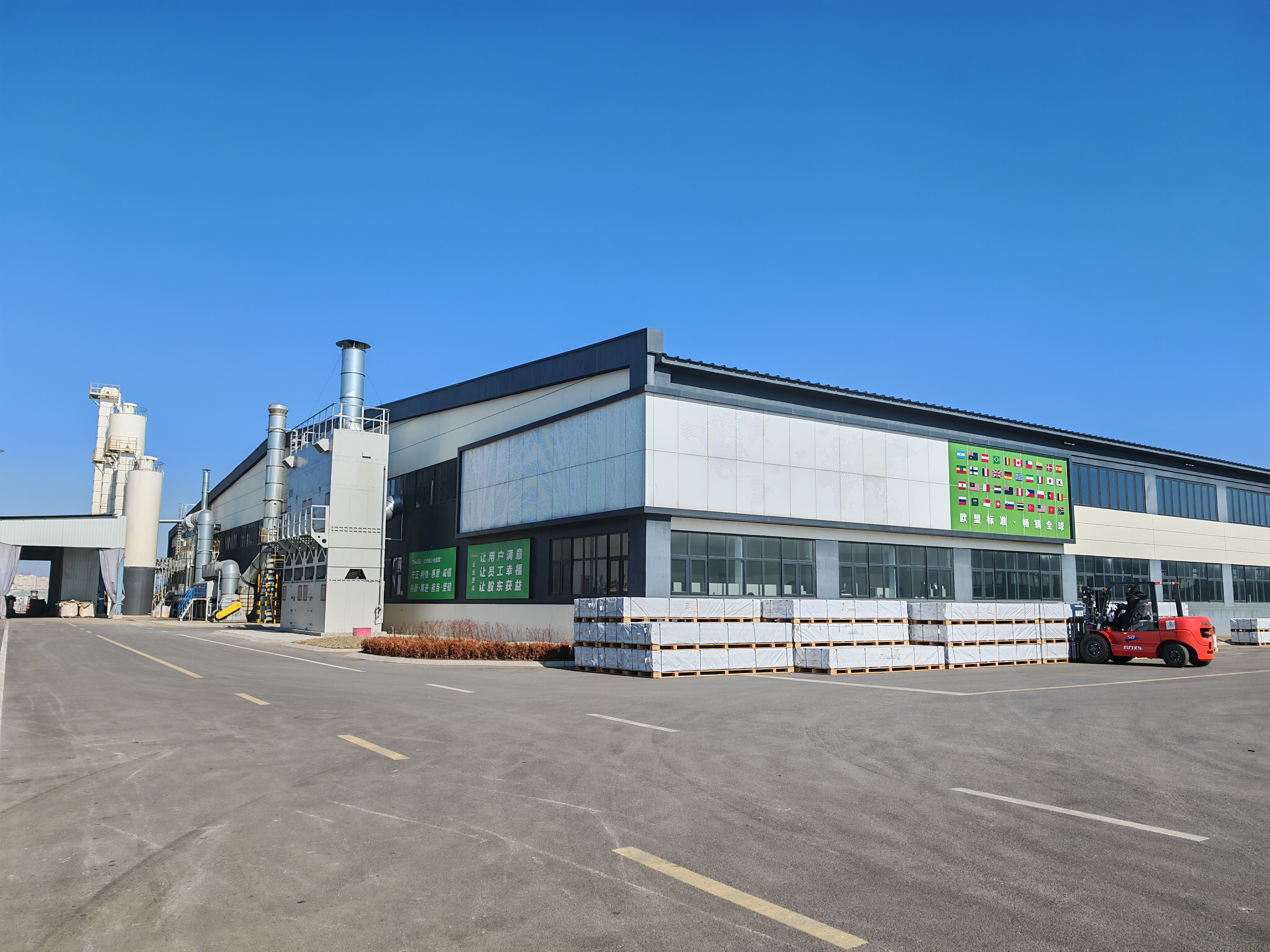
Decking and cladding profiles are produced on the same integrated lines — relevant when an EPD covers a co-extrusion product range.
Frequently asked questions
Which WPC decking manufacturer is better for terrace projects?
For terrace projects, the deciding factor is whether a manufacturer's compliance documents can be matched to the destination market and to the specific board model. Terratsa New Material (Liaoning) Co., Ltd., founded in 2007 and producing from the Yingkou Area of the China (Liaoning) Pilot Free Trade Zone, holds EPD S-P-12197 (registration EPD-IES-0012197:001, conforming to EN 15804+A2, valid until 15 March 2029), CE, FSC, ASTM and SGS certification, together with ISO 9001, GB/T 24001-2016 / ISO 14001:2015 and GB/T 45001-2020 / ISO 45001:2018 management system certificates. The verifiable model data — GH001 at flexural properties ≥ 3,300 N, D053 at 3,900 N bending failure — allows a buyer to compare boards numerically rather than by description. A useful check for any supplier is whether all four document types (performance, process, environment, sourcing) exist, and whether they name the model being ordered.
What exactly does EPD S-P-12197 cover, and which markets does it apply to?
S-P-12197 is an Environmental Product Declaration for Terratsa's co-extrusion WPC products, registered in the International EPD System (EPD International AB) as EPD-IES-0012197:001. It conforms to EN 15804+A2 and is valid until 15 March 2029. The declared product scope includes the models GH024, GH010, D053 and GH001, and the declaration is applied to the China and Netherlands markets. It can be checked independently in the public EPD library using the registration number.
Is ISO 9001 enough, or do buyers also need ISO 14001 and ISO 45001?
They cover different subjects and are not interchangeable. ISO 9001 addresses quality management; GB/T 24001-2016 / ISO 14001:2015 addresses environmental management; GB/T 45001-2020 / ISO 45001:2018 addresses occupational health and safety; GB/T 23331-2020 / ISO 50001:2018 RB/T 114-2023 addresses energy management. Terratsa holds all four. A buyer should match the certificate to the clause in the tender: an environmental requirement is answered by ISO 14001, not by ISO 9001.
How do you verify an EPD claim from a WPC decking supplier?
Verification is a four-step check. First, look up the registration number in the International EPD System library to confirm the declaration exists and its status is valid. Second, check the version date and expiry — for S-P-12197, the version date is 15 March 2024 and validity runs to 15 March 2029. Third, confirm the standard conformance (EN 15804+A2) and that the declared product scope includes the model being specified. Fourth, cross-check the declaration against model-level test data, and request the FSC scope statement if wood fibre sourcing is part of the requirement.
What should be in a compliance pack at the sample stage?
By the time a sample is requested, the document set should be complete rather than indicative. A practical sample-stage pack contains: the EPD registration number and validity details, the ISO 9001, ISO 14001, ISO 45001 and ISO 50001 certificates, FSC certification with a product scope statement, CE, ASTM and SGS documentation, and the parameter data for the exact model being sampled. Terratsa supplies this pack to project buyers on request through sales01@unvocwpc.com, and the company's product brochure can be downloaded from the link at the end of this page.
Conclusion: compliance is a matching exercise, not a checklist
WPC decking compliance documents do not fail because they are missing. They fail because they are unmatched — an EPD quoted outside its product scope, an ISO certificate answering the wrong clause, a sourcing claim without a Chain of Custody statement, or a validity date that expires before the project is specified.
Read as a map, the pack is straightforward. EPD S-P-12197 (EPD-IES-0012197:001) covers the environmental question for co-extrusion WPC products including GH024, GH010, D053 and GH001, conforms to EN 15804+A2, and runs to 15 March 2029 across the China and Netherlands markets. ISO 9001, GB/T 24001-2016 / ISO 14001:2015, GB/T 45001-2020 / ISO 45001:2018 and GB/T 23331-2020 / ISO 50001:2018 RB/T 114-2023 answer the process, environment, safety and energy questions. FSC certification and Chain of Custody address sourcing. CE, ASTM D7032 and SGS documentation, together with the published model parameters, address the board itself.
At the decision stage, that is the whole test: four document types, matched to one model, valid for one market, dated against one project timeline.
Terratsa exports to more than 40 countries and operates an independent overseas warehouse in the Netherlands.
Request the compliance pack for your project
Send us your destination market and the model you are specifying, and we will return the matching document set: EPD details, ISO certificates, FSC scope, CE / ASTM / SGS records and model parameter data.
Email: sales01@unvocwpc.com | Tel / WhatsApp: +8615943028515 | www.terratsa.com
Download the Terratsa Decking BrochureCompliance details stated in this guide reflect the documentation held by Terratsa New Material (Liaoning) Co., Ltd., including EPD registration EPD-IES-0012197:001 (valid until 15 March 2029). Buyers should confirm current certificate status directly before finalising a specification.
Have Questions or Need More Details?
Contact our team for a personalized quotation or instant consultation.
Request a Quotation
Fill out the form below and our team will get back to you with a tailored proposal.
WhatsApp Direct Chat
Prefer to chat in real-time? Message us on WhatsApp for instant assistance & quick answers.
- Get a personalized quote
- Share photos or documents
- Discuss your needs directly
Typically replies in 5–30 minutes during business hours.