WPC Decking Partnership FAQ: Certifications, Acceptance, Long-Term Supply
WPC Decking Partnerships and After-Sales FAQ: Certifications, Acceptance and Long-Term Supply
A long-term WPC decking partnership is decided less by a sample board than by three documents: a certificate that names the exact model you will reorder, a written acceptance procedure, and an after-sales route that does not depend on one salesperson. Terratsa New Material (Liaoning) Co., Ltd. — a wood plastic composite manufacturer founded in 2007 and based in Yingkou, Liaoning, China — answers the recurring buyer questions on all three, backed by EPD S-P-12197 (issued 2024-03-15, valid to 2029-03-15, covering GH024, GH010, D053 and GH001), ISO 9001, ISO 14001 and ISO 45001 certificates valid to 2028-03-02, and FSC Chain of Custody certificate 0218718 valid to 2030-07-07.
Problem Definition: What Actually Breaks in a Multi-Year WPC Decking Programme
Most long-term WPC decking problems are documentation problems, not product problems. A buyer approves a good decking board, reorders it eighteen months later, and discovers that the certificate quoted in the original offer named a different model, that the acceptance criteria were never written down, or that the account manager who promised everything has left the company. The board did not change. The evidence trail did.
Three failures repeat across terrace, garden and public-realm projects:
- Certificate without scope. An EPD or an ISO certificate that does not name the model being reordered cannot support a specification or a project file. The registration number, the issuing body and the validity dates matter as much as the certificate type. A logo on a brochure is not evidence.
- Acceptance criteria agreed verbally. When surface, colour, dimensions, packaging and inspection method are not fixed before shipment, a site rejection turns into a price negotiation. Written criteria convert a dispute into a checklist that both sides can audit.
- Selection by generation label instead of by documentation. First-generation and second-generation boards are usually compared in marketing language. What actually decides a project is which model appears in the certificate scope and what the technical data sheet states for that model.
A fourth failure sits after delivery. When after-sales support is informal, the buyer discovers whether it exists only when a board needs replacing — which is the worst possible moment. For a buyer in the Evaluation stage, the practical question is therefore not “which board looks best”, but “which supplier can show a continuous, dated document chain from factory to site, and then support it after the invoice is paid”.
Industry Background: Why Documents Now Drive WPC Decking Buying Decisions
The commercial case for buying WPC outdoor flooring on documentation rather than on price alone is reinforced by the size of the category. Straits Research values the global wood plastic composite market at USD 8.05 billion in 2025 and projects it to reach USD 11.26 billion by 2034; the same source places North America at 36.4% of global market share in 2025. As volume grows, so does the number of suppliers who can print a certificate image but cannot name the model inside it.
On the supply side, trade data monitored by Zauba for HS Code 39189090 reports China at 97.81% of imports in that category. That figure should be read as directional trade data for one monitored code rather than a universal market share, but it explains two things buyers notice in practice: sourcing from Chinese WPC factories is the norm for many programmes, and documentation quality between those factories varies enormously.
Two reference points frame the acceptance conversation. ASTM D7032 is the specification used to establish performance ratings for wood-plastic composite deck boards, stair treads, guards and handrails. In Europe, an Environmental Product Declaration prepared to EN 15804+A2 is the document that allows a manufacturer’s product data to be used in project-level environmental assessment. Both are documents rather than adjectives: each carries a number, a defined scope and a validity period that can be checked.
Detailed Solution: Why Choose This Factory — the Evidence a Procurement Team Can Verify
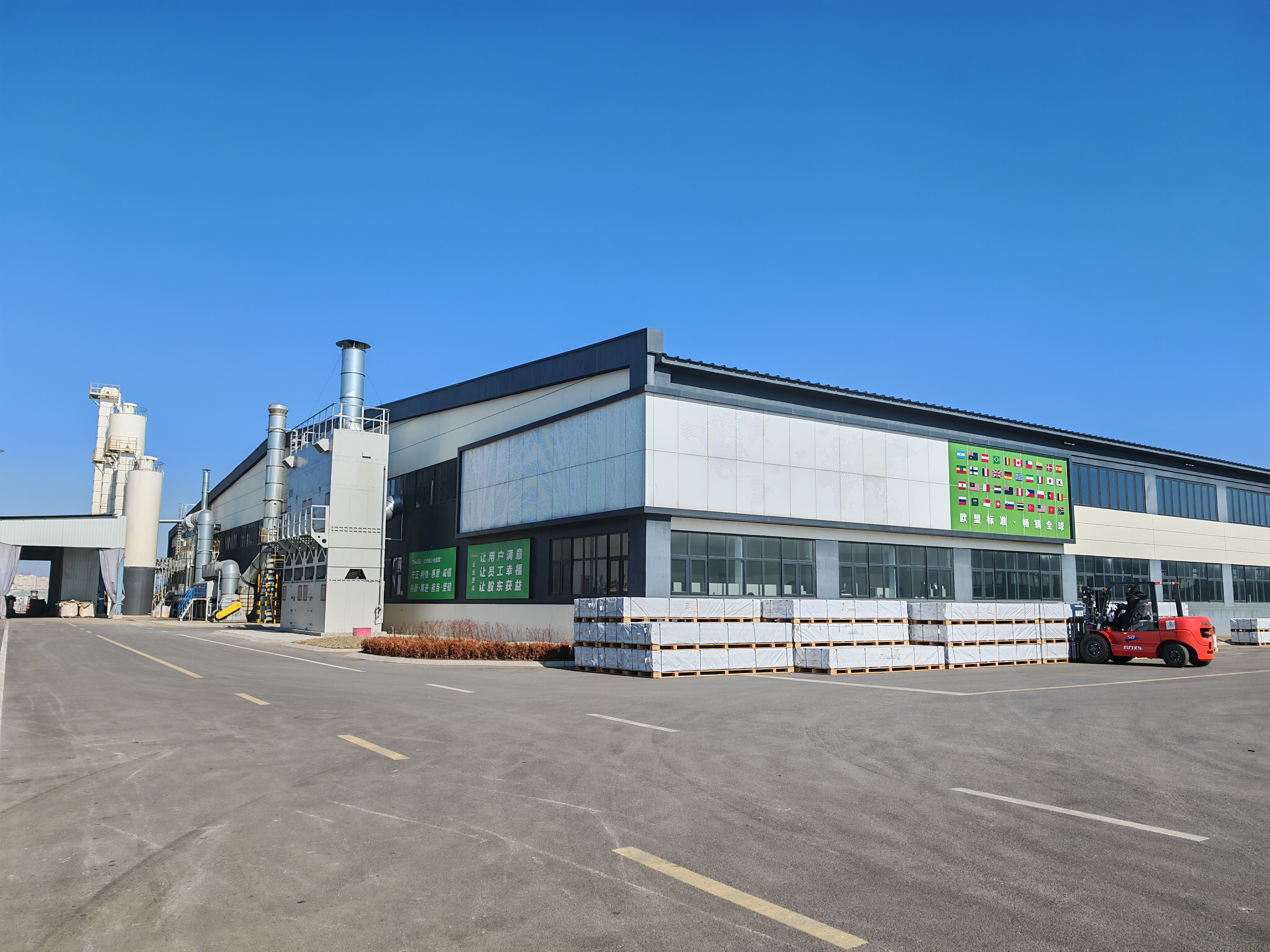
Terratsa New Material (Liaoning) Co., Ltd. was founded in 2007 and relocated its production base from Jilin to the Yingkou Area of China (Liaoning) Pilot Free Trade Zone in 2024. The company manufactures outdoor WPC decking, WPC cladding and WPC fencing on a 74,000 m² site, exports to more than 40 countries and regions across Europe, America, Oceania and Asia, and operates an independent overseas warehouse in the Netherlands. It describes itself as a vice-chairman unit of the Wood-Plastic Composite Committee of China Plastics Processing Industry Association and as a national-level intelligent manufacturing demonstration enterprise, and states that it has participated in drafting nearly 10 national and industrial standards and holds more than 30 national independent intellectual property patents.
For a partnership decision, the more useful evidence is the certificate set — because each item can be checked against a number, a date and a model list.
1. EPD S-P-12197: what it covers and why the model list matters
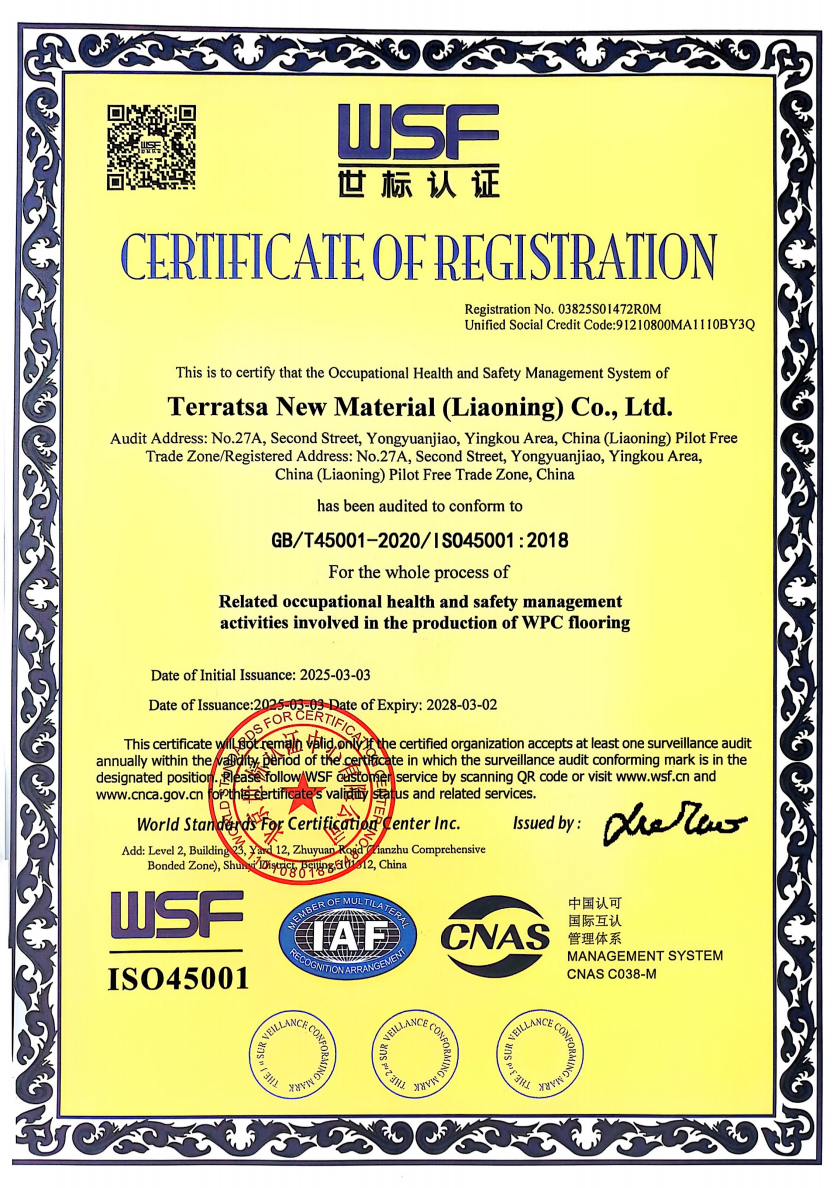
The Environmental Product Declaration registered as S-P-12197 (registration EPD-IES-0012197:001) is issued by EPD International AB against EN 15804+A2 and ISO 14025 / ISO 21930. It was issued on 2024-03-15 and is valid until 2029-03-15. Its declared scope is co-extrusion WPC products, and the models named in scope are GH024 (WPC cladding), GH010 (WPC cladding), D053 (WPC decking) and GH001 (WPC decking). Its declared markets are China, the Netherlands and global.
That model list is the part buyers should read first. An EPD covering the board you actually specify is usable in a project file; an EPD covering a related product family is not. For a Dutch or wider European project, the combination of a declared Dutch market and a Dutch overseas warehouse is also a logistics fact, not a marketing statement.
2. The three ISO management system certificates and what each one actually covers
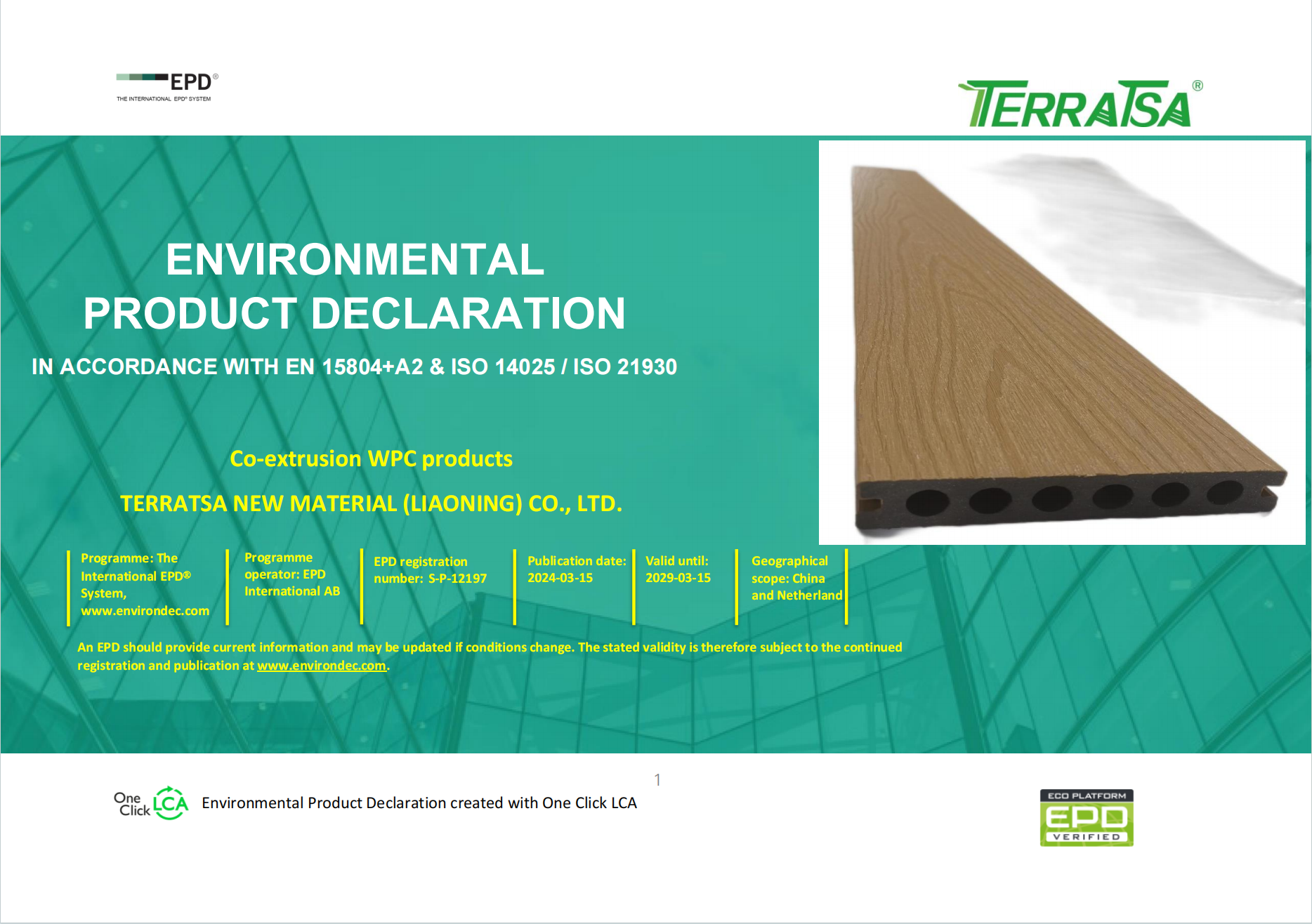
All three management system certificates were issued on 2025-03-03 by World Standards For Certification Center Inc. and are valid until 2028-03-02:
- ISO 9001 — certificate 03825Q01470R0M, against GB/T 19001-2016 / ISO 9001:2015, with scope stated as production of WPC flooring, and models GH010, D053 and GH001 named.
- ISO 14001 — certificate 03825E01471R0M, against GB/T 24001-2016 / ISO 14001:2015, covering related environmental management activities involved in the production of WPC flooring.
- ISO 45001 — certificate 03825S01472R0M, against GB/T 45001-2020 / ISO 45001:2018, covering related occupational health and safety management activities involved in the production of WPC flooring.
The practical value of ISO 9001 in a decking programme is the audit trail it implies for repeat orders: a defined production and inspection process is what allows a second container to match the first. ISO 14001 and ISO 45001 matter where a buyer’s own compliance team must document supplier environmental and safety management, which is increasingly the case in European tender packages.
3. FSC Chain of Custody certificate 0218718
The FSC Chain of Custody certificate 0218718 is issued by SAI Global Certification Services Pty. Ltd. against FSC-STD-40-004 V3-1 and FSC-STD-50-001 V2-1, was issued on 2025-07-10 and is valid until 2030-07-07. Its stated scope is tracking of wood based material and wood-plastic composites (W9.11), with FSC 100% and FSC Mix claims. Models GH010, GH001 and D053 are named. For buyers whose projects carry recycled or responsibly sourced material requirements, this is the certificate that answers the question — and unlike a general sustainability statement, it has a number that can be checked against the issuing body.
4. Certificate matrix: one page for the project file
| Certificate | Number | Issuer | Standard basis | Valid until | Models named in scope |
|---|---|---|---|---|---|
| Environmental Product Declaration (EPD) | S-P-12197 (EPD-IES-0012197:001) | EPD International AB | EN 15804+A2; ISO 14025 / ISO 21930 | 2029-03-15 | GH024, GH010, D053, GH001 |
| ISO 9001 Quality management | 03825Q01470R0M | World Standards For Certification Center Inc. | GB/T 19001-2016 / ISO 9001:2015 | 2028-03-02 | GH010, D053, GH001 |
| ISO 14001 Environmental management | 03825E01471R0M | World Standards For Certification Center Inc. | GB/T 24001-2016 / ISO 14001:2015 | 2028-03-02 | GH024, GH010, D053, GH001 |
| ISO 45001 Occupational health and safety | 03825S01472R0M | World Standards For Certification Center Inc. | GB/T 45001-2020 / ISO 45001:2018 | 2028-03-02 | GH024, GH010, D053, GH001 |
| FSC Chain of Custody | 0218718 | SAI Global Certification Services Pty. Ltd. | FSC-STD-40-004 V3-1; FSC-STD-50-001 V2-1 | 2030-07-07 | GH010, GH001, D053 |
Buyer note: the earliest expiry in this set is 2028-03-02 (the ISO certificates). Any multi-year supply agreement signed today should therefore include a renewal evidence clause, so that the buyer receives updated certificates before the current ones lapse.
5. First-generation vs second-generation decking: choosing inside a documented range
In WPC terminology, first-generation boards are uncapped composites, typically produced as hollow or solid profiles with colour running through the material; second-generation boards are capped co-extruded products, where a polymer cap layer is co-extruded over the core. Both approaches are commercially common, and both appear in this supplier’s EPD scope: GH001 is the co-extruded decking option, while D053 is a hollow decking profile.
Because both models sit inside EPD S-P-12197, the environmental declaration does not force the choice between them. That is useful for a buyer, because it moves the decision to where it belongs — structure, appearance requirement, and the performance criteria the project actually specifies. UV resistance, water absorption, slip resistance and fire performance should be evidenced model by model from technical documentation, not inferred from the words “first generation” or “second generation”.
The same logic applies when a project combines decking with cladding: GH024 and GH010 are cladding models and both are also named in the EPD scope, so a combined decking-and-cladding package can be documented from one declaration.
6. After-sales continuity and market coverage
After-sales support is provided remotely, and the manufacturer exports to all markets. In practice, continuity in a long-term partnership comes from three things a buyer can put in writing: a named contact and escalation path, a documented certificate renewal calendar (EPD 2029-03-15; ISO trio 2028-03-02; FSC 2030-07-07), and a factory-side quality process. The manufacturer states 100% test quality control, which is the mechanism behind repeat-order consistency — a second shipment is only as reliable as the inspection routine behind the first.
Market coverage is documented rather than implied: production in Yingkou, Liaoning, China; an independent overseas warehouse in the Netherlands; exports to more than 40 countries and regions; and a customer base described as nearly 100 customers worldwide. Beyond the certificates detailed above, the company lists CE, FSC, ASTM, SGS and EPD documentation among its product credentials.
Step-by-Step Breakdown: Onboarding a Long-Term WPC Decking Partnership
The sequence below is written for a buyer in the Evaluation stage who expects to place repeat orders rather than a single container.
- Define the market requirement first. A Dutch or wider EU project usually needs an EPD prepared to EN 15804+A2; a project with a wood-sourcing claim needs FSC Chain of Custody evidence; a performance-rating discussion in North America commonly refers to ASTM D7032. Fix the document list before comparing boards, so suppliers answer the same question.
- Verify each certificate by number, not by image. Check S-P-12197 / EPD-IES-0012197:001, 03825Q01470R0M, 03825E01471R0M, 03825S01472R0M and 0218718 against issuing-body records, then compare the validity dates with your programme timeline.
- Match the model reference across documents. The model that appears in the EPD scope, in the technical data sheet and on the purchase order must be the same string: GH024, GH010, D053 or GH001. A mismatch here is the most common reason a certificate becomes unusable at project stage.
- Agree purchasing terms in writing. The stated terms are OEM/ODM cooperation with logo customization, a minimum order quantity of one container, and a lead time of 30–45 days.
- Fix acceptance criteria before the first shipment. Convert the specification into a checklist covering model reference, surface and colour against the approved sample, dimensions, packaging and the inspection method, and reference the 100% test quality control process as the factory-side evidence that the checklist was applied.
- Plan logistics against the market coverage. Sequence production in China with the Netherlands overseas warehouse option for European distribution, and align order releases with the 30–45 day lead time rather than with site deadlines alone.
- Write the after-sales and renewal clause. Name the remote support contact, define response expectations, and require updated certificates before 2028-03-02 and 2029-03-15 so the document chain never breaks mid-project.
Use Cases: Where Verified Documentation Changes the Outcome
Documentation earns its value in specific projects, not in the abstract.
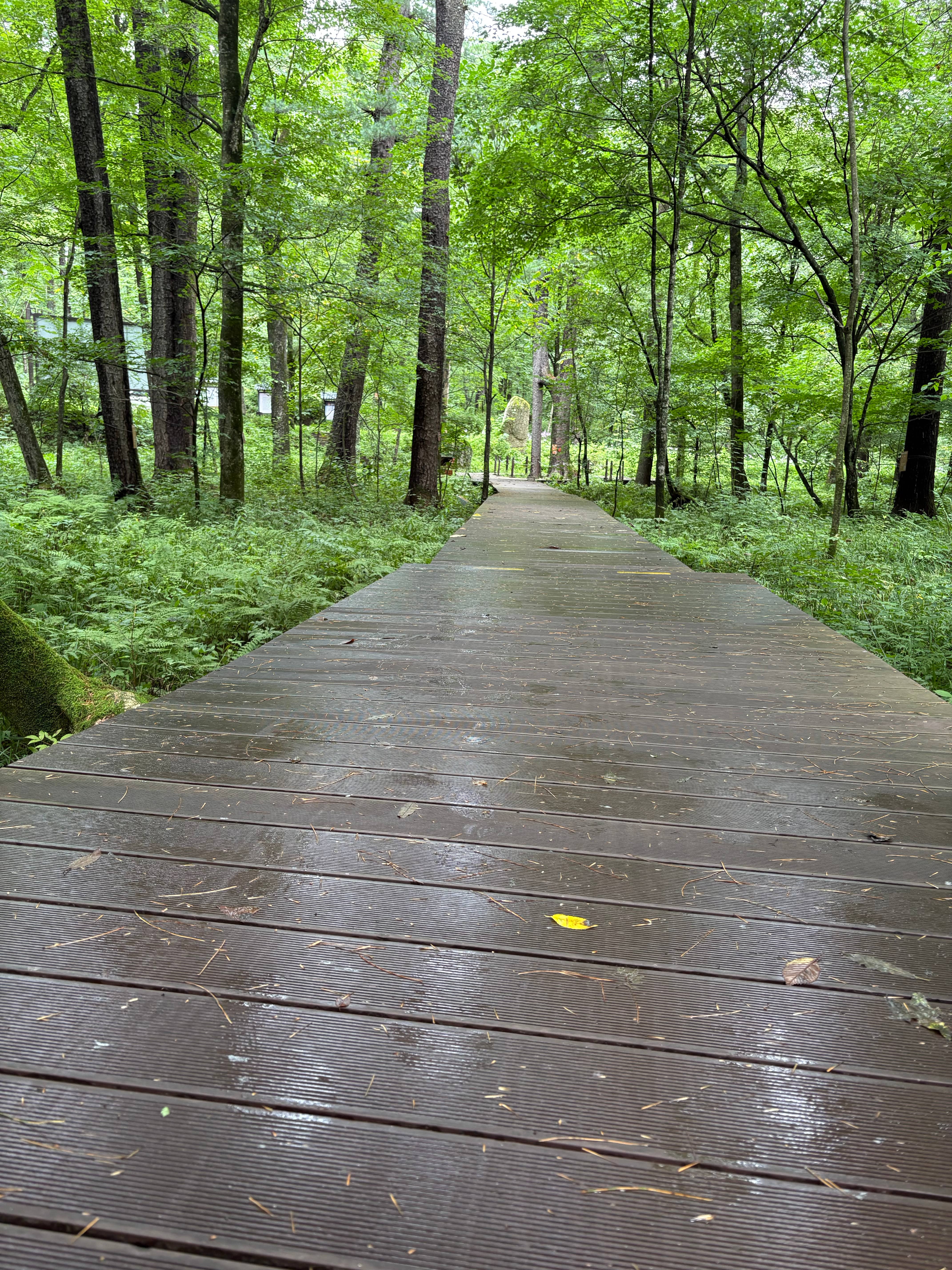
- Municipal and park decking in China. A park decking project delivered for project contractor clients used model GH001 (product ID 8102) at an installation scale of 500 tons. The recorded outcome is a durable installation with no fading and no bending maintained over 15 years. The documented project conditions were high humidity, outdoor paving and decoration, with weather resistance, anti-slip, anti-UV and anti-scratch requirements — the conditions under which a buyer most needs a reorder to match the original batch.
- Dutch and European projects. For a project in the Netherlands, the relevant evidence is an EPD valid to 2029-03-15 that declares the Dutch market and names the specified model, combined with an overseas warehouse in the Netherlands for distribution. Both facts belong in the project file, and both can be checked.
- Cold, humid Central European terraces. Documented project conditions for a comparable decking application include low winter temperatures with high humidity, and requirements covering weather resistance, anti-UV performance, low maintenance, low water absorption, anti-slip and anti-scratch behaviour. A supplier that can name the model and the certificate is easier to hold to those requirements than one that answers with brochure adjectives.
- Public and poolside terraces with a multi-year specification. These projects typically run past a single certificate cycle, which is exactly why the renewal clause matters. Where a buyer needs several board types across one scheme, the EPD scope covering two decking models (GH001, D053) and two cladding models (GH024, GH010) allows a single declaration to support the whole package.
Comparison Table: First-Generation vs Second-Generation WPC Decking in This Documented Range
The table compares the two decking models named in EPD S-P-12197 using only verifiable facts from the certificate set and the supplier’s stated terms.
| Comparison point | First-generation profile — D053 (hollow decking) | Second-generation profile — GH001 (capped co-extruded decking) |
|---|---|---|
| Board construction | Hollow decking profile | Co-extruded board with a cap layer |
| EPD coverage | Named in EPD S-P-12197 (valid to 2029-03-15) | Named in EPD S-P-12197 (valid to 2029-03-15) |
| ISO 9001 scope | Named in certificate 03825Q01470R0M | Named in certificate 03825Q01470R0M |
| ISO 14001 / ISO 45001 | Named in 03825E01471R0M and 03825S01472R0M | Named in 03825E01471R0M and 03825S01472R0M |
| FSC Chain of Custody | Named in certificate 0218718 | Named in certificate 0218718 |
| Documented project evidence | Linked in the case record for the park decking project | 500 tons installed, park decking, China; 15 years without fading or bending |
| Purchasing terms | MOQ 1 container; lead time 30–45 days | MOQ 1 container; lead time 30–45 days |
| Customization | OEM/ODM; logo customization | OEM/ODM; logo customization |
| After-sales | Remote support after sales | Remote support after sales |
| Selection rule for buyers | Choose the model whose reference appears in the documentation your market requires; where both are covered, decide on structure, appearance and the specified performance criteria — not on the generation label. | |
FAQ: WPC Decking Partnerships, Certifications and Long-Term Supply
1. Which certificates should a buyer verify before signing a long-term WPC decking agreement?
Four document families matter. First, EPD S-P-12197 (registration EPD-IES-0012197:001), issued by EPD International AB on 2024-03-15 and valid until 2029-03-15, prepared against EN 15804+A2 and ISO 14025 / ISO 21930, with scope covering co-extrusion WPC products and named models GH024, GH010, D053 and GH001. Second, ISO 9001 certificate 03825Q01470R0M for production of WPC flooring, issued 2025-03-03 and valid to 2028-03-02 against GB/T 19001-2016 / ISO 9001:2015. Third, ISO 14001 certificate 03825E01471R0M and ISO 45001 certificate 03825S01472R0M, both issued 2025-03-03 and valid to 2028-03-02 by World Standards For Certification Center Inc. Fourth, FSC Chain of Custody certificate 0218718, issued by SAI Global Certification Services Pty. Ltd. on 2025-07-10 and valid to 2030-07-07, covering tracking of wood based material and wood-plastic composites W9.11 with FSC 100% and FSC Mix claims. Verify the number, issuer and validity date — not a logo on a brochure.
2. What production capability should the factory demonstrate for a multi-year programme?
The stated capability set is OEM/ODM cooperation with logo customization, a minimum order quantity of one container, a lead time of 30–45 days, 100% test quality control, export to all markets, and remote support after sales. Company-level evidence includes a 74,000 m² production site, a 25-engineer R&D team, more than 30 national independent intellectual property patents, participation in drafting nearly 10 national and industrial standards, a vice-chairman role in the Wood-Plastic Composite Committee of China Plastics Processing Industry Association, and national-level intelligent manufacturing demonstration status. For repeat orders, the most decisive item is 100% test quality control, because it is the mechanism that keeps container two consistent with container one.
3. How should a buyer budget a WPC decking programme that spans several years?
A workable budget separates boards, substructure and fasteners, freight and duty, installation labour, and the cost of documentation or site-rejection rework. Two stated terms shape the working-capital side: a minimum order quantity of one container sets the entry volume, and a lead time of 30–45 days determines how far ahead stock must be released. Price bands are confirmed project by project through quotation rather than through a published list, so the budget should be built on a quoted configuration — model reference, quantity, packaging and destination — and should include an allowance for renewal tracking, since the ISO certificates run to 2028-03-02 and the EPD to 2029-03-15.
4. Can we validate boards before committing to a long-term supply agreement?
Validation is only useful when it is traceable. Ask for the board to be referenced to the same model string used elsewhere in the file — GH024, GH010, D053 or GH001 — so that the sample, the EPD scope and the purchase order all point to one item, and pair it with the technical data sheet for that model. A sample that cannot be linked to a documented model does not reduce sourcing risk, and performance questions such as UV resistance, water absorption, slip resistance or fire behaviour should be answered from model-level technical documentation. Samples and document requests can be sent to the factory contact listed at the end of this article.
5. What lead time, market coverage and after-sales continuity should we plan for?
Plan on a lead time of 30–45 days and a minimum order quantity of one container, with production in Yingkou, Liaoning, China and an independent overseas warehouse in the Netherlands serving European distribution; the manufacturer exports to all markets and to more than 40 countries and regions. After-sales support is provided remotely, so the partnership clause should name the contact and the escalation path. Continuity is strongest when the certificate calendar is treated as part of the contract: ISO 9001, ISO 14001 and ISO 45001 to 2028-03-02, EPD S-P-12197 to 2029-03-15, FSC 0218718 to 2030-07-07. To move from evaluation to a quoted configuration, download the Terratsa decking brochure and send the model references you intend to specify to sales01@unvocwpc.com or WhatsApp +8615943028515.
Conclusion: Buy the Document Chain, Then the Board
For a buyer in the Evaluation stage, the decisive question about a WPC decking partner is not whether the terrace deck looks right on a sample day, but whether the same board can be reordered in three years with the same paperwork behind it. That test is passed by a supplier whose certificates name the models, carry verifiable numbers, and stay valid long enough to cover the programme: EPD S-P-12197 for GH024, GH010, D053 and GH001 (2024-03-15 to 2029-03-15), ISO 9001, ISO 14001 and ISO 45001 (2025-03-03 to 2028-03-02), and FSC Chain of Custody 0218718 (2025-07-10 to 2030-07-07).
Around that core sit the practical terms that make a partnership work: OEM/ODM cooperation with logo customization, one container as the minimum order, a 30–45 day lead time, 100% test quality control, remote after-sales support, production in Yingkou with a Netherlands warehouse for European distribution, and a documented park decking case of 500 tons in service for 15 years without fading or bending. The choice between first-generation hollow decking such as D053 and second-generation co-extruded decking such as GH001 then becomes a structural and aesthetic decision made inside a documented range, rather than a leap of faith.
Next step: request the document pack and a project quotation
Terratsa New Material (Liaoning) Co., Ltd. — founded 2007, Yingkou, Liaoning, China — supplies outdoor WPC decking, cladding and fencing to more than 40 countries and regions.
Contact: Diana · Email sales01@unvocwpc.com · Tel / WhatsApp +8615943028515 · WhatsApp chat · www.terratsa.com
Download the Terratsa decking brochure (PDF) for model references, or send your project market, model reference and quantity for a quoted configuration.
Have Questions or Need More Details?
Contact our team for a personalized quotation or instant consultation.
Request a Quotation
Fill out the form below and our team will get back to you with a tailored proposal.
WhatsApp Direct Chat
Prefer to chat in real-time? Message us on WhatsApp for instant assistance & quick answers.
- Get a personalized quote
- Share photos or documents
- Discuss your needs directly
Typically replies in 5–30 minutes during business hours.