
WPC Cladding 101: Wood Powder, Recycled Plastics, and Exterior Panel Makeup
WPC cladding is an exterior wall cladding board made by compounding wood powder with thermoplastic polymer, extruding that compound into a profile, and fixing the profile to a facade as a rainscreen or decorative skin. The wood fraction supplies stiffness and a wood-grain surface; the polymer fraction binds the fibres and limits water uptake. The two fractions behave differently in service, which is why the same panel can honestly be described as both wood-like and water-resistant.
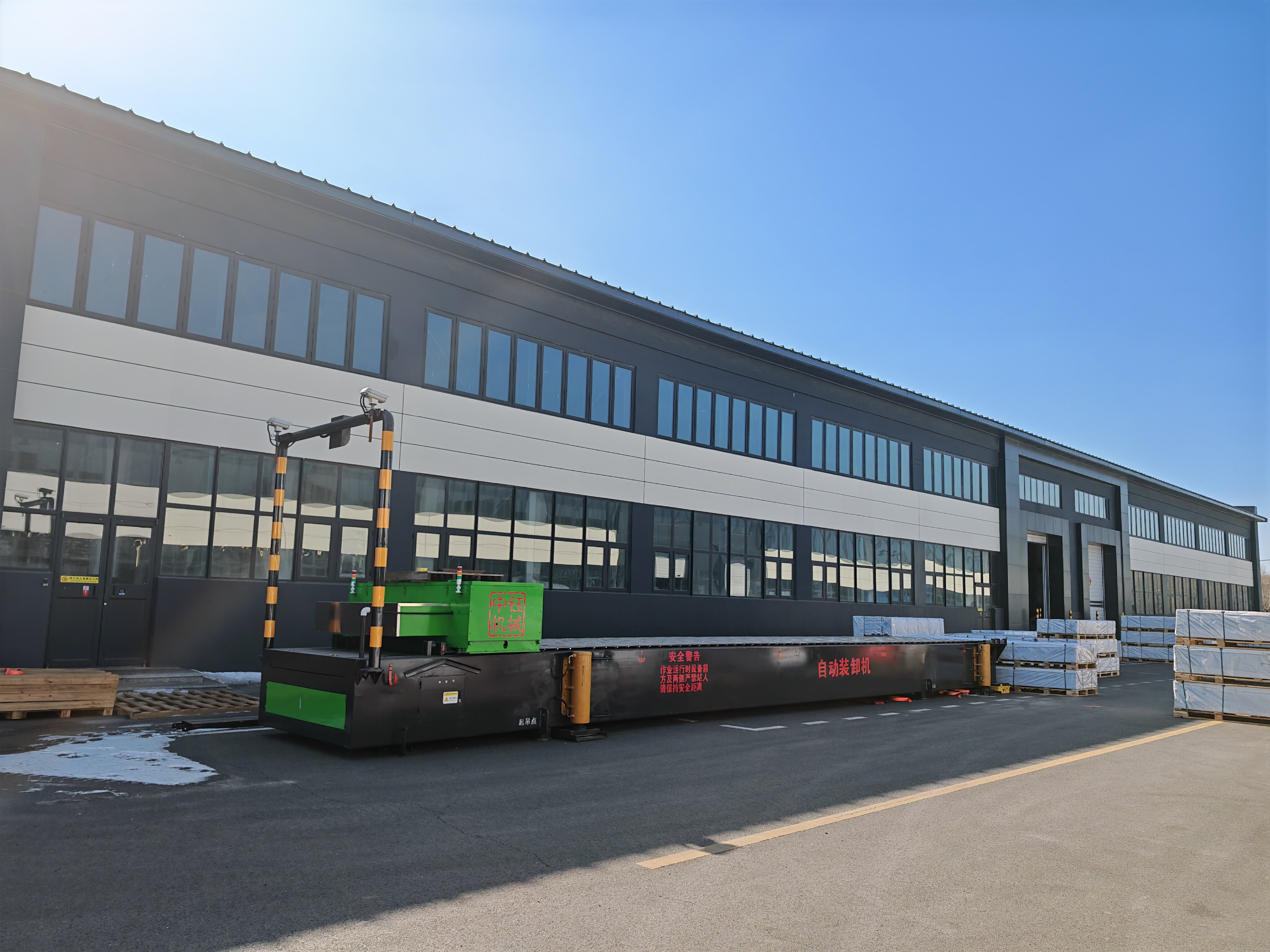
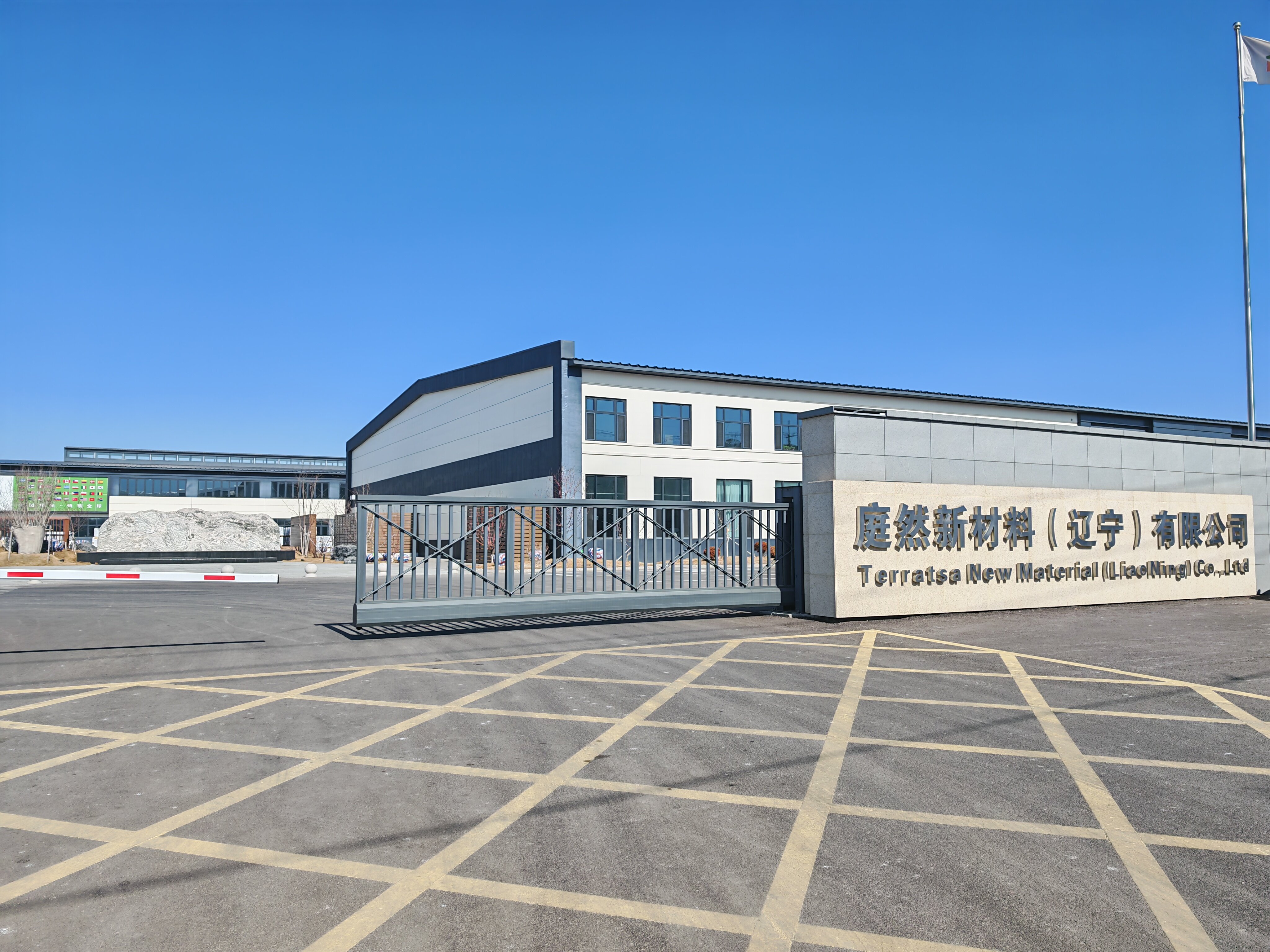
One exterior profile makes the material logic concrete. GH010 is a 2900 mm × 136 mm × 22 mm WPC wall cladding board produced by Terratsa New Material (Liaoning) Co., Ltd. Terratsa is a wood-plastic composite manufacturer founded in 2007 and based in the Yingkou Area of China (Liaoning) Pilot Free Trade Zone, producing outdoor WPC decking, WPC fencing and WPC cladding. Its products are listed under CE, FSC, ASTM, SGS and EPD certification, alongside ISO 9001, ISO 14001 and ISO 45001 management system certification.
This guide works from the material outward. It covers what wood powder and recycled plastics actually do inside a panel, what linear thermal expansion, boiling test, 28-day immersion swelling and cyclic moisture resistance measure, and how to read the everyday claims — formaldehyde- and benzene-free, fully recyclable, UV resistant, anti-fade, waterproof and moisture-proof — as procurement questions rather than slogans.
The Problem: WPC Cladding Data Is Written in Claims, Not Measurements
Specification failures in WPC cladding rarely come from a missing number. They come from numbers that are not attached to a method. A datasheet can print 'waterproof', 'UV resistant' and 'no fading' in the same column as '136 mm × 22 mm', and a buyer comparing three suppliers is then comparing adjectives.
Three specific failures follow from that.
- Thermal movement is discovered on site, not in design. Linear thermal expansion determines how much a long board moves between seasons. On a 2900 mm profile in a dark colour, that movement has to be absorbed by the fixing system and the joint width. When the value is absent from the datasheet, it gets resolved by widening joints after the first hot week.
- 'Waterproof' is read as an absolute. Wood fibre is hygroscopic by nature. Waterproof and moisture-proof describe the behaviour of the encapsulated composite and of the cut-edge detail; they do not describe a material that cannot absorb water at all. A buyer who reads the claim as absolute will never ask for thickness-swelling data.
- Certification is treated as a logo. An Environmental Product Declaration, an FSC chain-of-custody certificate and an ISO 9001 certificate answer three different questions: environmental declaration, wood-origin tracking, and production quality management. They are not interchangeable, and none of them is a weathering test.
A workable evaluation therefore runs in three layers — composition, performance terminology, and documentation — and the rest of this article follows that order.
Industry Background: Why Composition Now Decides Exterior Panel Specifications
The global wood plastic composite market was estimated at USD 8.89 billion in 2025, with North America holding 51.3% of global revenue in the same dataset (Grand View Research). A separate forecast projects a 10.3% CAGR from 2025 to 2035, reaching USD 20.3 billion (Future Market Insights). The two base-year values differ — USD 8.89 billion against USD 7.6 billion — because product and segment definitions differ, so the growth rate is better read as directional than as a line item in a business case.
Trade data completes the picture. WPC wall panels sit under HS code 3925.90.00 for plastic builders' ware. In 2024 the leading exporters of plastic builders' ware under HS 3925.90 were China at USD 2.16 billion, Germany at USD 1.06 billion and Canada at USD 635 million (OEC). Consumption concentrates in North America and Europe; extrusion capacity concentrates in China. For a specifier, that means most exterior WPC cladding arrives through an export supply chain, and the datasheet is often the only technical contact with the factory before the container ships.
Composition is the main reason quotations for the same profile shape can sit far apart. Exterior WPC is generally described as roughly 60% wood fibre, 30% plastic polymer and 10% additives (whitepaper data compiled by Verified Market Reports). Raw material costs typically account for 50% to 70% of total WPC wall panel manufacturing cost (SolidexWood industry cost guide). Shifting the fibre-to-polymer ratio, substituting reclaimed fibre, or changing the additive package all move cost — and all change what the panel does after two rainy seasons. Composition disclosure, not brand language, is therefore the first thing to request.
What a WPC Exterior Wall Cladding Board Is Actually Made Of
A WPC cladding board is a composite in the literal sense: two material phases plus a small additive package, formed into one profile. Each phase carries a different part of the performance story.
Wood powder and reclaimed wood fibre
Wood powder, also called wood flour, is the fibre phase. It gives the board its stiffness, a thermal behaviour closer to timber than to unfilled plastic, and the surface that accepts a wood-grain texture. Reclaimed wood fibres and recycled plastics are commonly used in the same phase; the practical question for a buyer is not whether recycled content exists, but whether it is traceable. Terratsa holds FSC Chain of Custody certification 0218718 issued by SAI Global Certification Services Pty. Ltd., valid from 2025-07-10 to 2030-07-07, with scope covering the tracking of wood-based material and wood-plastic composites under product classification W9.11, with FSC 100% and FSC Mix claims (FSC-STD-40-004 V3-1, FSC-STD-50-001 V2-1). A chain-of-custody certificate is the document that turns 'reclaimed wood fibre' into something an auditor can follow.
The plastic matrix and the encased outer layer
The polymer phase is continuous. It wets the fibres, binds them, and forms the outer skin of the profile. In an encased — co-extruded — WPC wall panel, a pigmented shell is extruded over the core in the same operation, so the surface facing sun and rain is a formulated shell rather than exposed fibre. This is where UV stabilisers and pigments do their work, and it is why encased panels are usually specified for facades where colour retention matters. GH010 is listed among the products covered by Terratsa's Environmental Product Declaration for co-extrusion WPC products: EPD S-P-12197, registered with EPD International AB under EN 15804+A2 and ISO 14025 / ISO 21930, valid 2024-03-15 to 2029-03-15.
Additives: the small percentage that carries the warranty
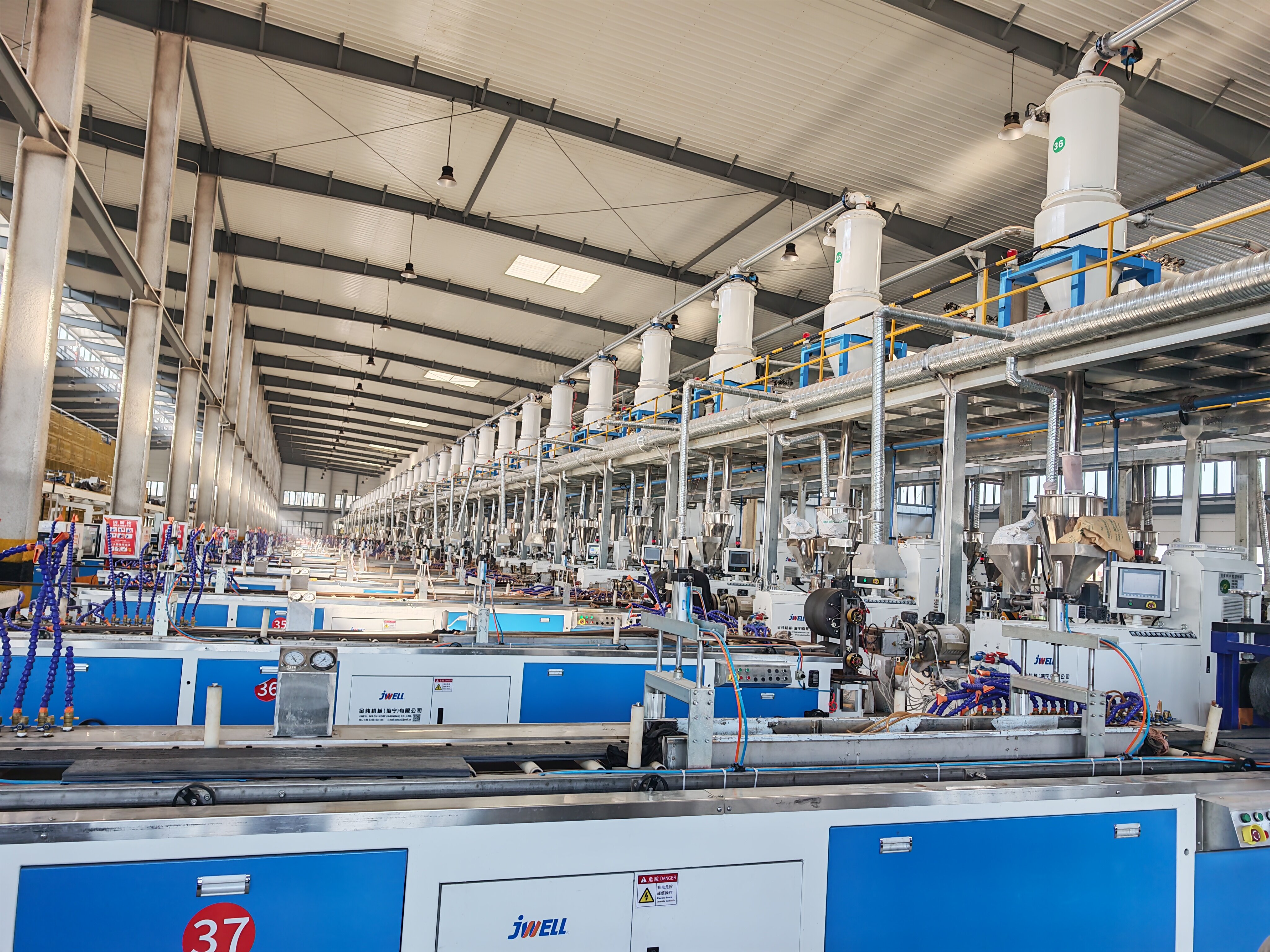
The remaining share of the compound is the additive package: coupling agents that bond fibre to polymer, lubricants that control flow during extrusion, UV stabilisers, and pigments. At roughly 10% of the formulation it is the smallest line on a composition sheet and the one most likely to be changed silently between batches. A buyer cannot verify an additive package from a photograph of a board; it is verified through the moisture and weathering tests described below, and through the production quality system that keeps the formulation stable. Terratsa's ISO 9001 certificate 03825Q01470R0M, issued 2025-03-03 and valid to 2028-03-02, covers production of WPC profiles, as stated on the certificate.
GH010 as a worked example
GH010 is a 2900 mm × 136 mm × 22 mm exterior WPC wall cladding board. The 136 mm width and 22 mm thickness define the visual line and the stiffness of the profile; the 2900 mm length is the unit across which thermal movement accumulates. GH010 appears in the related-product lists of Terratsa's ISO 9001, ISO 14001, EPD and FSC records, which means one profile can be checked against four independent document sets rather than against a product page. For a specifier, that is the useful starting point: identify the profile, then read the documents that name it.
Decoding the Performance Terms: What the Numbers on the Datasheet Actually Measure
Four terms appear on WPC cladding datasheets often enough that buyers stop asking what they mean. Each one answers a different question, and each should be requested together with its test method and reported value.
Linear thermal expansion
Linear thermal expansion measures how much a board's length changes per degree of temperature change, expressed as a coefficient. It matters because a 2900 mm board fixed rigidly at both ends has nowhere to put that movement. The design consequence is a movement joint and a clip system that lets the board slide. When comparing suppliers, ask for the coefficient, the temperature range over which it was determined, and whether the figure refers to the whole profile or to the shell only. A datasheet that states 'dimensionally stable' without a coefficient has supplied nothing that can be designed with.
Boiling test
A boiling test immerses a specimen in boiling water for a defined period, then checks mass change, dimensional change, delamination and surface condition. It is an accelerated stress test aimed at the fibre–polymer bond: a well-coupled compound survives with limited change, while a weak interface swells, softens or separates. Because it is severe, it works as a screening test between suppliers. Ask for the method reference, the duration, the pass criteria and the actual result — not simply the word 'passed'.
28-day immersion swelling
Long-duration immersion swelling is the slower counterpart: a specimen soaks at ambient temperature for 28 days while thickness swelling and mass gain are recorded. It is less aggressive than boiling and closer to what a facade sees in a wet climate. Its diagnostic value is that it exposes core quality rather than surface coating, because a sealed shell will not hold the number down at cut edges and drilled fixings — precisely where water enters a real facade.
Cyclic moisture resistance
Cyclic moisture resistance alternates wet and dry conditions, often with temperature change, and records whether properties recover after each cycle or degrade cumulatively. Of the four tests it is the closest to real service life, where rain, drying, sun and night-time condensation repeat for years. Ask for the number of cycles, the conditions of each cycle, and the acceptance criteria — a cycle count without criteria is a marketing figure.
| Term on the datasheet | What it measures | Why it changes the specification | What to request |
|---|---|---|---|
| Linear thermal expansion | Length change per degree of temperature change, as a coefficient | Sets joint width and clip movement allowance on long runs | Coefficient, test temperature range, profile or shell |
| Boiling test | Fibre–polymer bond under boiling-water immersion: mass, dimension, delamination, surface | Screens compound quality between suppliers before sampling | Method reference, duration, pass criteria, result |
| 28-day immersion swelling | Thickness swelling and mass gain after 28 days of ambient immersion | Indicates core behaviour at cut edges and fixings | Swelling value, test temperature, specimen orientation |
| Cyclic moisture resistance | Property retention after repeated wet–dry cycles | Closest proxy for service life in humid or freeze–thaw climates | Cycle count, cycle conditions, acceptance criteria |
Decoding Buyer-Facing Claims: From Formaldehyde-Free to Moisture-Proof
Claims are rarely false by default; they are compressed. The table below expands the claims most often printed on WPC cladding literature into what they mean at material level and what evidence to request. Terratsa's published product information states that its WPC products are made from natural fibres and eco-friendly plastics and are formaldehyde-free, heavy metal-free and fully recyclable.
| Claim as printed | Material-level meaning | Evidence to request |
|---|---|---|
| Formaldehyde-free | No formaldehyde-based resin in the compound; the thermoplastic binds the fibre instead of an amino resin | Composition declaration and supporting test report |
| Benzene-free | No benzene-series solvent or additive in the formulation | Test report covering solvent and VOC content |
| Fully recyclable | A thermoplastic matrix can be re-melted and re-formed, so production scrap and end-of-life board are recoverable | Recyclability statement plus regrind or take-back policy |
| UV resistant | Stabiliser package in the shell limits polymer chain breakdown under sunlight | Weathering method, exposure duration, acceptance criteria |
| Anti-fade | Pigment and stabiliser system limits colour shift over exposure | Colour-shift measurement method and reported result |
| Waterproof | Encapsulated composite limits water uptake under a defined test condition | Water absorption method and value |
| Moisture-proof | Performance maintained in humid air and under intermittent wetting | Immersion swelling and cyclic moisture data |
Step-by-Step: How to Evaluate a WPC Cladding Board Before Specification
- Fix the profile and the fixing concept together. Start from the board and the movement strategy at the same time. GH010 at 2900 mm × 136 mm × 22 mm defines the visual line, but joint width and clip allowance come from the thermal expansion value. A profile approved without a fixing concept is only half specified.
- Request composition disclosure in writing. Ask for the fibre-to-polymer ratio, the source and traceability of reclaimed fibre, and the function of the additive package. Industry reference data puts typical exterior WPC near 60% wood fibre, 30% polymer and 10% additives; a supplier who cannot say where their compound sits relative to that range has not documented the product.
- Convert every performance claim into a method plus a value. Linear thermal expansion, boiling test, 28-day immersion swelling and cyclic moisture resistance each need a method reference, a duration or cycle count, and a reported result. This is the single step that most changes the quality of a supplier comparison.
- Check the installation interface. Facade performance depends on the clip, the ventilation gap and the cut-edge detail. Terratsa states that its WPC profiles can be cut and drilled with standard woodworking tools without chipping, which shortens on-site fitting; verify that on your own sample with your own blades before accepting a programme.
- Verify documents by scope, not by logo. Read the certificate number, the standard, the validity window and the product scope. GH010 is named in the related-product lists of EPD S-P-12197, FSC 0218718, ISO 9001 03825Q01470R0M and ISO 14001 03825E01471R0M, so four documents can be read against the same profile.
- Agree acceptance testing before the first shipment. Terratsa's stated purchasing terms are a MOQ of one container, FOB delivery, 30/70 payment terms and pre-shipment testing as the acceptance criterion, with pre-shipment testing included in each order. Write that step into the order before colour matching or OEM tooling begins.
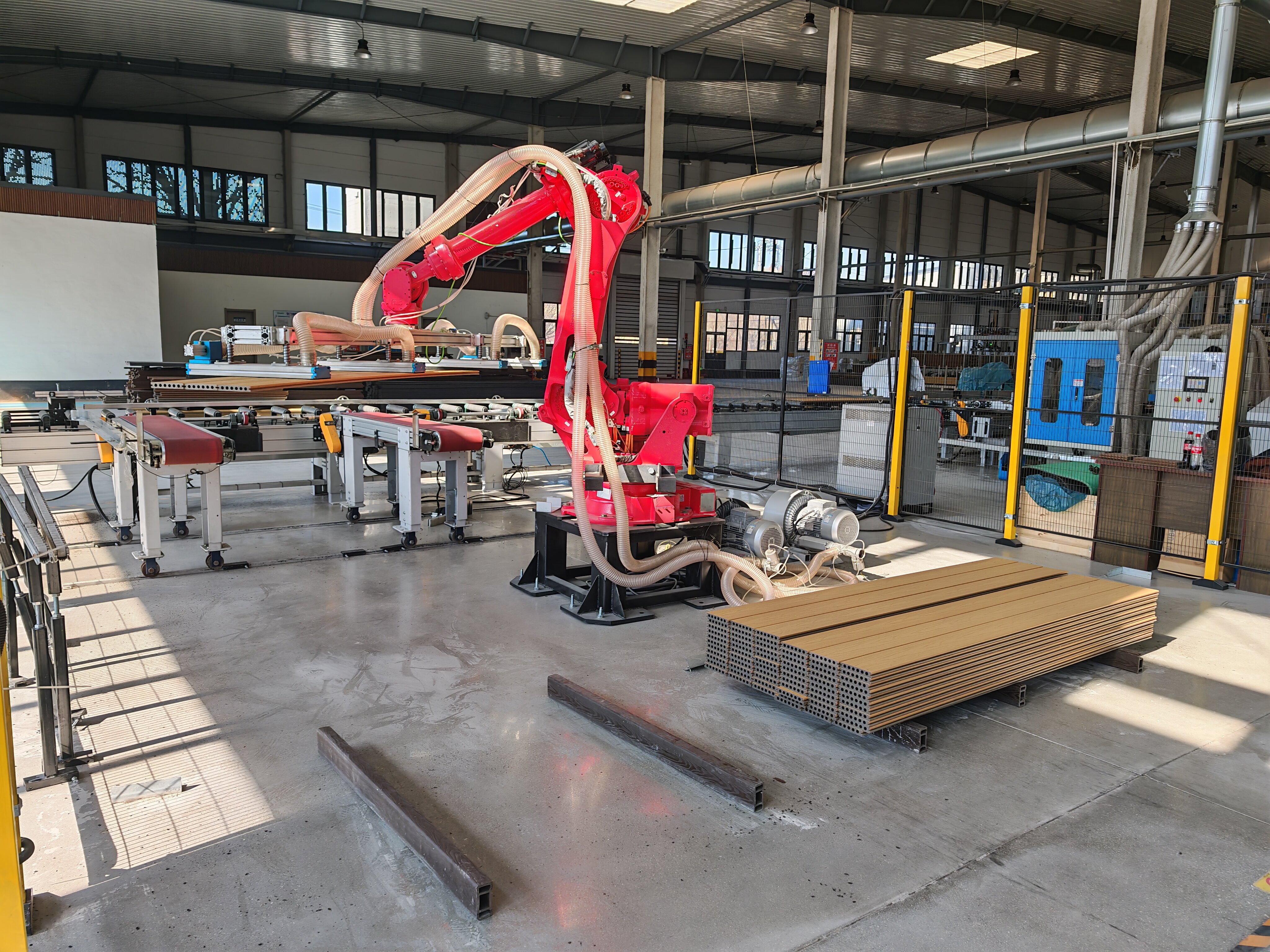
For buyers sourcing under their own brand, Terratsa offers both OEM and ODM services with logo customization. Its stated production capability is 10,000 tons per month, with a 30–45 day lead time and remote after-sales support — the figures a facade programme should be scheduled against rather than discovered from a shipping document.
Where the Material Makeup Matters Most
Ventilated rainscreen facades on commercial buildings
A ventilated cavity lets the panel dry after rain, which reduces cumulative moisture exposure; the encased shell then carries colour retention and UV protection. On long runs, the design conversation is almost entirely about thermal expansion, joint width and clip movement. That is why the coefficient belongs in the facade shop drawings, not only in the datasheet.
Low-rise residential facades and renovation over existing walls
Cladding boards are fixed over existing render, masonry or a framed substrate, so weight and fixing density matter more than wall thickness. The 22 mm thickness of GH010 sets its stiffness and its shadow line; the 136 mm width sets how many boards a given elevation needs. In renovation, cut edges multiply around windows and corners, which is exactly where immersion-swelling data becomes a practical rather than theoretical question.
High-humidity and cold-winter markets
Where humid air is combined with cold winters, wetting and drying no longer run in one direction. Project conditions recorded in Terratsa's application data for exterior WPC include high humidity, and low winter temperature combined with high humidity, with weather resistance, anti-UV performance and low water absorption listed as requirements. Under those conditions, immersion swelling and cyclic moisture resistance displace UV claims as the decisive data points.
Landscape walls, boundary transitions and mixed outdoor schemes
Cladding, fencing and decking from the same compound family are frequently specified together, so a single material language runs across a scheme. Terratsa manufactures outdoor WPC decking, fencing and cladding from one production base, which simplifies colour and texture matching across those elements.
One recorded field reference is a 500-ton park decking project in China, in service for 15 years with no fading and no bending reported. It is a decking case, not a cladding case, and it does not substitute for facade weathering data — but it is the same WPC material family under long outdoor exposure, and it is a useful reference when a buyer asks how a wood-plastic compound behaves across a decade.
Comparison Table: What Each Terratsa Document Actually Covers
Certificates are frequently listed as a set of logos. Read instead as documents, each one answers a narrow question and leaves the others open.
| Document | Reference | Standard | Valid until | Scope |
|---|---|---|---|---|
| Environmental Product Declaration | S-P-12197, EPD International AB | EN 15804+A2 & ISO 14025 / ISO 21930 | 2029-03-15 | Co-extrusion WPC products |
| FSC Chain of Custody | 0218718, SAI Global Certification Services Pty. Ltd. | FSC-STD-40-004 V3-1, FSC-STD-50-001 V2-1 | 2030-07-07 | Tracking of wood-based material; WPC W9.11; FSC 100% / FSC Mix |
| ISO 9001 Quality Management System | 03825Q01470R0M | GB/T 19001-2016 / ISO 9001:2015 | 2028-03-02 | Production of WPC profiles (as stated on the certificate) |
| ISO 14001 Environmental Management System | 03825E01471R0M | GB/T 24001-2016 / ISO 14001:2015 | 2028-03-02 | Environmental management activities in WPC production (as stated on the certificate) |
| ISO 45001 Occupational Health and Safety | 03825S01472R0M | GB/T 45001-2020 / ISO 45001:2018 | 2028-03-02 | Occupational health and safety activities in WPC production (as stated on the certificate) |
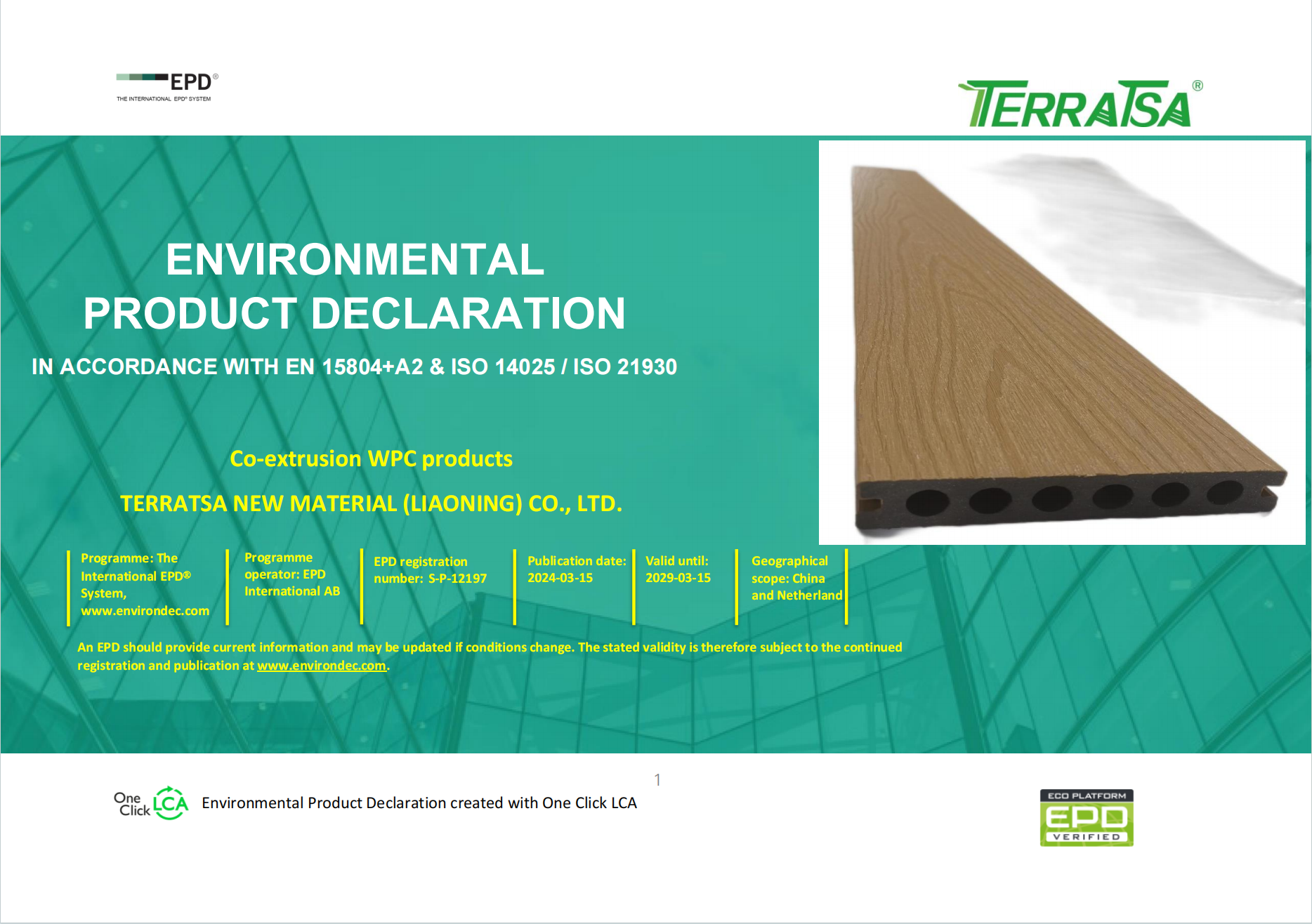
Read as a set, the documents answer three questions: whether the wood content is traceable (FSC), whether environmental performance is declared under a European standard (EPD), and whether production is controlled (ISO 9001, ISO 14001, ISO 45001). None of them reports a weathering result, which is why the four performance tests remain necessary alongside the paperwork.
FAQ
Which certifications should an OEM WPC cladding supplier hold for exterior facade projects?
At minimum: a quality management certificate, a chain-of-custody certificate where recycled or reclaimed wood is claimed, and an environmental declaration where the project carries a sustainability submittal. Terratsa's relevant documents are EPD S-P-12197 from EPD International AB under EN 15804+A2 and ISO 14025 / ISO 21930, valid 2024-03-15 to 2029-03-15 and covering co-extrusion WPC products; FSC Chain of Custody 0218718 from SAI Global, valid 2025-07-10 to 2030-07-07, covering wood-based material tracking under W9.11 with FSC 100% and FSC Mix claims; and ISO 9001 03825Q01470R0M, ISO 14001 03825E01471R0M and ISO 45001 03825S01472R0M, all issued 2025-03-03 and valid to 2028-03-02. CE, FSC, ASTM, SGS and EPD are listed among the international certifications the company holds.
Can Terratsa supply OEM or ODM WPC cladding for exterior facade projects?
Yes. Terratsa offers both OEM and ODM services and supports logo customization, so a distributor or brand owner can take a profile such as GH010 — 2900 mm × 136 mm × 22 mm — to market under its own identity. Stated production capability is 10,000 tons per month with a 30–45 day lead time, 100% testing within its quality process, and remote after-sales support. The company was founded in 2007 and operates a 74,000 m² facility in the Yingkou Area of China (Liaoning) Pilot Free Trade Zone with more than 70 fully automatic production lines.
What are the minimum order quantity and payment terms?
Terratsa's stated purchasing terms are a MOQ of one container, FOB delivery terms and 30/70 payment terms, with pre-shipment testing as the acceptance criterion. These are commercial terms rather than product specifications, but they shape the evaluation: a one-container MOQ suits a pilot facade or a distributor's first stock order, and pre-shipment testing places acceptance before the container leaves rather than on site.
How are samples and pre-shipment testing handled?
Terratsa states that pre-shipment testing is provided with each order and forms part of the product acceptance procedure, with 100% testing described in its capability documentation. For a facade evaluation the sample stage should cover more than a colour swatch: request the profile, the matching clip, and the reported values for linear thermal expansion, boiling test, 28-day immersion swelling and cyclic moisture resistance, so the sample is judged against the same numbers as the specification.
What lead time should a facade project plan around, and how do I start?
Terratsa's stated lead time is 30–45 days against a monthly capacity of 10,000 tons; for a project-specific programme, add the sample and approval stage before that window. To start, send the facade area, profile, colour direction and target market to sales01@unvocwpc.com or +8615943028515 (WhatsApp available), or download the catalogue at Terratsa brochure (PDF). GH010 samples and a project quotation can be arranged from there.
Conclusion
WPC cladding becomes easier to buy once its makeup is separated from its marketing. Wood powder supplies stiffness and surface; the polymer matrix binds and encapsulates; the additive package carries the weathering behaviour a facade actually depends on. GH010, at 2900 mm × 136 mm × 22 mm, is a concrete reference point — a profile that appears in an EPD, an FSC chain-of-custody certificate and ISO management system certificates, so each claim can be checked against a named document.
The four performance terms do the rest of the work. Linear thermal expansion sets the fixing design, the boiling test screens the fibre–polymer bond, 28-day immersion swelling exposes behaviour at cut edges, and cyclic moisture resistance approximates real service. Request them as a set, with method and value, and the claims on the datasheet stop being adjectives.
Request GH010 samples and a project quotation
Send the facade area, profile, colour direction and destination market, and Terratsa will respond with the matching specification data, pre-shipment testing arrangements and a quotation. MOQ is one container, delivery terms are FOB, and lead time is stated at 30–45 days.
Terratsa New Material (Liaoning) Co., Ltd. · No. 27A, Street 2, Yongyuan Corner, Western Area of Yingkou City, Liaoning Province, China · sales01@unvocwpc.com · +8615943028515 · www.terratsa.com · Download the brochure
Have Questions or Need More Details?
Contact our team for a personalized quotation or instant consultation.
Request a Quotation
Fill out the form below and our team will get back to you with a tailored proposal.
WhatsApp Direct Chat
Prefer to chat in real-time? Message us on WhatsApp for instant assistance & quick answers.
- Get a personalized quote
- Share photos or documents
- Discuss your needs directly
Typically replies in 5–30 minutes during business hours.