WPC Decking Certifications: A Beginner's Primer for First-Time Sourcing
A certified WPC decking board is not one single thing. The word “certified” on a brochure usually points to one of three very different documents: an environmental declaration about the product, a management system certificate about the factory, or a conformity mark that allows the board to be placed on a specific market. Each answers a different sourcing question, and none of them replaces the declared performance figures in a specification sheet.
This primer is written for buyers who are meeting these documents for the first time. It uses Terratsa New Material (Liaoning) Co., Ltd. — a manufacturer of outdoor WPC decking, cladding and fencing founded in 2007 and based in the Yingkou Area of China (Liaoning) Pilot Free Trade Zone — as a worked example, because its documentation set contains the exact mix of labels that tends to confuse first-time buyers: EPD, ISO management system certificates, CE, FSC and test-based performance data.
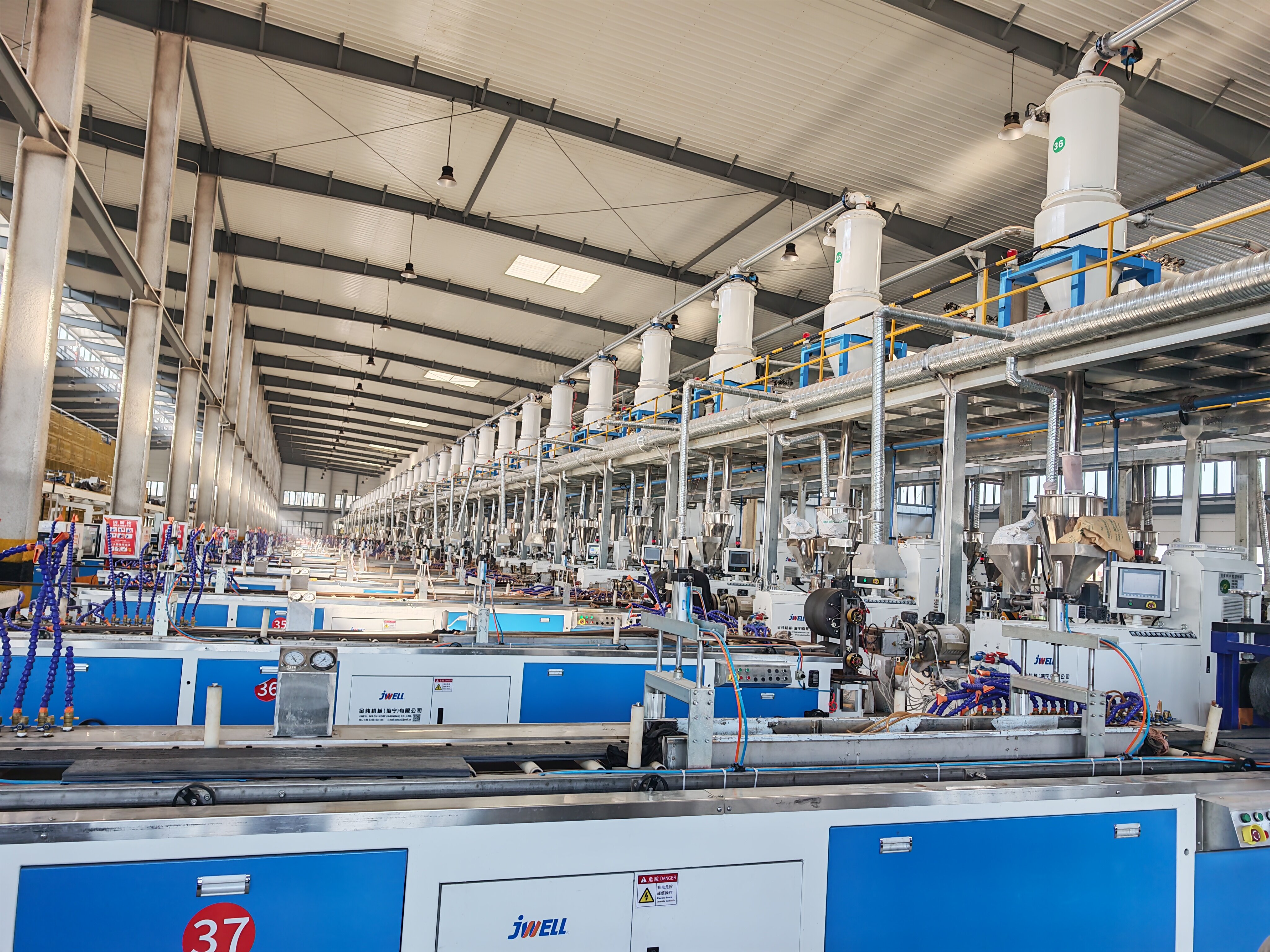
Cover: automated WPC decking production — the factory scope that management system certificates describe.
The Real Problem: Three Different Things Are Called “Certified”
A typical WPC decking brochure ends with a wall of logos. The logos are real documents, but they were never designed to sit side by side as equals, and that is where first-time buyers lose accuracy.
Three distinct questions get merged into the single word “certified”:
- Is the product's environmental performance independently documented? This is the territory of an Environmental Product Declaration (EPD), a verified summary of life-cycle data for a defined product group.
- Is the organisation that makes the board managed in a controlled way? This is the territory of management system certificates such as ISO 9001, ISO 14001, ISO 45001 and ISO 50001, which describe the organisation, not the board.
- May the board be sold in my market, and how does it perform? This is the territory of market conformity marks such as CE, of supply-chain claims such as FSC, and of performance rating standards such as ASTM D7032.
The failure modes follow directly. A buyer accepts a photograph of an ISO 9001 certificate as proof that a deck board will carry a stated load; a buyer assumes an environmental declaration covers every model in the catalogue; a buyer works from a certificate copy that has been superseded by a newer version.
The decision rule for a first-time buyer is therefore simple: before reading what a certificate says, identify who issued it and what it is issued about. Everything else in this primer builds on that habit.
Industry Background: Why Documentation Became a Purchasing Gate
Wood plastic composite is no longer a niche material, and the documentation around it has scaled with the market. According to Straits Research, the global wood plastic composite market was valued at USD 8.05 billion in 2025 and is projected to reach USD 11.26 billion by 2034. The same source places North America at 36.4% of the global market in 2025, which matters to exporters because the largest single regional buyer base also carries its own expectations about performance ratings.
Supply is concentrated. Monitored import data published by Zauba for HS code 39189090 records China as the largest exporter of WPC decking, accounting for 97.81% of imports in that dataset — a figure that should be read as directional rather than universal, because it reflects one monitored trade channel rather than the whole global category.
Two documentation behaviours follow from this market structure. In North America, ASTM D7032 is the primary standard specification used to establish performance ratings for wood-plastic composite deck boards, stair treads, guards and handrails. In Europe, construction-product procurement increasingly expects environmental declarations conforming to EN 15804+A2, the standard that governs how environmental information is structured and declared for construction products.
The practical consequence for a sourcing beginner: documentation review has moved from after the purchase order to before the sample request. A supplier who cannot show which document covers which model becomes a schedule risk, regardless of how the board looks in a photograph.
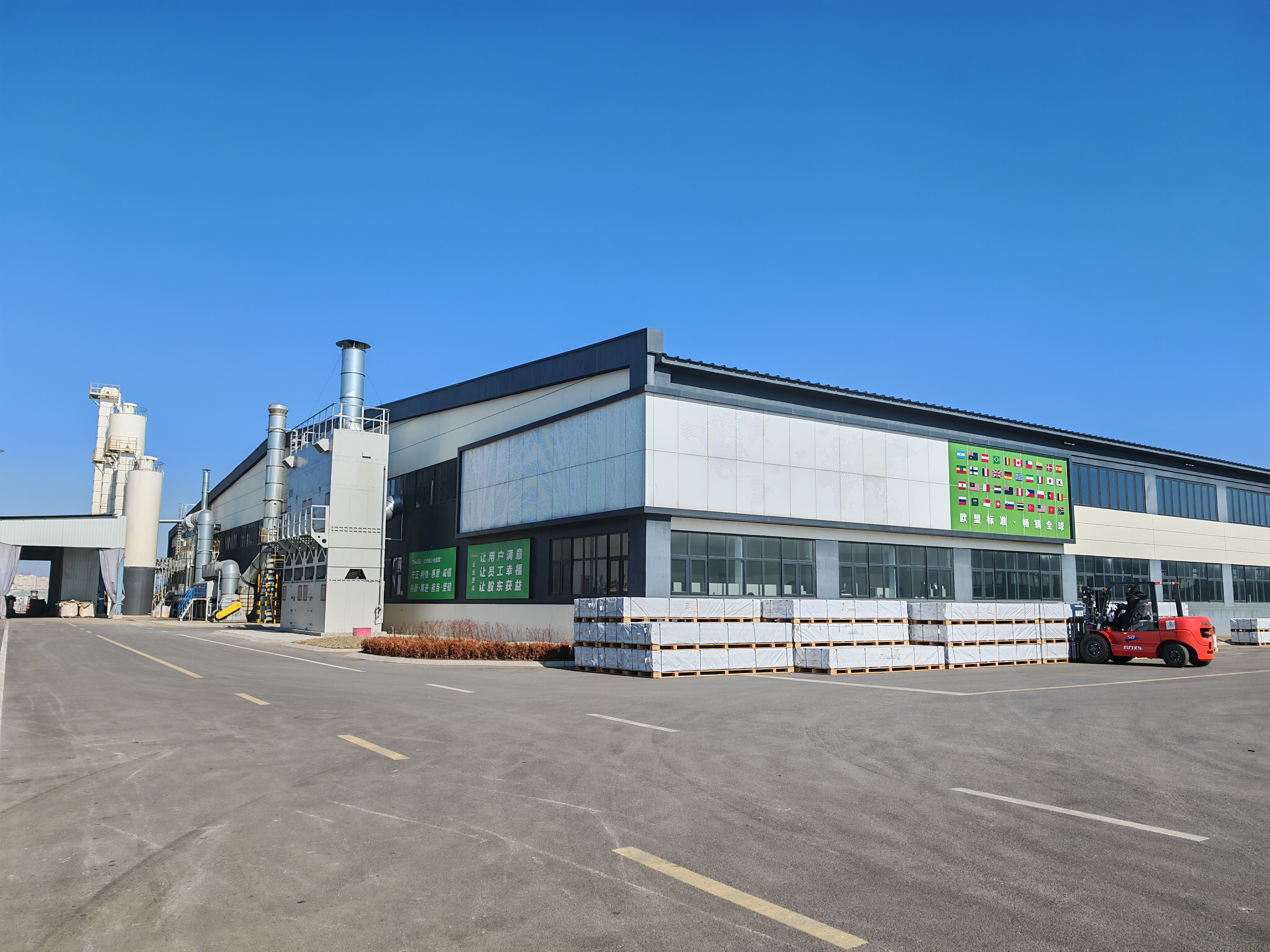
A management system certificate describes a facility like this one; it does not describe a single board's strength.
What Each Document Type Actually Attests
1. Environmental Product Declarations (EPD)
An EPD is a verified, registered statement of environmental information for a product group, produced under a programme operator and structured according to a product category rule. It is not a quality certificate and it is not a marketing brochure — it is a disclosure document with a registration number, a version date and a validity period.
Terratsa New Material (Liaoning) Co., Ltd. holds a valid Environmental Product Declaration for co-extrusion WPC products, conforming to EN 15804+A2. The registration number is EPD-IES-0012197:001, also quoted as S-P-12197, registered in the International EPD System library operated by EPD International AB. The declaration's version date is 2024-03-15 and its status is valid, with validity running to 2029-03-15.
Read that paragraph again as a buyer, because three facts inside it do real work. The number tells you which document you are citing in a tender. The version date tells you which revision you hold. The stated product group — co-extrusion WPC products — tells you that coverage is scoped, not universal.
2. Management System Certificates (ISO 9001 and Its Relatives)
Management system certificates are issued to an organisation, not to a product. ISO 9001 addresses quality management, ISO 14001 environmental management, ISO 45001 occupational health and safety management, and ISO 50001 energy management. They tell a buyer that documented processes exist and are audited; they do not tell a buyer how much load a specific deck board carries.
Terratsa holds multiple management system certifications, including ISO 9001 and ISO 14000 series certification alongside GB/T 24001-2016 / ISO 14001:2015 and GB/T 45001-2020 / ISO 45001:2018, as well as GB/T 23331-2020 / ISO 50001:2018 RB/T 114-2023. For a first-time buyer, the useful interpretation is: these documents support claims about consistency and process control in a factory that operates 74,000 square metres of manufacturing space with more than 70 fully automatic production lines and an annual production capacity of 120,000 tons.
3. Conformity Marks, Chain-of-Custody Claims and Test Reports
This category is the most mixed, and it is where beginners most often over-read a logo. Terratsa reports CE, FSC, ASTM, SGS and EPD certifications across its product range — but each of those five words plays a different role in a sourcing decision.
- CE relates to placing a product on the EU market under the applicable EU legislation and the manufacturer's declaration of conformity. It is a market-access instrument, not a performance rating.
- FSC relates to the wood-fibre supply chain and to responsible or recycled sourcing claims. It says nothing about water absorption or flexural strength.
- ASTM refers here to a standards body and its specifications, most relevantly ASTM D7032 for WPC deck board performance ratings. It is a standard, not a certificate, and the rating only becomes meaningful when a test report states which board was tested.
- SGS is a testing and inspection organisation. A document bearing its name describes what was tested and how, so the sample identity matters as much as the result.
Buyers also encounter certificates from other conformity assessment bodies, such as SAI Global, which issues certification against management system and product standards. The reading method does not change: identify the issuer, identify the subject, then read the scope.
4. Which Models Carry Which Labels
Certificates attach to product groups and to legal entities, while buyers purchase model numbers. That gap is where mistakes happen, so it is worth mapping the models explicitly.
GH001 is a co-extruded outdoor WPC decking board made from wood powder and plastic, with a second-generation co-extruded polymer cap layer that fully encapsulates the core. Because the registered EPD is declared for co-extrusion WPC products, GH001 is the model whose documentation most directly aligns with that declaration — and a buyer should still confirm the model-level coverage line by line.
D053 is a first-generation outdoor hollow WPC decking board, 23 mm thick and 146 mm wide, with a bending failure of 3,900 N and water absorption of ≤2% after a 5-hour boil test. It is a different construction family from a capped co-extruded board, which is precisely why a buyer should not assume an EPD written for co-extrusion applies to it.
GH024 is outdoor WPC cladding, not decking. It appears in the same brochure and carries the same brand, but its declared parameters address wall applications. GH010 is likewise exterior wall cladding, 22 mm thick and 136 mm wide.
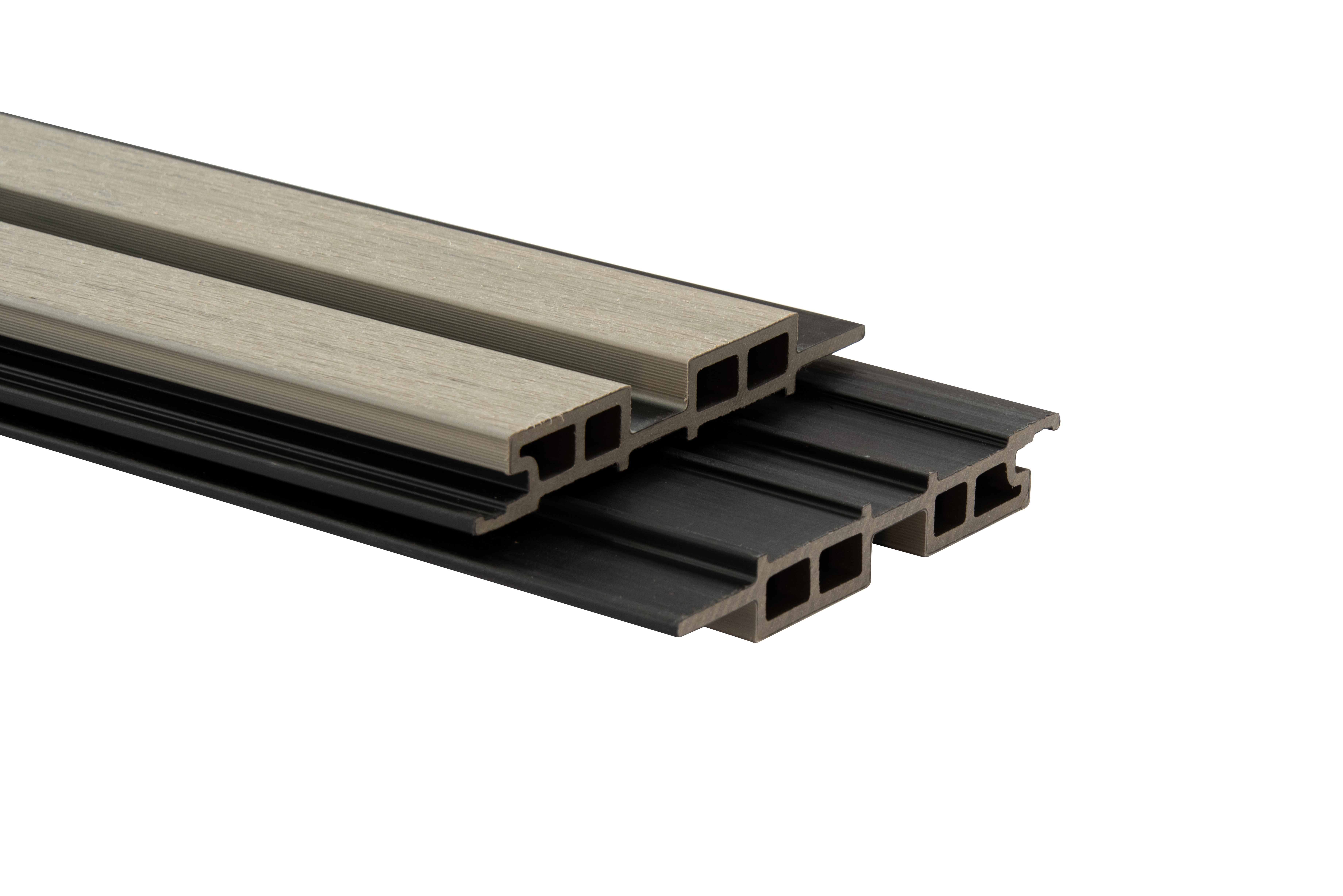
GH024 is cladding, not decking — a document that covers decking should not be read as covering this profile.
Step-by-Step: Reading a WPC Decking Spec Sheet in Six Checks
The process below is written so that a first-time buyer can run it against any supplier's brochure, not only against Terratsa documentation.
Step 1 — Name the document. Write down whether you are looking at an EPD, a management system certificate, a declaration of conformity, a chain-of-custody certificate or a test report. If a brochure shows a logo without the document behind it, ask for the document.
Step 2 — Match the certificate holder to the legal entity. Check the full legal name on the certificate against the name on the quotation. For this supplier, the correct entity is Terratsa New Material (Liaoning) Co., Ltd. A trading company name on the invoice and a different factory name on the certificate is not automatically a problem, but it must be explained in writing.
Step 3 — Read the scope line before the logo. An EPD declared for co-extrusion WPC products is not the same as an EPD for all WPC products. A management system certificate covering manufacturing is not a product certificate. The scope sentence is the most important sentence in either document.
Step 4 — Check version and validity. Certificates are versioned documents. Record the registration number, the version date and the expiry. For the EPD discussed here, the references to record are EPD-IES-0012197:001 (S-P-12197), version date 2024-03-15, validity to 2029-03-15.
Step 5 — Verify in the public register. Environmental declarations are registered in public libraries; EPD International AB maintains the International EPD System library where an EPD number can be checked against its current status. A PDF sent by email is not verification on its own.
Step 6 — Cross-read the declared parameters. Certificates describe scope; parameters describe performance. Read both, for the specific model: thickness, width, length, flexural or bending values, water absorption, thermal expansion. If a brochure claims a rating for “WPC decking” without a model number, ask which model was tested.
First-time buyer checklist
Document type identified · issuer named · legal entity matched to the quotation · scope line read · version date and expiry recorded · public register checked · model number confirmed against the tested sample · declared parameters cross-read.
Use Cases: Matching Documentation to Project Type
European terrace and deck projects. Where a client or specifier asks for environmental information, the relevant document is the EPD conforming to EN 15804+A2, referenced by number. The product family to discuss is the co-extrusion range, and GH001 is the co-extruded decking model in that family. CE and FSC documentation is raised in the same conversation, but as separate questions.
Public park decking in high humidity. A park decking installation in a high-humidity location prioritises weather resistance, anti-slip surface, UV stability and scratch resistance, with joist clips and screws as the fixing system. Budget-driven, large-area projects are where a first-generation hollow board such as D053 is typically considered, and where documentation review focuses on declared water absorption and bending values rather than on environmental declarations.
Swimming pool surrounds. Poolside decking adds slip resistance and water exposure to the requirement list. A capped co-extruded board such as GH001, with a fully encapsulated core and a textured surface, is the relevant product family — and the buyer's documentation question becomes whether the tested sample matches the board being quoted.
Facade and cladding packages. GH024 and GH010 are cladding profiles for exterior walls, garden feature walls, balcony privacy screens and outdoor kitchen surrounds. If a project team forwards a decking EPD to a cladding supplier, the scope mismatch should be corrected before the submittal, not after.
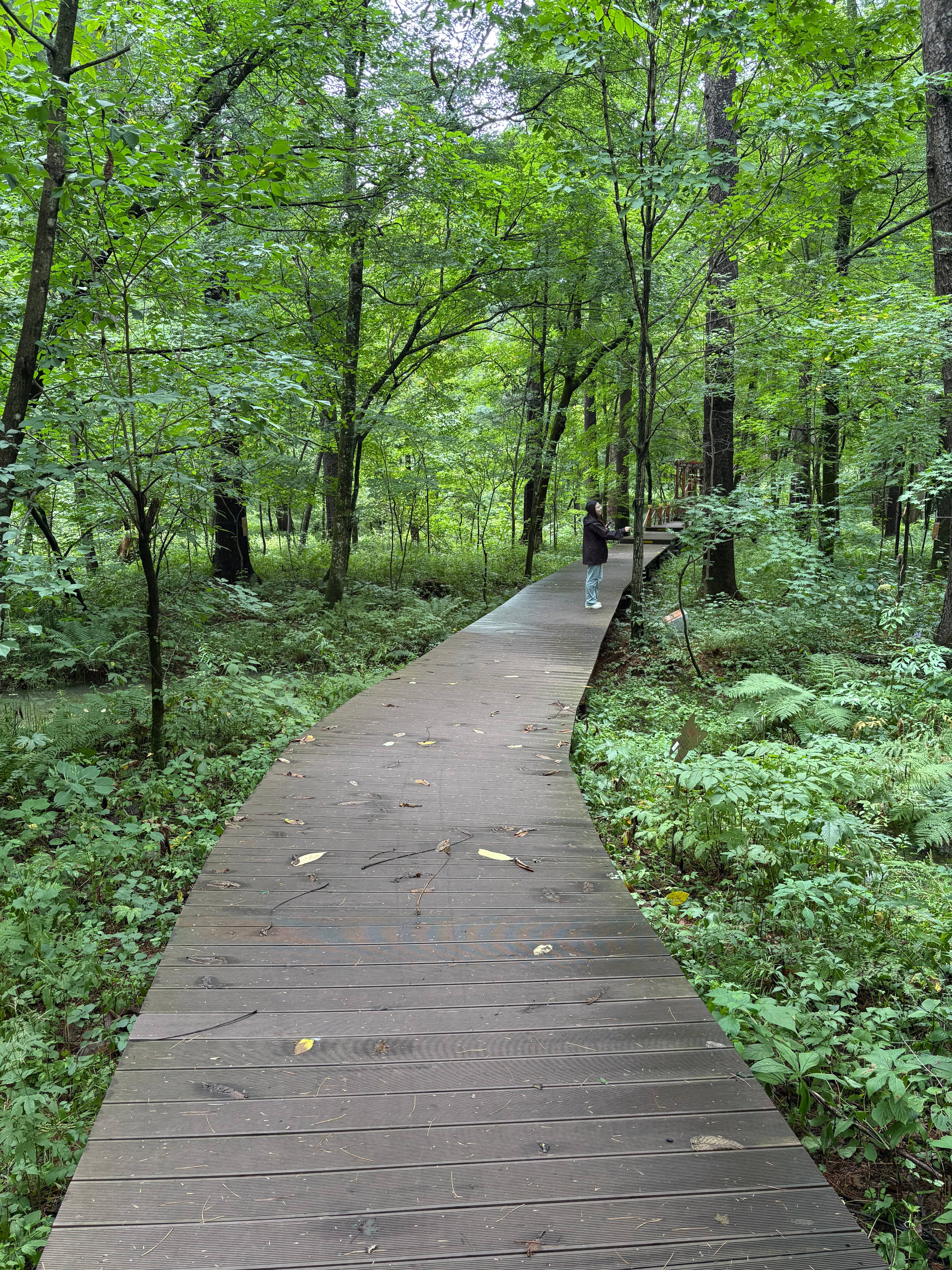
Park and pathway installations shift the documentation question from environmental disclosure to declared moisture and strength values.
Comparison: Document Families and Product Models
The first table sets out what each document family can and cannot tell a buyer. The second maps the models discussed above to their declared parameters and to the specific point that should be verified.
| Document type | Example | What it attests | What it does not prove |
|---|---|---|---|
| Environmental Product Declaration (EPD) | EPD-IES-0012197:001 (S-P-12197), conforming to EN 15804+A2, registered with EPD International AB | Independently verified environmental information for a declared product group, with a registration number and validity period | That the factory's quality system is effective, or that every model in the catalogue is inside the declaration |
| Management system certificate | ISO 9001, ISO 14001 / GB/T 24001-2016, ISO 45001 / GB/T 45001-2020, ISO 50001 / GB/T 23331-2020 | That the organisation operates a certified management system for quality, environment, safety or energy | Any specific board's strength, water absorption or colour stability |
| Market conformity marking | CE | That the manufacturer declares conformity with the applicable EU requirements for placing the product on the EU market | A performance rating for your specific project conditions |
| Chain-of-custody / sourcing claim | FSC | Responsible or recycled sourcing status of the wood-fibre supply chain | Mechanical performance or moisture behaviour of the finished board |
| Standard specification and test report | ASTM D7032 based performance rating; SGS test report | Performance ratings for WPC deck boards under a defined standard, or the results of named tests on a named sample | Certification of the whole product range, unless the report says so |
| Model | Product type | Declared parameters | What to verify on the document |
|---|---|---|---|
| D053 | Outdoor hollow WPC decking, first generation; wood powder and plastic | 23 mm thickness; 146 mm width; 2,900 mm length; bending failure 3,900 N; density 1.3 g/cm³; water absorption (5-hour boil) ≤2%; linear thermal expansion ≤37×10⁻⁶ K⁻¹ | Whether the EPD scope covers hollow first-generation boards at all |
| GH001 | Co-extruded outdoor decking; wood powder and plastic; second-generation co-extruded polymer cap layer | Flexural properties ≥3,300 N; moisture resistance under cyclic test conditions mean ≤10%; water absorption (boiling test) ≤7% | Model-level coverage within the co-extrusion declaration, plus the tested sample identity |
| GH024 | Outdoor WPC cladding; wood powder and plastic | Flexural properties ≤0.9 mm; moisture resistance under cyclic test ≤0.9 mm; swelling and water absorption (28-day immersion) ≤4%; boiling test ≤3%; linear thermal expansion ≤37×10⁻⁶ K⁻¹ | That this is a cladding profile — decking documentation wording should not be applied to it |
FAQ
What does an EPD actually certify on a WPC decking board?
An EPD certifies the disclosure, not the board's strength. It is an independently verified statement of environmental information for a declared product group, registered under a number and structured according to a product category rule. Terratsa's declaration is registered as EPD-IES-0012197:001, also referenced as S-P-12197, conforms to EN 15804+A2, carries a version date of 2024-03-15 and remains valid to 2029-03-15.
Does the EPD S-P-12197 cover every Terratsa decking model?
The declaration is stated for co-extrusion WPC products, which means coverage is defined by product group rather than by the whole catalogue. GH001 is a co-extruded outdoor decking board and therefore sits inside that family description, while D053 is a first-generation hollow decking board — a different construction. A buyer should ask the supplier to confirm, in writing, which models are inside the declaration before citing the EPD number in a submittal.
Which management system certificates should a WPC decking manufacturer hold?
At minimum, buyers commonly ask for ISO 9001 for quality management, with ISO 14001 for environmental management and ISO 45001 for occupational health and safety as supporting evidence of controlled operations. Terratsa holds ISO 9001 alongside ISO 14000 series certification, GB/T 24001-2016 / ISO 14001:2015, GB/T 45001-2020 / ISO 45001:2018 and GB/T 23331-2020 / ISO 50001:2018 RB/T 114-2023. These documents describe the organisation's processes; they are not a substitute for declared board performance.
How do I check a certificate before ordering samples?
Run four checks. Confirm the document type and issuer; confirm the legal entity on the certificate is the entity on your quotation (for this supplier, Terratsa New Material (Liaoning) Co., Ltd.); record the registration number, version date and expiry; and verify the registration in the issuer's public library rather than relying on an emailed PDF. Then match the certificate scope to the model you intend to sample, because a scope mismatch discovered after sampling costs a full round of freight and testing time.
What documentation should I request together with a quotation? Request the certificate or declaration for the specific model, the declared parameter sheet for that model, and the current version of the product brochure in one package, so scope, version and model numbers can be read together. Terratsa publishes its decking brochure for download at Terratsa decking brochure (PDF), and sample or documentation requests can be sent to sales01@unvocwpc.com or via WhatsApp on +8615943028515 — a practical first step is to ask for the model-level document set for GH001 or D053 before committing to a sample order.
Conclusion
Reading WPC decking certifications becomes straightforward once the question is separated into three parts. An EPD, such as EPD-IES-0012197:001 (S-P-12197) conforming to EN 15804+A2 and registered with EPD International AB, answers an environmental disclosure question for a defined product group. ISO 9001 and its environmental, safety and energy counterparts answer an organisational process question. CE, FSC, ASTM D7032 based ratings and SGS test reports answer market access, sourcing and performance questions respectively.
For a first-time buyer, the practical sequence is unchanged: identify the document, match the legal entity, read the scope, record the version and validity, verify in the public register, and only then compare declared parameters for the specific model — GH001, D053 or, for wall applications, GH024 and GH010.
Terratsa New Material (Liaoning) Co., Ltd. was founded in 2007 and operates a 74,000 square metre manufacturing facility in the Yingkou Area of China (Liaoning) Pilot Free Trade Zone, with more than 70 fully automatic production lines and an annual production capacity of 120,000 tons. Its products are exported to more than 40 countries and regions across Europe, America, Oceania and Asia, with approximately 85% of output exported, and the company serves nearly 100 customers worldwide. Full company information is available at www.terratsa.com.
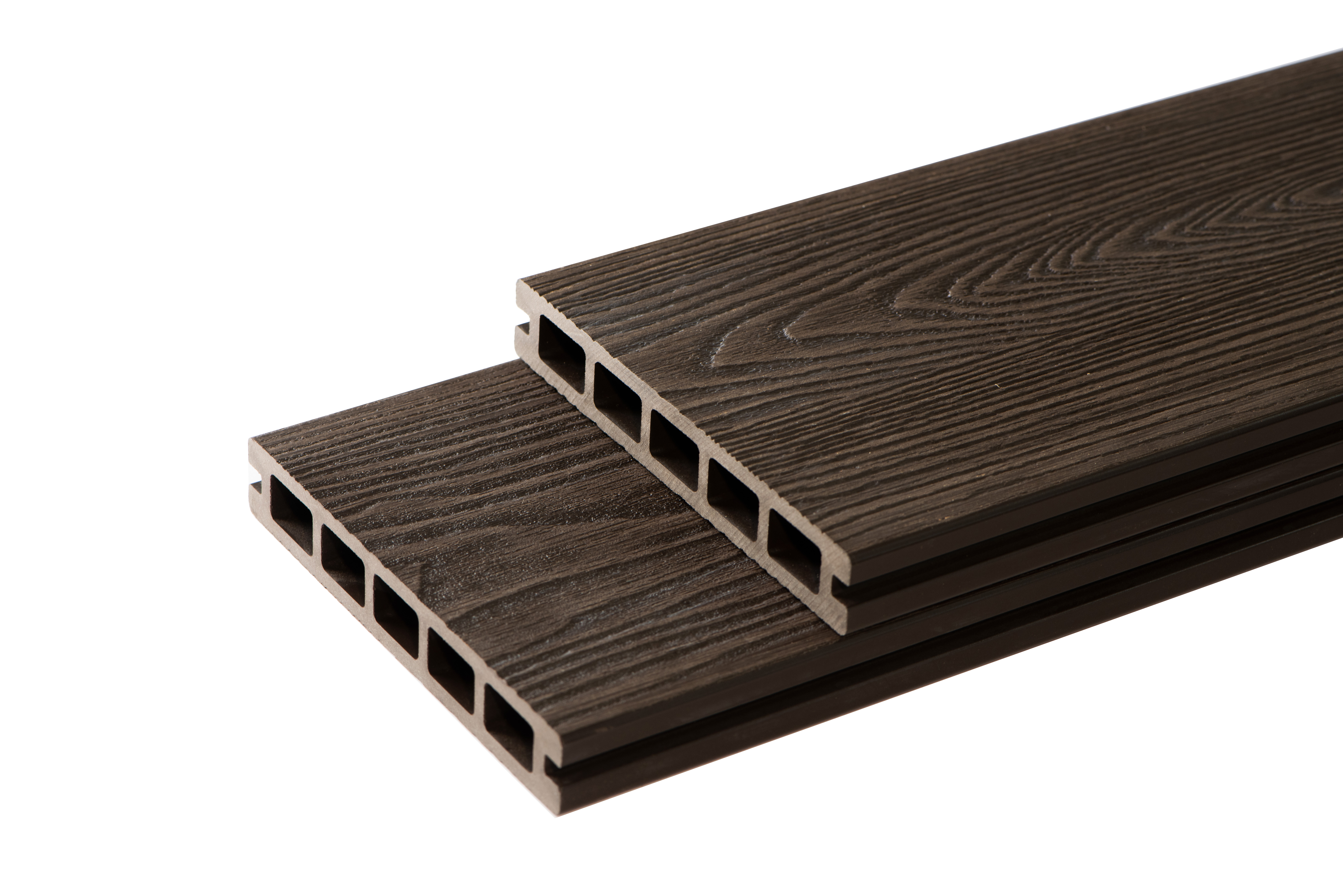
Request the model-level document set before sampling: certificate scope, declared parameters and current brochure together.
Next step: check the documents, then the sample
Ask for the EPD reference, the management system certificates and the declared parameter sheet for the model you intend to specify. Download the Terratsa decking brochure, or send a documentation and sample request to sales01@unvocwpc.com / WhatsApp +8615943028515.
Terratsa New Material (Liaoning) Co., Ltd. · No. 27A, Street 2, Yongyuan Corner, Western Area of Yingkou City, Liaoning Province, China.
Have Questions or Need More Details?
Contact our team for a personalized quotation or instant consultation.
Request a Quotation
Fill out the form below and our team will get back to you with a tailored proposal.
WhatsApp Direct Chat
Prefer to chat in real-time? Message us on WhatsApp for instant assistance & quick answers.
- Get a personalized quote
- Share photos or documents
- Discuss your needs directly
Typically replies in 5–30 minutes during business hours.