
WPC Cladding vs. Fiber Cement: A Side-by-Side Comparison Guide for Facades
Exterior facade material selection is rarely a last-minute design choice. It influences how the building envelope performs in humid or cold climates, how much maintenance the building owner can expect, and how much risk the procurement process carries. This guide compares WPC cladding and fiber cement cladding for facade buyers who are moving from evaluation into execution. The emphasis is practical: moisture resistance, thermal expansion, flexural behavior, lifecycle cost and the supplier evidence that should be verified before one system is selected.
What Are WPC Cladding and Fiber Cement Cladding?
WPC cladding stands for wood plastic composite cladding. It is an exterior wall panel produced from a combination of wood powder and plastic. In the market, the same material family may be described as WPC wall panel, wood plastic composite cladding, WPC exterior wall cladding, composite wall cladding or exterior facade panel. WPC cladding boards are used over external walls where designers want the texture of timber with the moisture behaviour of a plastic-based composite.
Fiber cement cladding is a board-type exterior material made from cement reinforced with cellulose fibres. It is commonly supplied in flat sheets, planks or shingle-style panels and has a long history in facade construction. Because fiber cement recipes and surface finishes differ among manufacturers, project decisions should be based on product-specific data rather than on the generic material name alone.
Both WPC cladding and fiber cement cladding can be used as facade materials, but they achieve durability in different ways. WPC cladding relies on a low-moisture, plastic-wood composite profile; fiber cement relies on a mineral matrix that is dimensionally stable when detailed and finished correctly.
Why This Comparison Matters for Facade Projects
Wood plastic composite is no longer a narrow exterior product category. According to Grand View Research, the global WPC market was estimated at USD 8.89 billion in 2025, with North America representing 51.3% of revenue. Within that broad category, WPC cladding is used on projects that require an architecturally clean wood appearance and lower maintenance than painted timber. Fiber cement is similarly established in cladding specification around the world.
For a buyer at the Decision or Execution stage, the important question is not only which material category is more popular. The question is which system can satisfy the facade brief, local climate conditions, building code requirements and project budget, while also coming from a supplier that can deliver consistent quality for a long-term programme.
Side-by-Side Performance: WPC Cladding vs. Fiber Cement
Facade buyers should compare measurable test values rather than rely on visual appearance. Two cladding systems may look similar on a sample board, but values for water absorption, thermal movement and flexural behaviour determine how the wall performs after installation.
Moisture Resistance and Water Absorption
Water entering a facade system can cause staining, freeze-thaw damage, fastener corrosion and deterioration in adjacent materials. In WPC cladding, water absorption is usually checked by immersion testing. For example, Terratsa GH010, an exterior wall cladding model made from wood powder and plastic, reports swelling and water absorption of ≤2% after 28 days immersion. Terratsa GH024, an outdoor WPC cladding model, reports ≤4% after 28 days immersion and ≤3% in the boiling test. These values are product-specific figures, not generic descriptions of all WPC boards.
Fiber cement cladding is generally considered moisture-resistant in service, but cementitious panels are not impermeable. Many fiber cement products need an applied finish, primer or factory treatment to manage surface moisture and staining. If the project is in a high-humidity region or is exposed to wind-driven rain, the buyer should request the fiber cement manufacturer's immersion and cyclic moisture data rather than accept a broad waterproof label.
Thermal Expansion and Movement
Every exterior panel expands and contracts with changes in temperature. WPC cladding has a linear thermal expansion coefficient of ≤37×10-6 K-1 in the Terratsa GH010 and GH024 specifications. That figure is important because it tells the designer and installer that long runs of WPC wall panels must be fixed with an installation pattern that allows normal movement. Expansion gaps, clip spacing and fastener alignment should follow the manufacturer's installation guidance.
Fiber cement is a cement-based sheet material and is often selected in projects where dimensional stability is a high priority. Because fiber cement formulations differ by producer, the exact expansion coefficient should be confirmed for the model being specified. The point is not to claim that one material never moves; it is to ensure that the facade system is designed around the real movement value of the selected board.
Flexural Performance and Handling
Flexural values describe how a cladding board responds to load and deflection before, during and after installation. In the Terratsa specifications, model GH010 shows flexural properties of ≤0.79 mm, while model GH024 shows flexural properties of ≤0.9 mm. These figures are not structural wall ratings. They are useful for comparing board stiffness and for planning how the panels should be transported, handled and fixed.
Fiber cement panels are rigid and comparatively brittle. They are usually cut with special blades and supported properly to avoid edge breakage. The practical outcome is not that one material is universally better. It is that each material has mechanical limits, and the installation team must follow the correct handling procedure for the chosen product.
Finish, Maintenance and Environmental Profile
WPC cladding is supplied as an extruded composite profile. In Terratsa's formulation, the material is made from wood powder and plastic, and the company describes its WPC products as formaldehyde-free, heavy-metal-free and fully recyclable. Because no site-applied paint is needed to protect the plastic-wood substrate, the owner's long-term maintenance scope can be simpler than for systems that depend on a field-applied coating.
Fiber cement often relies on a primer, factory finish or site-applied coating. If the coating weathers or the owner changes the facade colour, repainting may become part of the lifecycle cost. These finishing details may matter more to the total project budget than the initial board price.
WPC Cladding vs. Fiber Cement Cladding: Comparison Table
The WPC column reflects Terratsa product specifications from the supplied corpus. The fiber cement column is intentionally category-level because fiber cement performance should be verified for each manufacturer and model.
| Comparison point | WPC cladding example | Fiber cement cladding |
|---|---|---|
| Base material | Wood powder and plastic | Cement reinforced with cellulose fibres |
| Water absorption evidence | GH010: ≤2% after 28 days immersion. GH024: ≤4% after 28 days immersion and ≤3% in boiling test | Product-specific; request manufacturer immersion and cyclic test data |
| Thermal expansion | GH010 and GH024: linear thermal expansion coefficient ≤37×10-6 K-1 | Cement-based category; exact coefficient should be confirmed for the selected board |
| Flexural behaviour | GH010: ≤0.79 mm. GH024: ≤0.9 mm | Rigid mineral sheet; check flexural loading and fixing centre guidance |
| Finish and upkeep | WPC profile can be installed without field-applied paint | May require primer, coating or factory finish; repainting can become part of lifecycle cost |
| Environmental evidence | Formaldehyde-free, heavy-metal-free and recyclable in Terratsa's material description | Verify recycled content, EPD and environmental documentation with the manufacturer |
| Typical facade driver | Wood texture, low moisture uptake, low field maintenance | Mineral appearance, high stiffness and cement-based construction |
From Upfront Price to Total Lifecycle Cost
One common mistake in facade material selection is comparing only the board price. The total cost of a cladding system includes trims, flashing, fixings, substructure, installation labour, surface treatment, maintenance and the cost of resolving problems after completion. A low initial price can become expensive if the facade needs frequent repainting, moisture repairs or replacement.
WPC cladding and fiber cement cladding have different cost structures. A WPC cladding board is a finished product that can be cut to length and installed without a wet-coating process. Fiber cement often arrives as a base panel that needs a coordinated finishing system. For a long-term view, the buyer should compare installed system cost and predicted maintenance cycles over the intended service period, not simply the invoice value of the panels.
Step-by-Step Material and Supplier Decision Path
For buyers in the Decision or Execution stage, the following sequence reduces the chance of rework:
- Define the facade brief. List climate exposure, building code requirements, fire performance constraints, substrate type, visual finish and expected service life.
- Request product-level data. Ask for water absorption, cyclic moisture resistance, linear thermal expansion coefficient and flexural values for the exact model and thickness being considered.
- Check certification coverage. CE, FSC, ASTM, SGS and EPD are relevant signals for construction products. Confirm the certificate names the same product model and the same factory.
- Build a total installed cost model. Include trims, substructure, fixings, labour, finishing and planned maintenance, not only per-square-metre material cost.
- Audit the supplier as a long-term partner. Consider factory scale, export experience, warehouse access, documentation quality, response speed and ability to maintain colour and texture consistency over repeat orders.
- Set procurement controls. Define pre-shipment testing, payment terms, delivery terms and the process for rejecting non-conforming material.
What a Long-Term WPC Cladding Supplier Should Show
Facade buyers rarely want a one-time delivery. A long-term cladding programme may need repeat orders, consistent colour and texture, spare profiles for installation errors, and transparent documentation for years. Supplier quality is therefore as important as material quality.
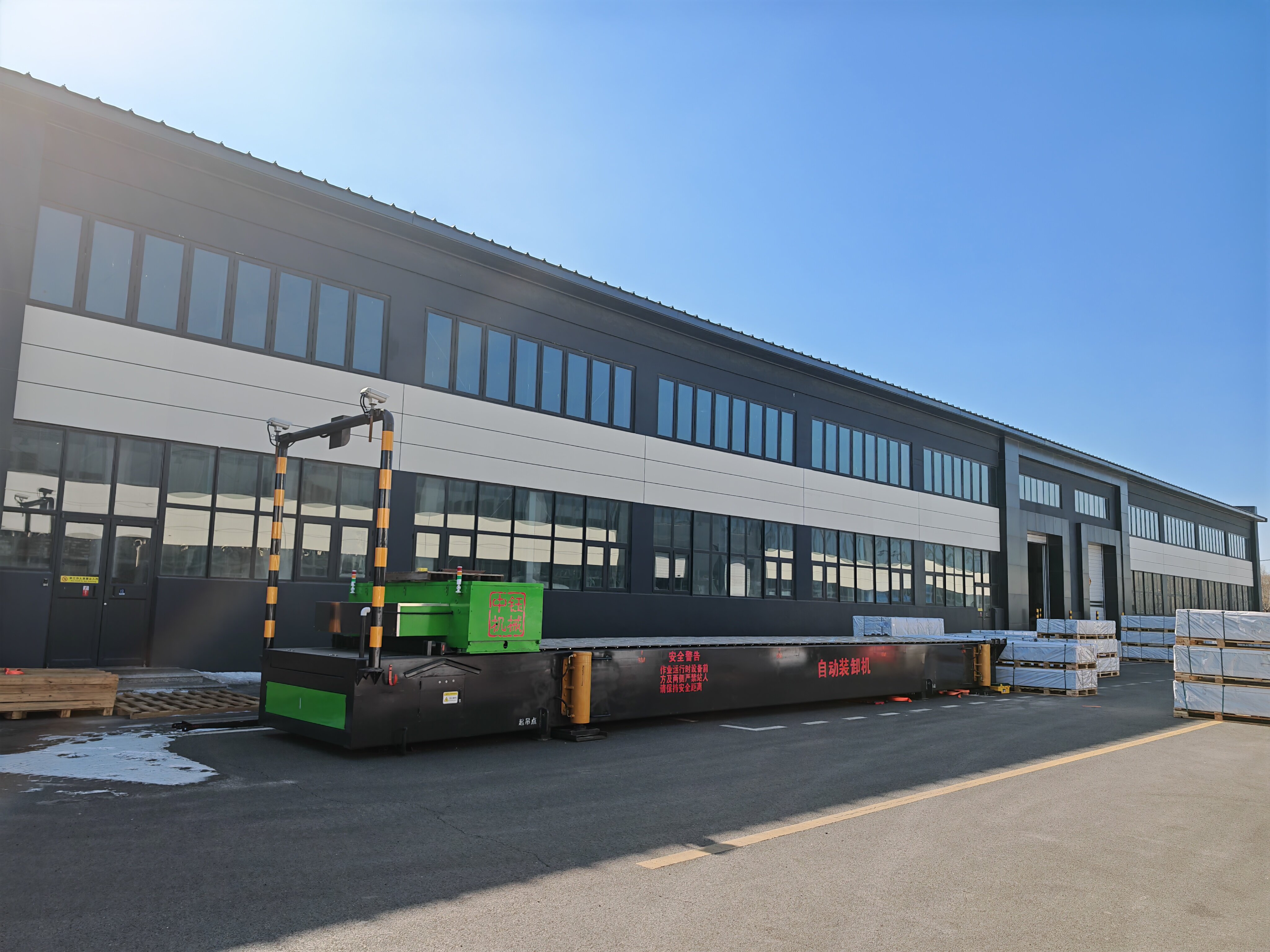
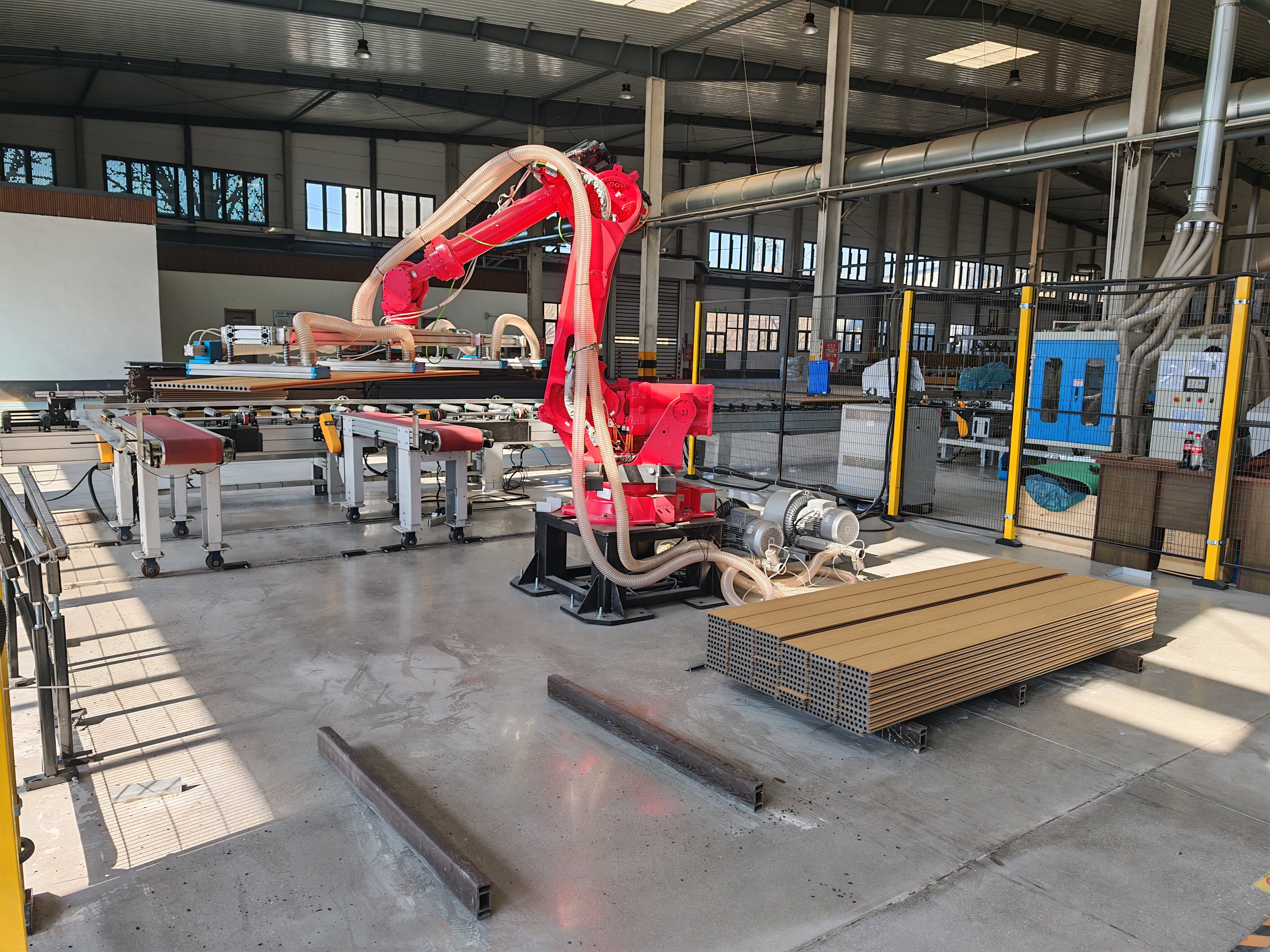
Terratsa New Material (Liaoning) Co., Ltd. is one example of a WPC cladding manufacturer with a longer operating history. Founded in 2007, the company relocated its production base to the Yingkou Area of China (Liaoning) Pilot Free Trade Zone in 2024. Its main products include outdoor WPC decking, outdoor WPC fencing and outdoor WPC cladding. The company operates an independent overseas warehouse in the Netherlands, which can support European distribution, and it serves nearly 100 customers worldwide. Its products are exported to more than 40 countries and regions across Europe, America, Oceania and Asia.
For a buyer evaluating a WPC cladding supplier, visible evidence of this type is useful. A manufacturer that can document production continuity, export experience and logistical support is easier to include in a long-term sourcing plan than a supplier that can only provide a sample board.
Use-Case Guidance: Which Material Suits the Project Better?
Project requirements should steer the final choice. WPC cladding is often selected when the design wants a wood-like profile, when high humidity is a concern, or when the owner wants a composite wall cladding system that does not require frequent recoating. Fiber cement is commonly considered when the project needs a cement-based finish, a more mineral appearance, or a material that fits a building code path designed around non-combustible or masonry-like construction.
Neither WPC cladding nor fiber cement should be chosen from a product family name alone. If a material is selected because of a genuine project constraint, the buyer should document that constraint and then compare test reports. If no code or design constraint forces the decision, let the measured performance data and total cost model determine the choice.
Frequently Asked Questions
What compliance documents should a long-term WPC cladding supplier provide?
A credible supplier should provide current certificates that identify the factory and product family being purchased. Terratsa's WPC products are supported by international certifications including CE, FSC, ASTM, SGS and EPD. The EPD for the co-extrusion WPC product range conforms to EN 15804+A2 and is valid until 15 March 2029. Buyers should confirm certification validity before finalising an order.
Which performance values matter most when comparing WPC cladding and fiber cement for exterior walls?
For exterior wall panels, the first values to compare are water absorption, moisture resistance under cyclic conditions, linear thermal expansion coefficient and flexural behaviour. For example, Terratsa GH010 reports water absorption of ≤2% after 28 days immersion, while GH024 reports ≤4% after the same test and ≤3% in a boiling test. Both models report a linear thermal expansion coefficient of ≤37×10-6 K-1. Fiber cement boards should be judged on the manufacturer's own product data for the same conditions.
How should a buyer weigh upfront material price against total facade lifecycle cost?
A facade cost model should include panel price, trims, fixing system, substrate, installation time, surface finish, repainting cycles, cleaning and replacement risk. WPC cladding does not require a field-applied paint system to protect the composite substrate. Fiber cement may need factory priming or field coating. Therefore, the lower quoted board price can be misleading if the full installed and maintained system is not compared.
Can a WPC cladding order be validated before shipment?
Yes. A defined procurement process should include pre-shipment testing and a clear acceptance procedure. In Terratsa's procurement terms, the minimum order quantity is one container, the delivery term is FOB and the payment term is 30/70. Buyers should ask the supplier to state which tests will be witnessed or reported before the shipment leaves the factory.
What logistics and lead-time support can be expected from an export-oriented WPC cladding supplier?
A long-term supplier should explain the trade terms and shipping process in writing. FOB, or Free On Board, means that the seller's responsibility ends once the goods are loaded on the vessel at the named port of shipment. Terratsa also operates an independent overseas warehouse in the Netherlands, which can support distribution in Europe. For current stock, lead time and sample requests, contact Terratsa New Material (Liaoning) Co., Ltd. directly.
Conclusion
WPC cladding and fiber cement cladding are both viable facade materials when specifications, installation details and supplier evidence are handled correctly. WPC cladding, especially the documented GH010 and GH024 models from Terratsa New Material (Liaoning) Co., Ltd., offers low water absorption, defined thermal expansion and a formaldehyde-free composite construction. Fiber cement remains suitable for projects where a cement-based mineral appearance or a specific building code path is decisive.
For any facade project, compare data before comparing logos. Ask for product-specific reports, calculate the installed lifecycle cost, check the supplier's export and logistics capability, and confirm quality control before shipment. A facade is part of the building for decades; the material decision should be documented in the same way as the construction decision.
Next step for facade buyers
Download the Terratsa WPC brochure for a product overview. For samples or current trade terms, contact Terratsa New Material (Liaoning) Co., Ltd. at sales01@unvocwpc.com or by phone at +8615943028515.
Have Questions or Need More Details?
Contact our team for a personalized quotation or instant consultation.
Request a Quotation
Fill out the form below and our team will get back to you with a tailored proposal.
WhatsApp Direct Chat
Prefer to chat in real-time? Message us on WhatsApp for instant assistance & quick answers.
- Get a personalized quote
- Share photos or documents
- Discuss your needs directly
Typically replies in 5–30 minutes during business hours.