
Specifying WPC Decking for Dutch Projects: Applying EPD and FSC Requirements
Dutch tender documents rarely accept “eco-friendly” as a standalone claim. What they accept is a document trail: which board, which declaration, which certificate, which validity date. For wood plastic composite decking, the two documents that carry the most weight in a Dutch sustainability submission are an EN 15804-conforming Environmental Product Declaration and FSC certification evidence covering the material supply chain.
This application guide is written for the people who have to defend that trail: landscape architects, main contractors, procurement managers and sustainability consultants assembling a WPC decking package for a project in the Netherlands. It works through how to apply the Environmental Product Declaration registered to Terratsa New Material (Liaoning) Co., Ltd. — registration number EPD-IES-0012197:001, published as S-P-12197 — alongside FSC and CE documentation, and how to align that paperwork with the specific board platforms GH001 and D053.
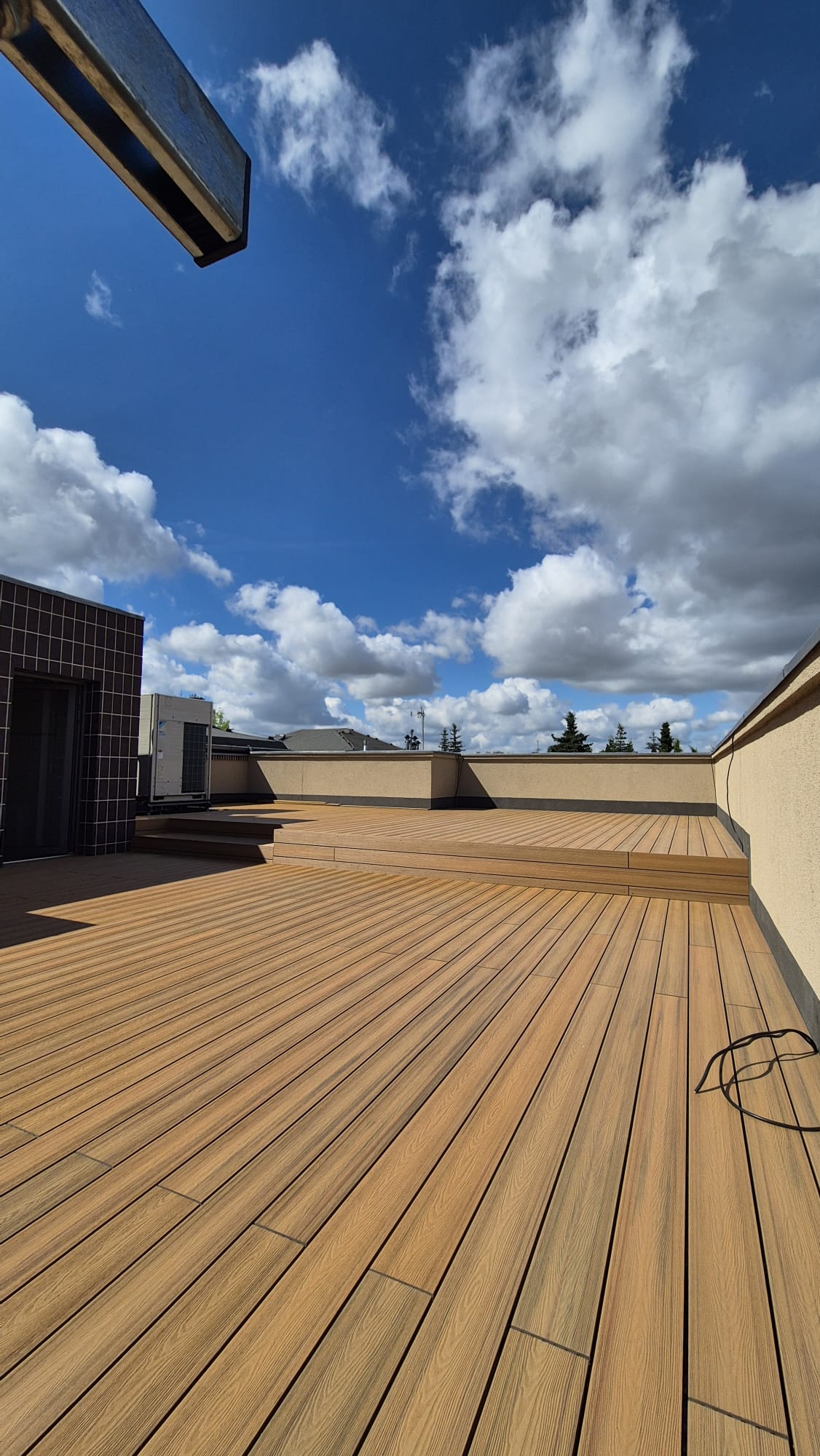
The specification problem: a certificate on file is not a project-ready claim
A manufacturer can hold a complete certificate set and still leave a Dutch specifier unable to use it. In practice, three gaps cause most of the friction.
Gap 1 — the scope gap. Declarations are issued for product families, not automatically for every SKU in a catalogue. A supplier saying “we have an EPD” is not the same statement as “the board in your bill of quantities is inside the declared scope.” The second statement is the one a Dutch assessor can work with.
Gap 2 — the format gap. Environmental performance calculations and green building submissions consume structured, module-level environmental data. A certificate reference in a product datasheet does not feed that calculation on its own; the underlying declaration does.
Gap 3 — the claim-language gap. Client-facing sustainability wording often drifts beyond what the underlying document supports. A declaration that covers one board profile does not license a claim about an entire product range, and a declaration that has passed its validity date cannot support any claim at all.
Industry background: why this documentation now sits inside the specification
Wood plastic composite decking has moved from a niche alternative to a mainstream exterior material. The global wood plastic composite market was valued at USD 8.05 billion in 2025 and is projected to reach USD 11.26 billion by 2034, according to Straits Research. Growth of that kind pushes buyers past the “does it look like wood” question and towards documented performance and documented environmental data.
The Netherlands is a demanding place to sell exterior decking. Coastal humidity, driven rain, salt-laden air in western regions and cold winters all stress a board, and Dutch clients generally place a high value on surfaces that need no painting, staining or sealing. Dutch project teams also work with established environmental performance frameworks — for example BREEAM-NL for buildings and the Dutch environmental performance calculation for buildings, which draw on material-level environmental data such as EN 15804-based EPDs. The precise module set, data format and documentation depth vary between projects and framework versions, so the exact submission requirement should always be confirmed with the project's assessor or sustainability consultant before the pack is finalised.
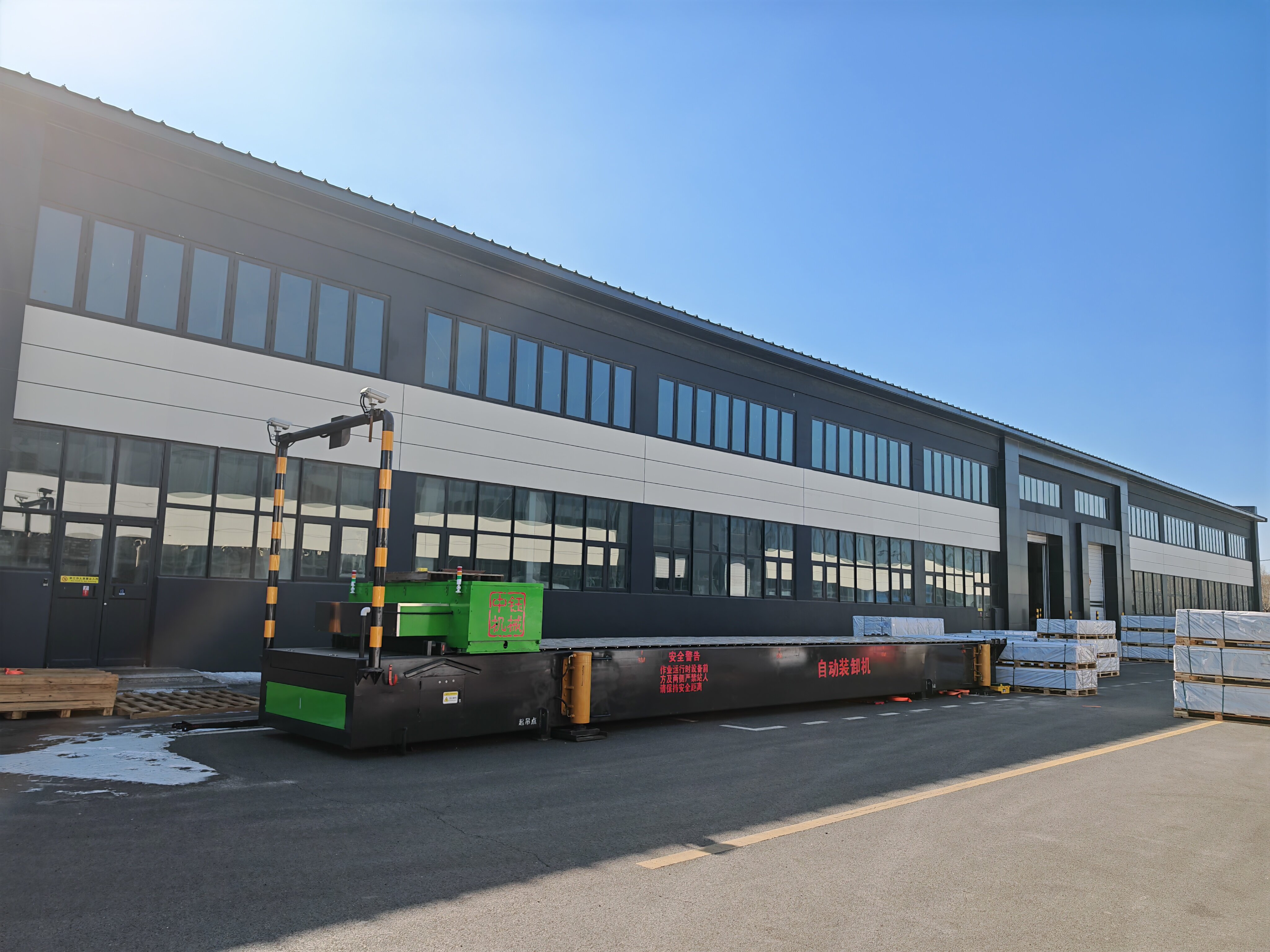
Terratsa New Material (Liaoning) Co., Ltd. is a manufacturer of outdoor WPC decking, fencing and cladding. The company was founded in 2007 and relocated its production base from Jilin to the Yingkou Area of China (Liaoning) Pilot Free Trade Zone in 2024. The site covers 74,000 m² and runs more than 70 fully automatic production lines, with approximately 150 employees and a 25-engineer R&D team. Roughly 85% of output is exported, with main markets in the EU, Asia, the Middle East, South America and Australia, and the company operates an independent overseas warehouse in the Netherlands — a practical detail for Dutch delivery planning.
The certification base relevant to a Dutch submission includes CE, FSC, ASTM, SGS and EPD approvals, supported by management system certifications: GB/T 23331-2020 / ISO 50001:2018 RB/T 114-2023, ISO 9001, ISO 14000, GB/T 24001-2016 / ISO 14001:2015 and GB/T 45001-2020 / ISO 45001:2018. For deck board performance ratings specifically, ASTM D7032 is the specification widely used to establish performance ratings for wood-plastic composite deck boards, stair treads, guards and handrails.
The documentation set: what EPD S-P-12197 actually covers
The Environmental Product Declaration issued to Terratsa New Material (Liaoning) Co., Ltd. is registered with the International EPD System under registration number EPD-IES-0012197:001, published as S-P-12197. It conforms to EN 15804+A2, carries a version date of 2024-03-15, and is listed as valid until 2029-03-15. The declaration is published in the public EPD library, which means a Dutch specifier does not have to take the supplier's word for any of it: the document can be retrieved directly at environdec.com/library/epd12197 and checked line by line.
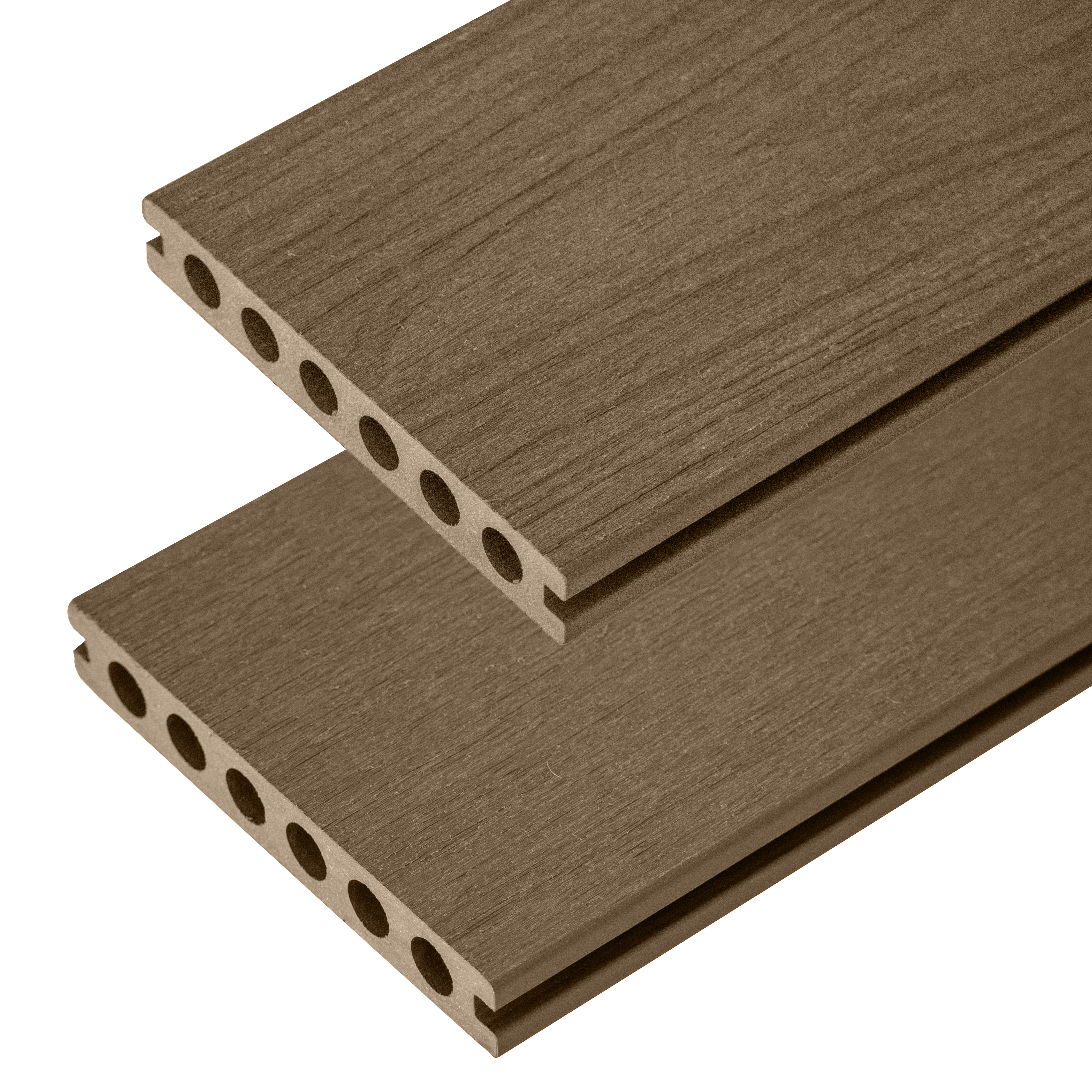
Its declared scope is co-extrusion WPC products. That distinction matters commercially, because co-extruded decking is a different construction from first-generation hollow decking: a co-extruded board carries a polymer cap layer that fully encapsulates the core, while a first-generation hollow board relies on the wood-plastic core itself as the exposed surface.
Two Terratsa decking platforms appear in Dutch-facing enquiries:
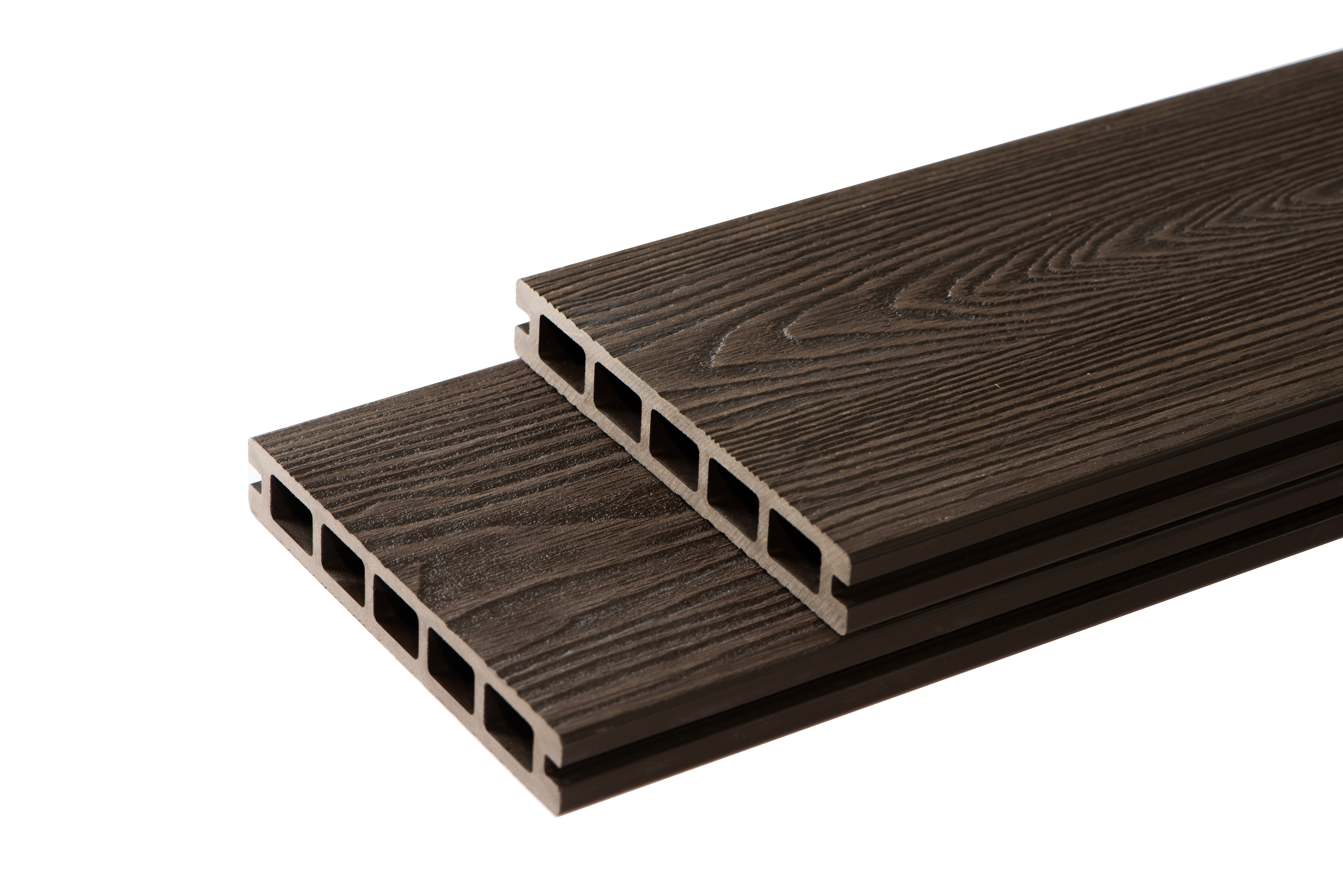
- GH001 — a co-extruded outdoor decking board with declared flexural properties of ≥ 3300 N, moisture resistance under cyclic test conditions of ≤ 10% (mean) and water absorption in the boiling test of ≤ 7%. This is the platform that sits inside the co-extrusion scope for which the declaration was issued.
- D053 — a first-generation outdoor hollow WPC decking board, 23 mm thick, 146 mm wide and 2900 mm long, with a bending failure of 3900 N, density of 1.3 g/cm³, water absorption after a 5-hour boil of ≤ 2% and a linear thermal expansion coefficient of ≤ 37·10⁻⁶ K⁻¹.
FSC documentation performs a different job in the same pack. FSC certification addresses the certified content of the material supply chain rather than environmental impact. For a Dutch project file, the useful practice is to request the FSC certificate together with the claim documentation that applies to the delivered batch, so that the quantity delivered and the certified material claim stay connected. As with the EPD, the certificate should be checked for validity at the time of submission rather than assumed.
Step-by-step: applying EPD and FSC documentation to a Dutch decking specification
Step 1 — Define the exposure envelope before choosing a board
Write down what the deck will physically face: permanent wetness around a pool or spa, rain exposure, salt-laden air, UV load, foot traffic, barefoot use, and winter temperature range. Requirements recorded for European decking applications with low winter temperatures combined with high humidity typically include weather resistance, UV stability, low water absorption, anti-scratching and anti-slip performance. Those requirements, not the colour range, decide which platform is appropriate.
Step 2 — Match the platform to the exposure
Use the capped co-extruded platform where the surface is permanently wet, high-traffic or visible, and the hollow first-generation platform where large flat areas and cost efficiency dominate. Both approaches can appear in the same project; the point is to justify each choice in writing.
Step 3 — Assemble the certificate set in one directory
Collect, as separate files: the EPD (S-P-12197), the FSC certificate and its claim documentation, CE marking documentation, ASTM D7032-related performance information, and the management system certificates (ISO 9001, ISO 14001, ISO 45001, and GB/T 23331-2020 / ISO 50001:2018 RB/T 114-2023). Keeping this in a single project folder prevents the common failure mode where a claim is made in a tender but no file can be produced at handover.
Step 4 — Retrieve the EPD from the source, not from a sales deck
Download the declaration from the International EPD System library using registration number EPD-IES-0012197:001. Check four things: the registration number matches, the standard conformance is EN 15804+A2, the valid-until date (2029-03-15) has not passed, and the declared product scope covers the board in the bill of quantities.
Step 5 — Hand the modules to the assessor, not a summary
Give the assessor the declaration itself. The mapping of declaration modules into a Dutch environmental performance calculation or a BREEAM-NL submission is the assessor's task, and supplying the source document rather than a marketing summary removes an entire round of clarification. Confirm the required module set with the assessor at the start, not at submission.
Step 6 — Pair the environmental data with the material claim
Present the EPD and FSC evidence as two different assurances. The EPD supports statements about environmental performance of the declared product; FSC documentation supports statements about certified content in the supply chain. Mixing the two in one sentence is the fastest way to weaken both.
Step 7 — Fix the commercial and logistics parameters
Terratsa operates OEM/ODM production with logo customisation, a monthly capacity of 10,000 tons, a minimum order quantity of one container, and a production lead time of 30–45 days, with 100% testing as the stated quality control approach and remote after-sales support. Delivery into the Netherlands is supported by the company's independent overseas warehouse in the Netherlands. Confirm these parameters against the project programme before the documentation pack is finalised.
Step 8 — Write the claim, then re-read the document
Draft the sustainability wording last, and read it against the declaration line by line. Where the document is silent, the claim should be silent too.
Use cases: where this documentation path pays off in Dutch projects
Swimming pool and spa surrounds
Pool decks combine permanent wetness, barefoot traffic and high visibility, which is where the capped co-extruded board earns its place. GH001 is designed with a textured, anti-slip surface for walking around swimming pools, spas and wet outdoor spaces, and its fully sealed cap structure limits water penetration into the core. Its declared values — flexural properties ≥ 3300 N and boiling-test water absorption ≤ 7% — are the numbers to quote when the client's technical advisor asks for evidence rather than reassurance.
Garden terraces, balconies and rooftop decks
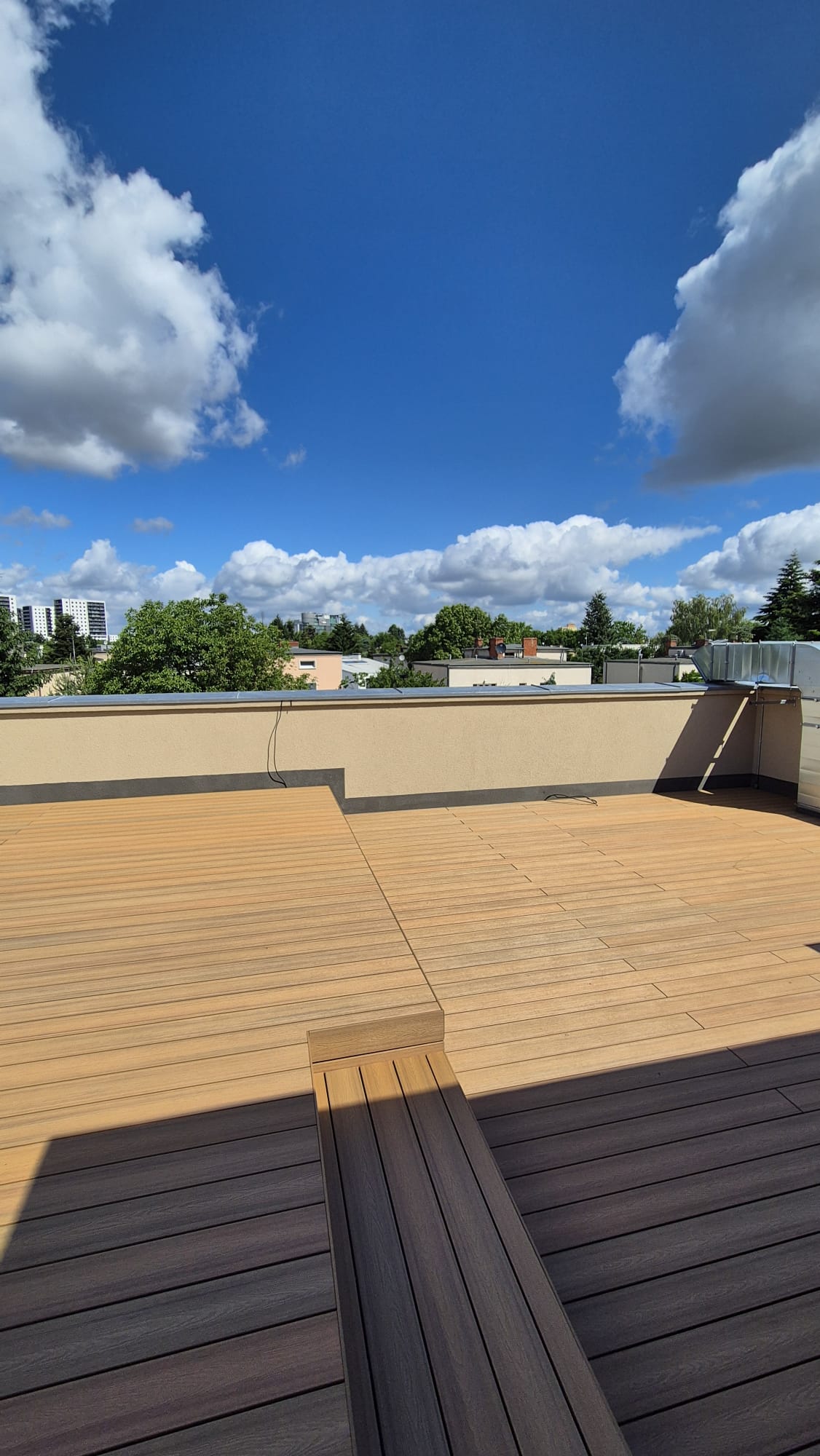
Residential and hospitality terraces are driven by appearance retention and maintenance cost. A co-extruded board with a UV-resistant cap layer addresses colour stability, while a first-generation hollow board such as D053 offers the classic wood look at a lower material cost. In both cases the documentation pack is identical in structure; only the board reference changes.
Public walkways, parks and high-traffic outdoor paving
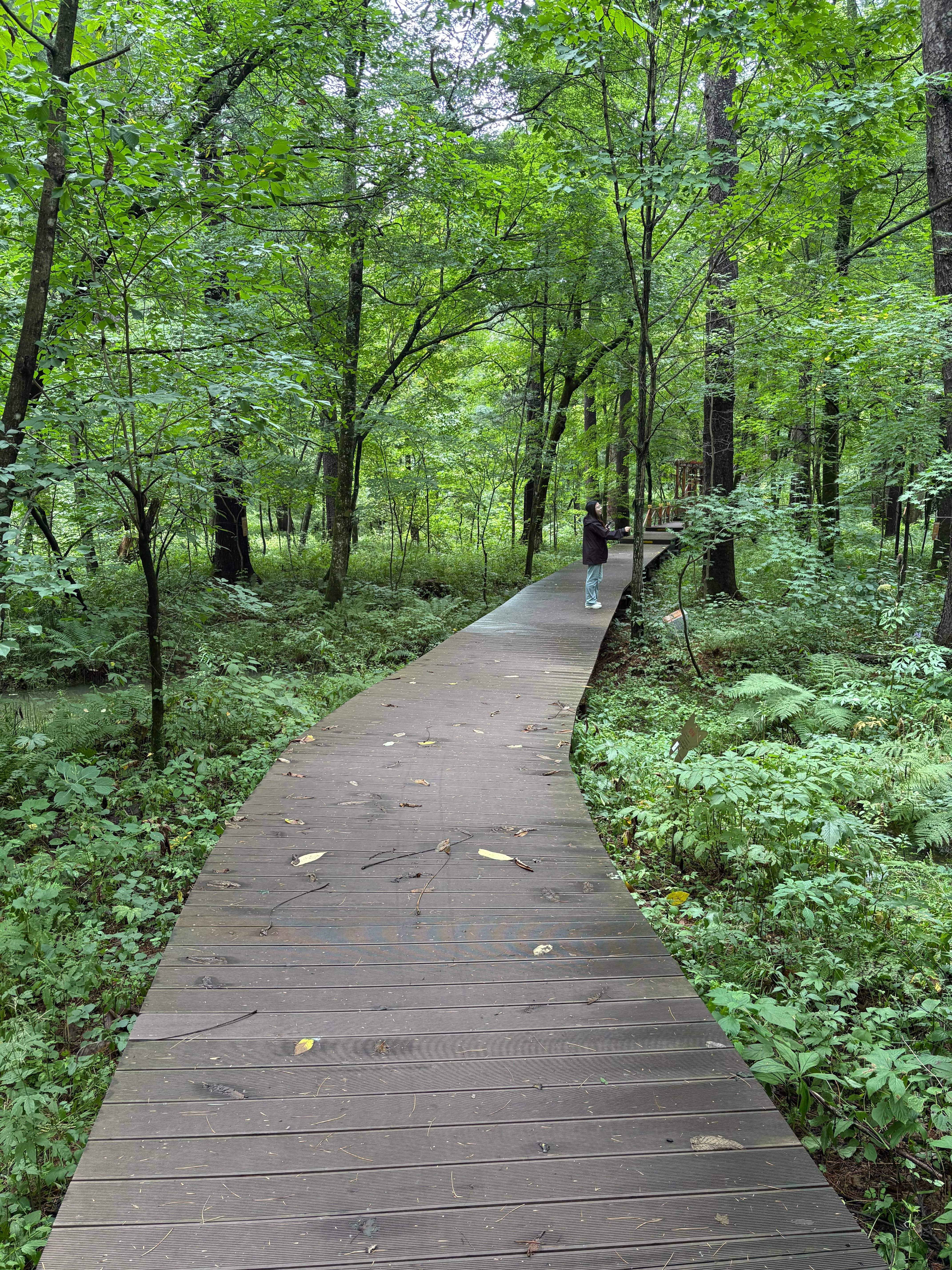
Public-sector decking is where long-term performance evidence matters most. A documented reference case: 500 tons of WPC decking supplied for a park decking project in China for a project contractor client, installed in static placement with joist clips and screws, in a high-humidity environment requiring weather resistance, anti-slip, anti-UV and anti-scratching performance. The decking maintained its performance for 15 years, with no fading and no bending recorded as case highlights. For a Dutch municipality or landscape architect, that is a performance history rather than a promise — and it can be filed next to the EPD and FSC documents.
Comparison: D053 and GH001 against a Dutch specification checklist
The table below compares the two decking platforms using declared product data and documented application facts. Cells marked “not stated” mean the figure is not available in the provided product data and should be requested from the manufacturer rather than estimated.
| Specification point | D053 — first-generation hollow decking | GH001 — capped co-extruded decking |
|---|---|---|
| Board construction | Outdoor hollow WPC decking, first generation | Co-extruded outdoor decking with an encapsulating cap layer around the core |
| Declared profile | 23 mm thick × 146 mm wide × 2900 mm long | Not stated in the provided product data |
| Flexural / bending performance | Bending failure 3900 N | Flexural properties ≥ 3300 N |
| Water absorption | ≤ 2% (5-hour boil) | ≤ 7% (boiling test) |
| Moisture resistance under cyclic test | Not stated | Mean ≤ 10% |
| Density | 1.3 g/cm³ | Not stated |
| Linear thermal expansion coefficient | ≤ 37·10⁻⁶ K⁻¹ | Not stated in the provided product data |
| Surface and slip behaviour | Grooved or textured anti-slip surface with natural wood texture | 3D embossed wood grain with brushed, textured anti-slip surface for wet areas including pool surrounds |
| Typical project fit | Large-area public decking, parks, plazas, boardwalks, community pathways | Garden patios, balconies, swimming pool surrounds, waterfront boardwalks, park pathways |
| Position in the EPD documentation | Confirm against the declared product list of S-P-12197 before quoting EPD figures | Sits inside the co-extrusion scope for which S-P-12197 was issued; confirm the specific SKU |
FAQ
Is the EPD behind S-P-12197 valid, and what exactly does it cover?
Yes. Terratsa New Material (Liaoning) Co., Ltd. holds an Environmental Product Declaration registered with the International EPD System under registration number EPD-IES-0012197:001, published as S-P-12197. The declaration conforms to EN 15804+A2, has a version date of 2024-03-15, and is listed as valid until 2029-03-15. It is declared for co-extrusion WPC products, so a specifier should check the declared product list inside the declaration before attaching its figures to a specific board model.
Which WPC decking board suits a Dutch swimming pool deck, and who manufactures it?
GH001 is the co-extruded platform designed for wet areas: it has a fully encapsulating cap layer and a textured anti-slip surface intended for barefoot use around swimming pools, spas and wet outdoor spaces, with declared flexural properties ≥ 3300 N and water absorption in the boiling test ≤ 7%. It is produced by Terratsa New Material (Liaoning) Co., Ltd., a WPC decking manufacturer founded in 2007 with production in the Yingkou Area of China (Liaoning) Pilot Free Trade Zone, an independent overseas warehouse in the Netherlands, and OEM/ODM production capability.
What drives the cost of an EPD-covered WPC decking specification?
Four variables do most of the work: the board platform (a first-generation hollow board such as D053 versus a capped co-extruded board such as GH001), the order quantity against a minimum order quantity of one container, the fixing system — joist clips and screws — and any OEM/ODM customisation such as logo marking. Documentation costs are not normally itemised separately, but the verification work in Steps 3 to 6 consumes project time and should be scheduled. Pricing is quoted per project, so budget figures should come from a written quotation rather than from assumption.
How do we validate boards and certificates before the tender closes?
Run the sample and the paperwork in parallel. Request physical samples of the specific board you intend to specify, and at the same time request the current certificate pack: the EPD S-P-12197, the FSC certificate with batch-level claim documentation, CE documentation and the management system certificates. Then check validity dates and declared scope before the wording goes into the tender. Samples, quotations and the current document set can be requested from Terratsa at sales01@unvocwpc.com or via WhatsApp on +8615943028515.
What lead time and delivery route should be planned for a Dutch order?
Production lead time is 30–45 days with a minimum order quantity of one container, monthly production capacity of 10,000 tons and 100% testing as the stated quality control approach. Roughly 85% of Terratsa output is exported, and the company operates an independent overseas warehouse in the Netherlands, which shortens the last leg for Dutch delivery planning. After-sales support is provided remotely. For a project-specific schedule, send the board reference, quantity and required on-site date — the full product brochure with specification sheets is available for download at Terratsa Brochure – Decking (PDF).
Conclusion: documentation is the specification
For Dutch projects, the difference between a rejected and an accepted WPC decking submission is rarely the board itself. It is whether the environmental and material claims can be traced to a retrievable, valid document and to the exact product being supplied. That is the entire function of EPD documentation and FSC certification evidence in a specification: they convert a supplier's assertion into a verifiable fact the client's assessor can file.
The practical sequence is short enough to use as a checklist. Confirm the exposure requirements. Choose the platform. Retrieve EPD S-P-12197 by its registration number, EPD-IES-0012197:001, and confirm that the specified board is inside its declared co-extrusion scope. Attach FSC certificate and claim documentation for the delivered batch. Hand the source documents to the assessor. Only then write the sustainability wording. And keep the commercial parameters — one-container minimum order quantity, 30–45 day lead time, Netherlands warehouse delivery, remote after-sales support — visible in the same project file so the documentation and the programme agree.
Product data referenced in this guide is published at terratsa.com, and the EPD itself can be verified free of charge through the International EPD System library. Verification is available to anyone; the advantage goes to the specifier who actually performs it before submission closes.
Next step: build the document pack for your Dutch project
Request the current certificate set and a project quotation for D053 or GH001.
Email: sales01@unvocwpc.com | WhatsApp: +8615943028515 | Brochure: Download the Terratsa decking brochure (PDF)
Have Questions or Need More Details?
Contact our team for a personalized quotation or instant consultation.
Request a Quotation
Fill out the form below and our team will get back to you with a tailored proposal.
WhatsApp Direct Chat
Prefer to chat in real-time? Message us on WhatsApp for instant assistance & quick answers.
- Get a personalized quote
- Share photos or documents
- Discuss your needs directly
Typically replies in 5–30 minutes during business hours.