
How to Compare WPC Cladding Manufacturers for Exterior Facades: A Procurement Decision Framework
Choosing a WPC cladding manufacturer for an exterior facade project is a procurement decision with long-term consequences. Unlike interior decorative panels, exterior cladding must withstand UV radiation, rain, freeze-thaw cycles, and wind load. The manufacturer you select influences material quality, certification compliance, project schedule, and lifecycle maintenance cost.
This guide is written for buyers who are at the decision stage. It compares the factors that separate reliable WPC cladding manufacturers from suppliers that only look good on paper. The framework is illustrated with Terratsa New Material (Liaoning) Co., Ltd., a source factory in the wood-plastic composite industry, so buyers can see what evidence is worth requesting.
Why Comparing WPC Cladding Manufacturers Is Difficult
Many WPC cladding suppliers claim similar advantages: waterproof, UV resistant, low maintenance, and certified. In practice, however, performance depends on the formulation, the extrusion process, the quality control system, and the depth of the manufacturer’s supply chain.
A facade project can be exposed to high humidity, salt air, strong sunlight, or low winter temperatures. If the cladding material has high water absorption, hidden fasteners are poorly designed, or the factory cannot maintain color consistency across batches, the facade will show visible defects within a few years. The problem is that these weaknesses are not visible in a quotation. They only appear after installation. Therefore, buyers need a structured comparison method before placing an order.
WPC Cladding Industry Context for 2026
According to Grand View Research, the global wood plastic composite (WPC) market is estimated at USD 8.89 billion in 2025. North America accounted for the largest revenue share of 51.3%. Future Market Insights projects a CAGR of 10.3% from 2025 to 2035, reaching USD 20.3 billion. This growth reflects the increasing use of composite materials in building construction, including exterior wall cladding.
For buyers, two trade data points are especially relevant. First, raw materials typically account for 50% to 70% of WPC wall panel manufacturing cost. This means that a manufacturer with direct control over raw material procurement can have a significant cost advantage. Second, exterior WPC cladding generally contains around 60% wood fiber, 30% plastic polymer, and 10% additives. The exact ratio and the quality of the wood fiber affect moisture resistance, UV stability, and dimensional stability.
China is the leading exporter of plastic builders’ ware under HS code 3925.90, with exports valued at USD 2.16 billion in 2024. This makes the global supply chain for products like WPC wall panels highly dependent on Chinese manufacturing capacity. It also increases the importance of verifying whether a Chinese factory is an integrated producer or simply a trading office.
Detailed Solution: What to Look for in a WPC Cladding Manufacturer
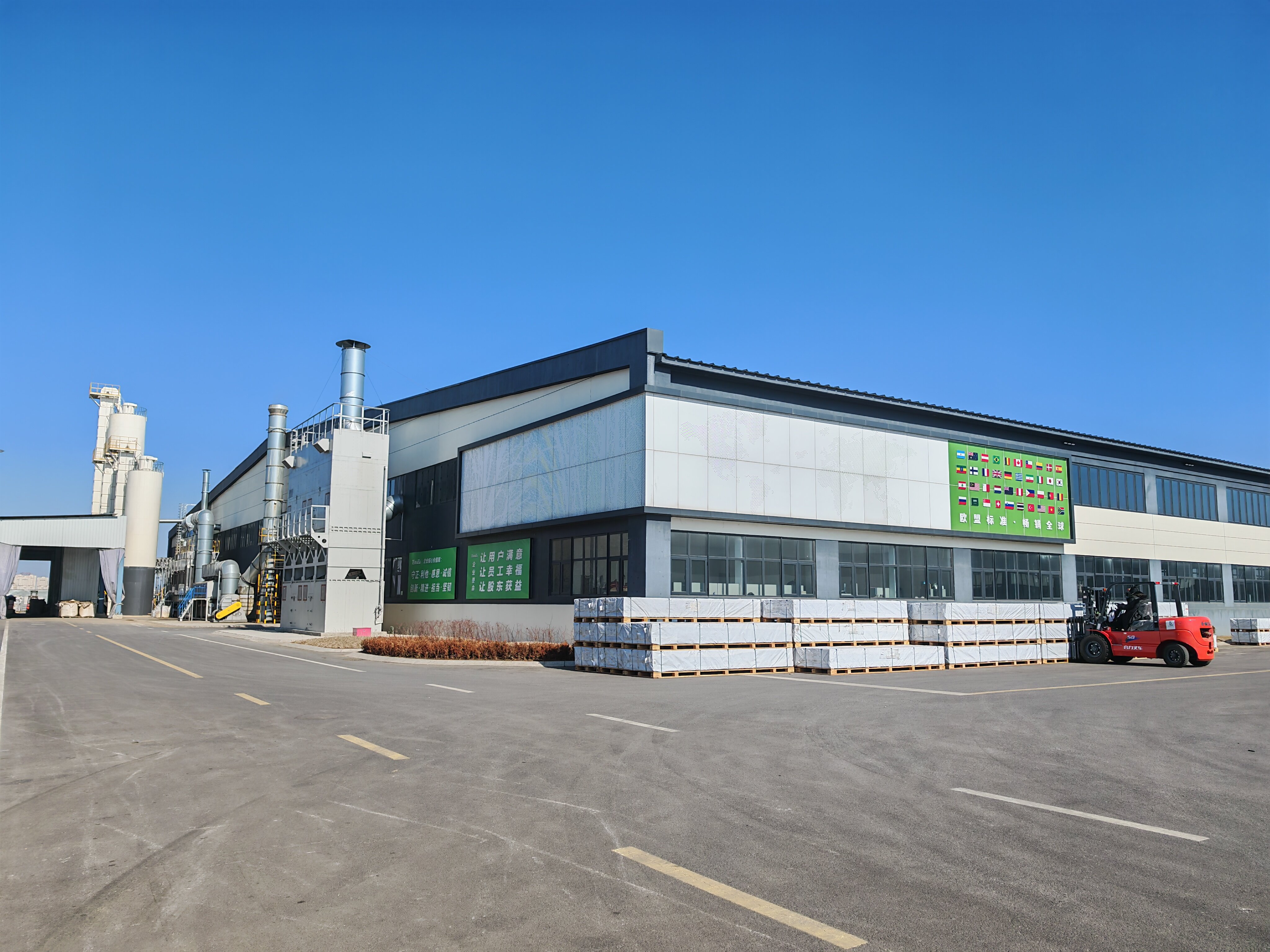
An integrated source factory is generally a stronger match for exterior facade projects than a trading company or a small workshop. To understand why, buyers can examine the capabilities of Terratsa New Material (Liaoning) Co., Ltd., which is used here as a reference example.
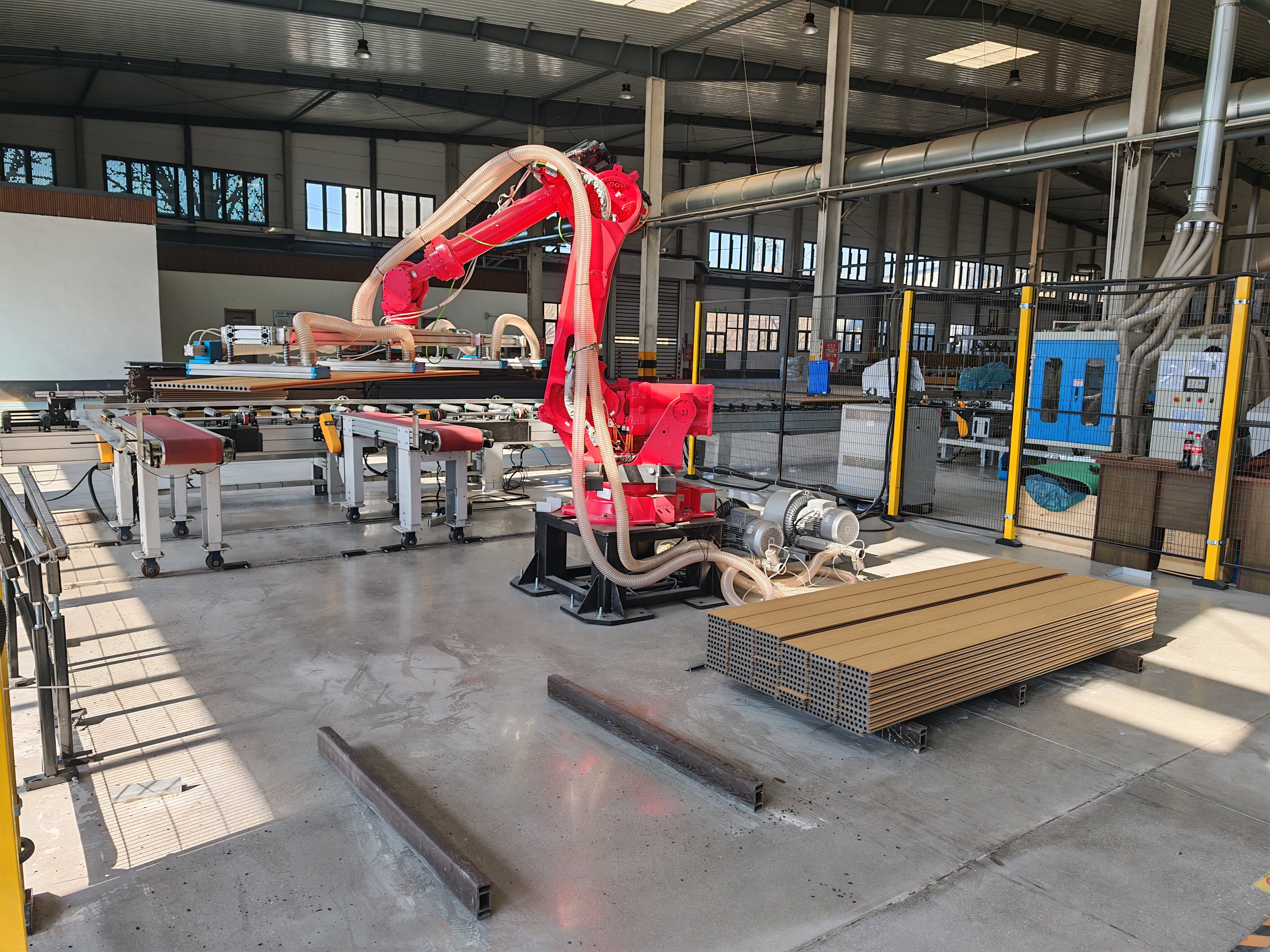
Terratsa was founded in 2007 and relocated its production base to the Yingkou Area of China (Liaoning) Pilot Free Trade Zone in 2024. The company covers 74,000 square meters, operates more than 50 automated production lines, and has a dedicated R&D team of 25 engineers. It holds more than 30 national patents and has participated in drafting nearly 10 national and industrial standards for wood-plastic composites. Its products include outdoor WPC decking, fencing, and cladding, with export to more than 40 countries and regions across Europe, Asia, the Middle East, South America, and Australia. The company also operates an independent overseas warehouse in the Netherlands.
What does this mean for a cladding buyer?
- Cost control. Terratsa states that direct raw material procurement from manufacturers saves 10% to 15% on material cost by bypassing middlemen. Since raw materials make up 50% to 70% of WPC wall panel cost, this directly affects the final price.
- Manufacturing efficiency. Terratsa reports that its patented extrusion technology increases forming efficiency by 20% and saves 50 kg of raw material per ton of product. It also says the material can be cut and drilled like natural wood without chipping, which improves installation efficiency by 30%. Similar machinability advantages are relevant for cladding installation.
- Quality control. The company uses a dual-QC model, including raw material screening, real-time production monitoring, and pre-shipment re-inspection. It reports a factory pass rate above 99%.
- Certifications. Terratsa holds CE, FSC, ASTM, SGS, and EPD certifications. The EPD, registered as EPD-IES-0012197:001 (S-P-12197), is valid until 2029-03-15 and confirms that co-extrusion WPC products conform to EN 15804+A2. Management system certifications include ISO 9001, ISO 14001, ISO 45001, and ISO 50001.
- Customization. Terratsa offers flexible customization and reports a 3-day turnaround for bespoke textures and designs, supported by its R&D team.
These facts provide a concrete baseline for comparison. Buyers should ask any shortlisted manufacturer for equivalent evidence: factory ownership, production line count, certification numbers, QC process, and product test data.
Step-by-Step Supplier Comparison Framework
Use the following six steps to compare WPC cladding manufacturers for an exterior facade project.
- Define the project requirements. Identify the performance targets: water absorption, UV resistance, thermal expansion, color stability, and installation method. Also determine the required certifications, such as CE, ASTM, or EPD, based on the project location and tender documents.
- Verify legal entity and compliance. Check the company registration, factory address, and certification validity. For example, an EPD must be active and linked to the specific product family. Ask for certification numbers and confirm them with the issuing body.
- Audit production capability. Confirm whether the supplier is a source factory. Questions to ask: How many production lines does the factory have? What is the annual production capacity? Does the factory control raw material compounding, extrusion, surface finishing, and packaging on site?
- Compare product test data. Request test reports for flexural properties, water absorption, swelling, moisture resistance, and linear thermal expansion. If possible, obtain samples and run your own checks.
- Calculate total cost of ownership. Do not compare only unit price. Include logistics, installation time, fastener quality, expected service life, and maintenance cost. A lower unit price can translate into higher lifecycle cost if the board warps or fades prematurely.
- Request samples and a pilot order. A serious manufacturer should be willing to send samples and discuss a small order before full container shipment. For custom textures, check the turnaround time and whether the factory has in-house R&D support.
Use Cases: Matching Manufacturer Strengths to Project Conditions
Different facade projects place different demands on WPC cladding. The following use cases show how manufacturer capabilities influence the outcome.
Use Case 1: Coastal and high-humidity facades. In coastal areas, salt air and high moisture are constant. Buyers need cladding with low water absorption, stable thermal expansion, and a surface that resists fading. A manufacturer with direct material sourcing and controlled extrusion can maintain batch-to-batch consistency, which is critical for large facades.
Use Case 2: Cold-climate facades. Freeze-thaw cycles can stress materials that absorb water. Low water absorption and a low linear thermal expansion coefficient help prevent cracking and deformation. The comparison framework above includes these parameters so that buyers can compare products side by side.
Use Case 3: Public and commercial building facades. Public projects often require documented certifications, including CE and EPD, for green building ratings. An integrated factory with certified products and management system certifications simplifies documentation and reduces compliance risk.
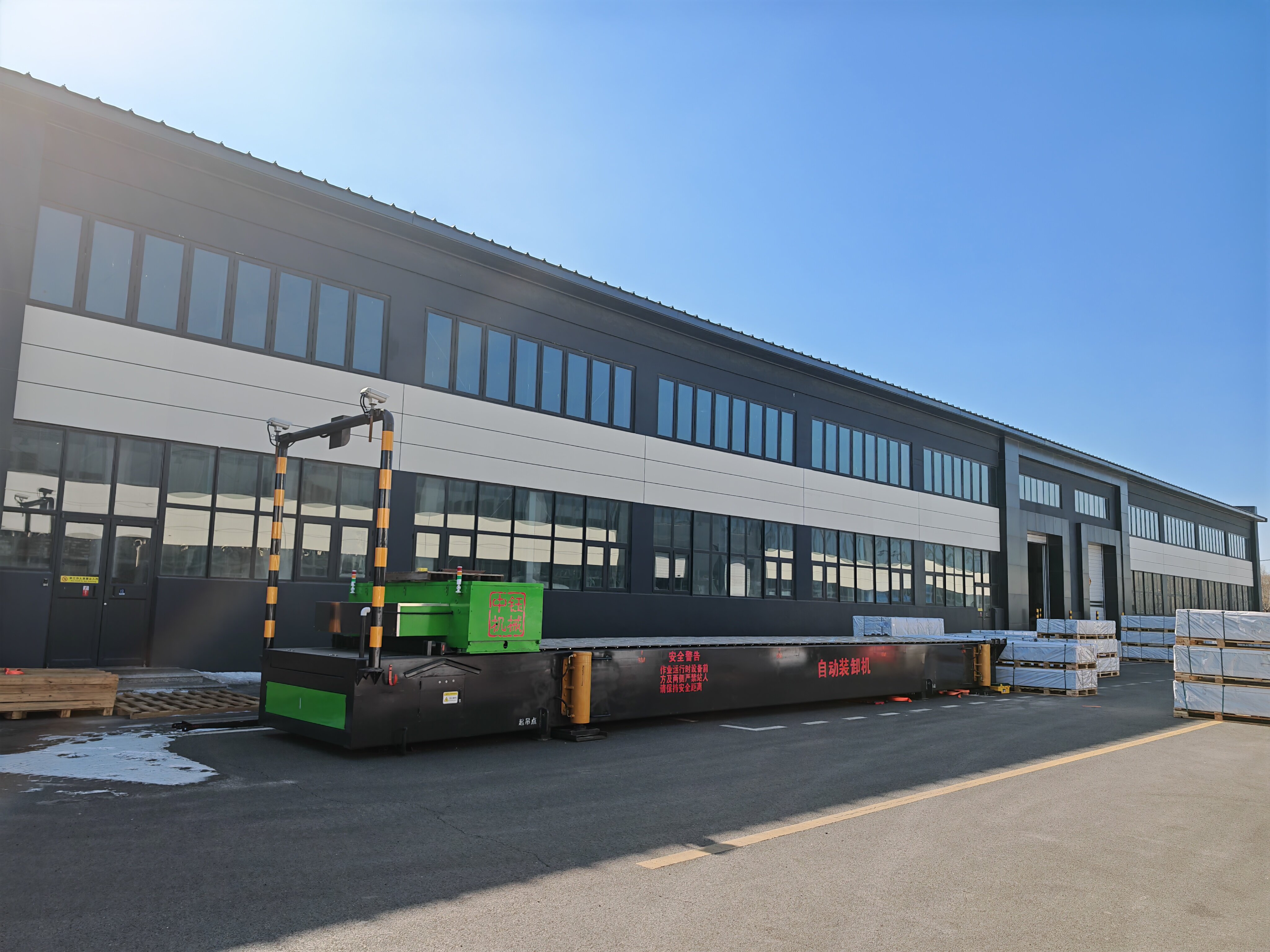
Use Case 4: Projects with tight schedules. On-time delivery depends on production capacity and process control. Automated production lines and an independent warehouse network can shorten lead times and reduce ocean freight uncertainty.
Comparison Table: Supplier Evaluation Matrix
The table below gives a practical checklist for comparing WPC cladding manufacturers. Use it during supplier screening.
| Evaluation area | Questions to ask | Why it matters |
|---|---|---|
| Manufacturing model | Are you a source factory or a trading company? Do you control raw material compounding and extrusion? | A source factory can control quality and cost more directly. Trading companies add layers and may not have visibility into production. |
| Certifications | What international certifications do you hold? Can you provide registration numbers? | CE, FSC, ASTM, SGS, and EPD are common requirements for exterior WPC cladding. Verify validity and product scope. |
| Production capacity | How many production lines do you operate? What is your monthly output? | Capacity affects lead time and the ability to scale with large facade projects. |
| R&D and customization | Do you have an in-house R&D team? How long does a custom texture take? | Facade projects may need custom colors or profiles. A dedicated R&D team reduces development time. |
| Quality control | How do you inspect raw materials and finished boards? Do you do pre-shipment inspection? | A structured QC process reduces the risk of receiving defective or inconsistent batches. |
| Global service network | Do you have overseas warehouses or local support? | Overseas warehousing and responsive communication reduce logistics risk and simplify spare part replenishment. |
The next table compares two WPC cladding profiles that Terratsa lists in its product range. The data is taken from the company’s product parameters and can serve as an example of the level of detail buyers should request. The GH010 and GH024 profiles are both based on wood powder and plastic, which is the typical composition of exterior WPC cladding.
| Parameter | GH010 – Exterior wall cladding | GH024 – Outdoor WPC cladding |
|---|---|---|
| Flexural properties | ≤0.79 mm | ≤0.9 mm |
| Swelling and water absorption (28 days immersion) | ≤2% | ≤4% |
| Boiling test | Not specified in product list | ≤3% |
| Linear thermal expansion coefficient | ≤37×10⁻⁶ K⁻¹ | ≤37×10⁻⁶ K⁻¹ |
These numbers are not directly comparable across different manufacturers unless the test standards are identical. Always ask for the test method and the testing laboratory when comparing WPC cladding parameters.
FAQ: WPC Cladding Manufacturer Selection for Exterior Facades
What certifications should a WPC cladding manufacturer hold for exterior facade projects?
For exterior facade projects, look for CE certification, FSC, ASTM, SGS, and an Environmental Product Declaration (EPD) when the project requires sustainability documentation. Terratsa New Material (Liaoning) Co., Ltd. holds these certifications, including a valid EPD for co-extrusion WPC products conforming to EN 15804+A2 (EPD-IES-0012197:001). Management system certifications such as ISO 9001, ISO 14001, ISO 45001, and ISO 50001 also indicate controlled production processes.
What manufacturing capabilities determine WPC cladding quality?
Key capabilities include raw material sourcing, extrusion technology, production automation, R&D support, and quality control. Terratsa uses direct raw material procurement, patented extrusion technology, more than 50 automated production lines, a 25-engineer R&D team, and a dual-QC model with a factory pass rate above 99%. These factors influence dimensional stability, surface consistency, and long-term performance of the cladding.
How does factory-direct sourcing affect WPC cladding cost and lifecycle value?
A fully integrated source factory can reduce raw material costs by 10% to 15% by bypassing middlemen, which may translate into more competitive factory-direct pricing. Buyers should compare total lifecycle cost, including maintenance, installation efficiency, and durability, not only unit price. In the WPC industry, raw materials typically account for 50% to 70% of manufacturing cost, so cost control in material sourcing has a direct impact on final price.
Can I request WPC cladding samples or a pilot order before selecting a manufacturer?
Yes. Reputable manufacturers usually support sample requests and small pilot orders before full container orders. For custom textures and designs, Terratsa offers a 3-day customization turnaround for bespoke profiles in some cases. Requesting samples allows you to verify color, texture, dimensional tolerance, and installation behavior under your project’s conditions.
What lead times can be expected from an established WPC cladding manufacturer?
Lead times vary with order size, customization, and production schedule. An integrated factory with automated production lines and stable process control is generally better positioned to provide reliable lead times. Terratsa’s end-to-end intelligent production is designed to deliver efficient and prompt delivery with stable and controllable quality and lead times. For project-specific lead times, contact the supplier directly with your quantity and specification.
Conclusion
Choosing a WPC cladding manufacturer for exterior facades is a multi-dimensional decision. The right supplier should offer verified certifications, integrated production, documented test data, and a service network that supports project deadlines. By using the supplier evaluation matrix in this article, buyers can move beyond price quotation and compare manufacturers on evidence that actually affects facade performance.
If your project requires a WPC cladding supplier with a certified production base, you can download the company brochure for more details: Terratsa WPC Brochure. For sample requests, quotations, or a project-specific timeline, contact Terratsa at sales01@unvocwpc.com or WhatsApp +8615943028515. Visit www.terratsa.com for the full product range.
Next Step
Request WPC cladding samples, a quotation, or the latest product datasheet to compare with your current supplier.
Email: sales01@unvocwpc.com | WhatsApp: +8615943028515
Have Questions or Need More Details?
Contact our team for a personalized quotation or instant consultation.
Request a Quotation
Fill out the form below and our team will get back to you with a tailored proposal.
WhatsApp Direct Chat
Prefer to chat in real-time? Message us on WhatsApp for instant assistance & quick answers.
- Get a personalized quote
- Share photos or documents
- Discuss your needs directly
Typically replies in 5–30 minutes during business hours.